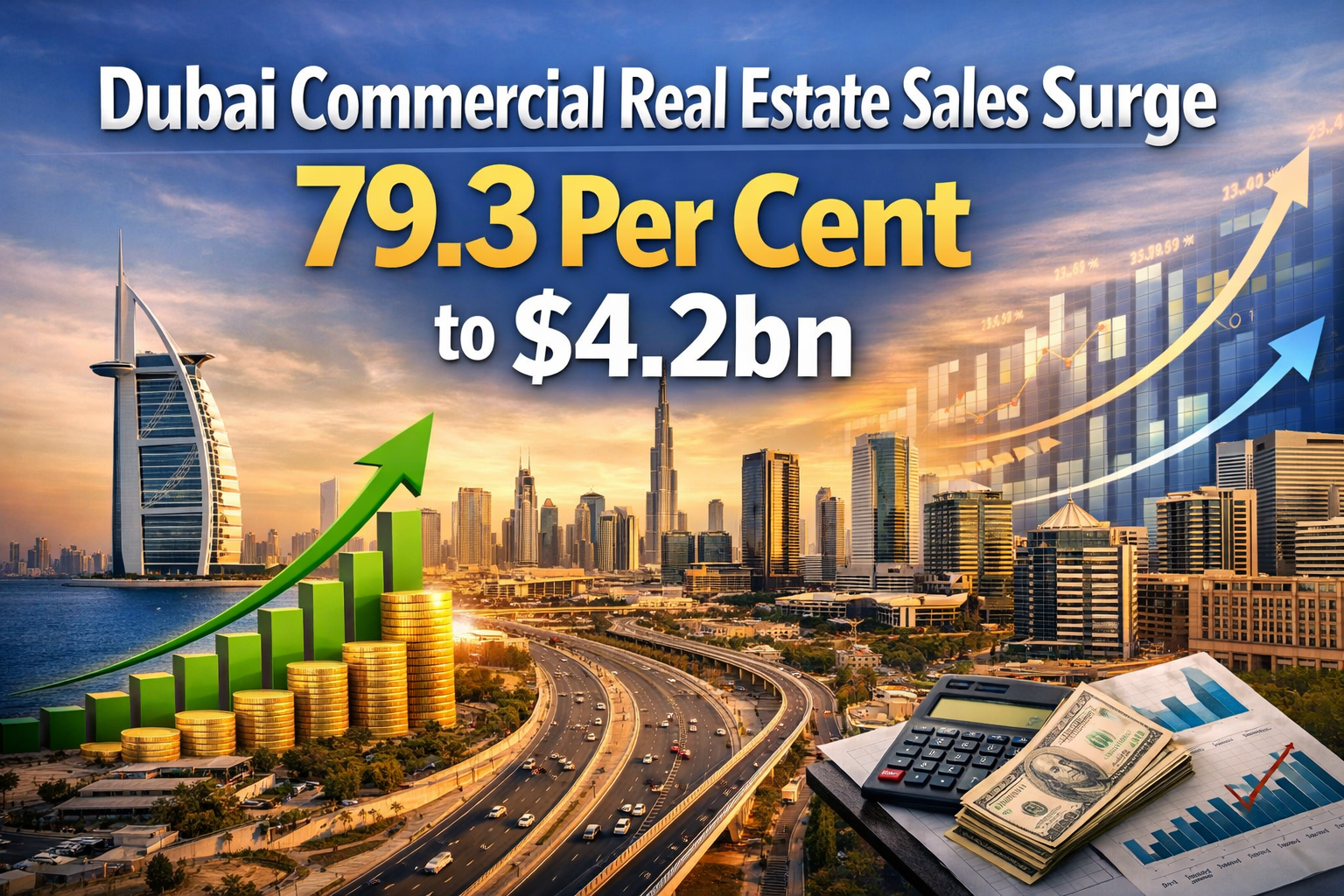
Dubai’s commercial real estate sector has entered a decisive expansion phase, with sales volumes surging by 79.3 per cent to reach $4.2 billion, reflecting unprecedented transactional velocity across office, retail, and mixed-use commercial assets. This performance signals robust institutional participation, sustained foreign capital inflows, and heightened demand for income-generating properties in prime business districts. The market now demonstrates strong absorption rates, tighter vacancy cycles, and accelerating capital appreciation across core and secondary commercial corridors.
The surge is driven by structured corporate relocations, expanding regional headquarters, and rising demand from multinational firms seeking scalable office footprints. Commercial investors are capitalizing on rising rental yields, stable lease structures, and long-term tenancy frameworks, positioning Dubai as a preferred destination for global portfolio diversification.
Office Sector Leads Commercial Transaction Growth
Grade A Offices Drive Capital Concentration
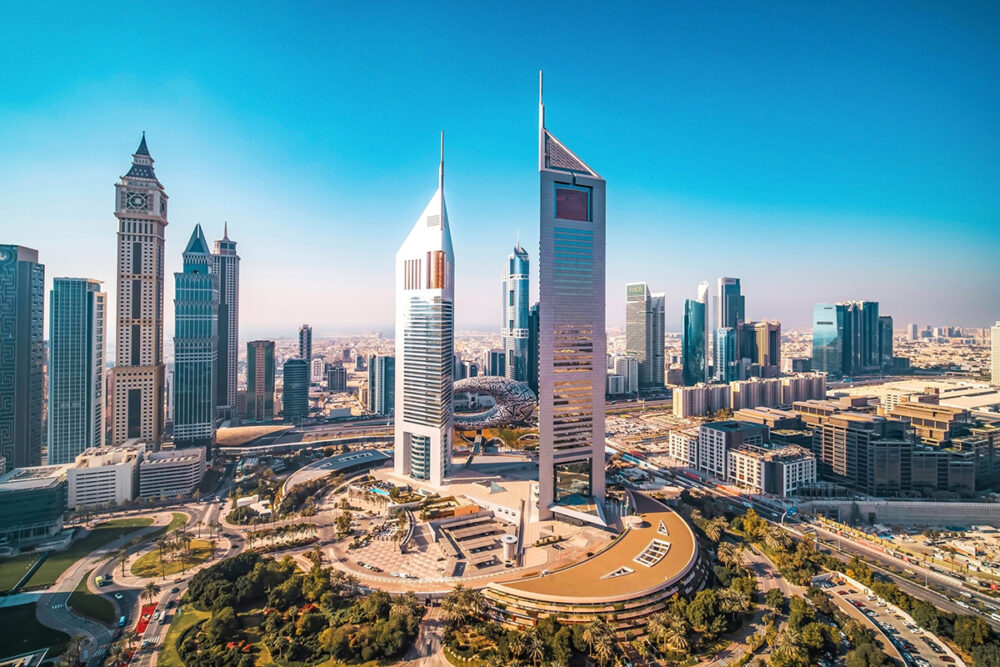
Grade A office stock in locations such as Downtown Dubai, DIFC, Business Bay, and Sheikh Zayed Road continues to command premium valuations. Institutional buyers prioritize buildings offering high sustainability ratings, flexible floor plates, and advanced digital infrastructure. Sale transactions in these areas reflect compressed cap rates and rising capital values driven by strong corporate tenancy pipelines.
Multinational firms increasingly prefer long-term leases in smart buildings that integrate ESG compliance, energy efficiency, and wellness-certified designs. As occupancy stabilizes at elevated levels, asset owners are witnessing both rental escalations and asset repricing, reinforcing transactional momentum in the investment sales segment.
Free Zone Ownership Boosts Investment Liquidity
Free zone jurisdictions enable 100 per cent foreign ownership, removing legacy barriers to commercial asset acquisition. Zones such as Dubai Internet City, Dubai Media City, and Jebel Ali Free Zone continue attracting technology firms, logistics operators, and light industrial tenants. Investors benefit from strong covenant strength, extended lease tenures, and stable operating cash flows, encouraging long-term capital deployment.
This ownership flexibility supports deeper international participation, particularly from Asian and European institutional funds seeking inflation-protected income streams anchored to high-growth economic ecosystems.
Retail Commercial Assets Experience Strategic Repositioning
High-Street Retail and Community Centers Gain Momentum
Retail commercial transactions are increasingly concentrated in high-footfall corridors, lifestyle districts, and integrated community developments. Investors target assets anchored by essential services, dining clusters, and experiential retail formats that drive consistent daily traffic. Neighborhood retail centers benefit from stable occupancy profiles and predictable tenant mix diversification.
Sales activity reflects growing interest in subdivided retail units, allowing private investors to participate in income-producing commercial segments with scalable capital exposure.
Tourism-Driven Retail Assets Strengthen Performance Metrics
Dubai’s tourism expansion supports premium retail corridors located near hospitality clusters and entertainment zones. Commercial properties aligned with visitor traffic benefit from stronger lease renegotiations and shorter vacancy cycles. Investors are selectively acquiring repositioned retail stock with upgraded tenant layouts and omnichannel integration capabilities.
Retail transactions increasingly include redevelopment potential, allowing asset managers to enhance long-term income performance through tenant optimization strategies.
Logistics and Industrial Commercial Properties Attract Capital Inflows
Warehousing and Distribution Assets in High Demand
E-commerce growth, regional trade expansion, and last-mile delivery requirements are intensifying demand for logistics infrastructure. Industrial commercial sales in Dubai South, Jebel Ali, and Al Quoz demonstrate rising investor appetite for well-located warehouse facilities offering modern loading bays, climate control, and rapid connectivity to ports and airports.
Investors value long-term triple-net lease structures, strong tenant covenants, and scalable expansion capacity. These attributes provide stable yield profiles while preserving long-term capital appreciation potential.
Data Centers and Tech Infrastructure Drive Niche Commercial Growth
Specialized commercial assets such as data centers and cloud infrastructure facilities are gaining prominence within transaction volumes. These assets benefit from long-duration leases, high switching costs, and structural demand growth from digital services, fintech, and artificial intelligence deployment across the region.
Capital allocations into these segments reflect strategic portfolio diversification into mission-critical infrastructure categories with resilient income profiles.
Foreign Direct Investment Fuels Commercial Sales Expansion
Institutional Capital Targets Core Commercial Assets
Sovereign wealth funds, pension schemes, and global REIT operators are actively acquiring stabilized commercial properties with strong operational metrics. These investors prioritize buildings with professional asset management frameworks, long-term occupancy stability, and redevelopment optionality.
Transaction structures increasingly involve portfolio acquisitions, joint ventures, and sale-and-leaseback arrangements that enhance market liquidity and pricing transparency.
Private Investors Access Fractional Commercial Ownership
Digital property platforms and regulated investment vehicles are enabling broader participation in commercial real estate ownership. Fractional investment models allow capital pooling into prime assets, supporting transaction volumes while expanding investor access to high-quality income-generating properties.
This democratization of commercial investment channels is reinforcing sustained transactional depth across multiple asset classes.
Rental Performance Strengthens Investment Valuations
Lease Escalations Enhance Net Operating Income
Commercial rental rates across prime districts are registering consistent upward adjustments supported by limited new supply pipelines and strong tenant demand. Office rental renewals increasingly reflect stepped escalation clauses, improving forward income visibility for asset owners.
As net operating income expands, property valuations continue to recalibrate upward, supporting transaction pricing benchmarks and increasing exit liquidity for early-stage investors.
Occupancy Stability Reduces Investment Risk Premiums
High occupancy levels and diversified tenant mixes are compressing risk premiums across multiple commercial segments. Properties with stable occupancy and institutional-grade tenants are achieving faster sale cycles and premium pricing, reinforcing market confidence and transactional velocity.
Reduced volatility encourages long-term capital commitments and portfolio scaling strategies among both regional and international investors.
Mixed-Use Developments Accelerate Commercial Integration
Live-Work-Play Ecosystems Enhance Asset Synergies
Developments integrating office, retail, hospitality, and residential components are commanding heightened investor interest. These assets benefit from cross-sector foot traffic, diversified income streams, and stronger tenant retention dynamics.
Mixed-use commercial assets demonstrate superior operational resilience, particularly in urban nodes experiencing population density growth and transit connectivity improvements.
Transit-Oriented Commercial Zones Drive Value Uplift
Commercial assets located near metro lines, logistics corridors, and intermodal transport hubs experience stronger capital appreciation trajectories. Transit-oriented development strategies reduce tenant operating costs while expanding catchment areas for retail and service-oriented businesses.
Investors actively target land parcels with zoning flexibility and infrastructure proximity to capitalize on future development intensity allowances.
Regulatory Framework Supports Market Transparency
Digitized Transaction Platforms Enhance Market Confidence
Streamlined registration systems, digital title transfers, and transparent valuation benchmarks improve transaction execution efficiency. Regulatory frameworks ensure title security, enforce contractual compliance, and facilitate cross-border capital movement through regulated banking channels.
These mechanisms reduce transaction friction, accelerate deal closures, and attract institutional-grade capital deployment into commercial assets.
Long-Term Residency Programs Strengthen Corporate Stability
Residency incentives for investors, business owners, and skilled professionals support sustained occupancy demand across commercial properties. Corporate retention benefits long-term lease stability, reinforcing asset income reliability and investment attractiveness.
Workforce stability further enhances tenant credit profiles and reduces operational turnover risks for property owners.
Capital Appreciation Outlook Remains Structurally Positive
Supply Constraints Support Pricing Momentum
Development pipelines for large-scale commercial projects remain selectively paced, ensuring demand absorption continues to outpace new supply delivery in core business districts. This supply discipline sustains upward pricing momentum across stabilized assets.
Investors benefit from predictable market cycles, reduced speculative oversupply risk, and consistent yield compression trends.
Economic Diversification Expands Tenant Demand Base
Growth across technology, finance, healthcare, logistics, and creative industries continues to diversify tenant demand across multiple commercial segments. This sectoral expansion reduces reliance on single-industry performance cycles and strengthens long-term leasing sustainability.
Commercial assets aligned with multi-sector tenant ecosystems exhibit stronger resilience during global economic fluctuations.
Strategic Investment Patterns Reshape Commercial Portfolios
Value-Add Opportunities Attract Active Asset Managers
Investors increasingly pursue repositioning strategies involving interior upgrades, tenant mix optimization, and digital building enhancements. These initiatives enhance asset competitiveness and rental income trajectories while supporting accelerated exit valuations.
Value-add strategies expand capital participation beyond passive income models into performance-driven asset management structures.
Portfolio Aggregation Increases Market Liquidity
Institutional buyers are consolidating multiple single-asset acquisitions into scalable commercial portfolios, improving asset management efficiency and exit flexibility. Portfolio aggregation supports future REIT listings, private fund structuring, and structured debt financing solutions.
This institutionalization of commercial portfolios enhances overall market maturity and capital recycling efficiency.
Dubai Commercial Real Estate Establishes Global Market Leadership
Dubai’s commercial property sector now ranks among the most dynamic investment environments globally, combining regulatory clarity, capital accessibility, strong economic fundamentals, and sustained tenant demand growth. The recorded 79.3 per cent sales increase to $4.2 billion reflects more than cyclical recovery—it represents a structural elevation of market depth, investor confidence, and asset quality standards.
Commercial assets across office, retail, logistics, and mixed-use categories are achieving faster turnover cycles, higher income stability, and stronger long-term valuation trajectories. As capital inflows continue and development strategies remain disciplined, Dubai’s commercial real estate market stands positioned for continued transaction growth, portfolio expansion, and institutional market integration.