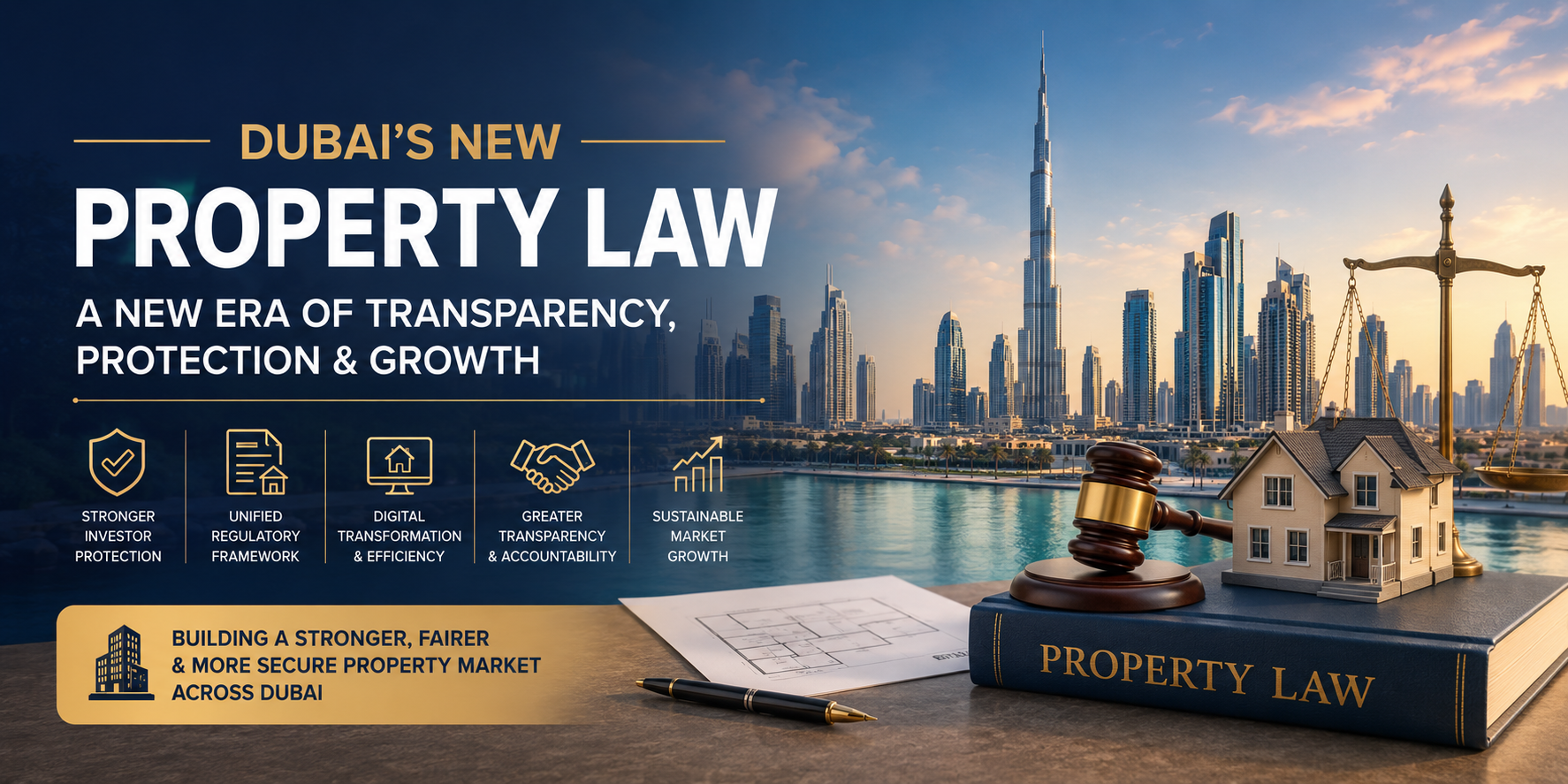
Dubai’s property sector has long been recognized as one of the most dynamic and internationally attractive real estate markets in the world. With buyers arriving from Europe, Asia, the Middle East, and North America, the emirate has built a reputation for combining strong infrastructure, investor-friendly policies, and tax advantages. However, as the market grows in size and complexity, regulators face increasing pressure to ensure that property transactions, ownership structures, and development activities remain transparent and consistent across all districts.
The newly introduced property law aims to address these challenges by creating a more comprehensive framework that applies throughout the emirate. Rather than relying on fragmented regulations or location-specific practices, the law seeks to establish uniform standards that govern property-related activities regardless of where a project is located. This approach helps reduce ambiguity, ensures fair treatment of stakeholders, and creates a predictable environment for investors. The initiative aligns with Dubai’s broader strategy of strengthening governance while maintaining its position as a global real estate hub. Recent regulatory developments have consistently emphasized transparency, accountability, and investor protection across the sector.
Why Dubai Introduced the Reform
The reform did not emerge in isolation. Dubai’s real estate market has experienced substantial growth over recent years, attracting record levels of investment and increasing transaction volumes. As property ownership becomes more diverse and international participation expands, regulators must ensure that laws evolve alongside market realities.
One of the primary drivers behind the reform is the need for greater consistency. Investors often prefer markets where regulations are clear and predictable. When rules vary between districts or development types, confusion can arise regarding ownership rights, maintenance responsibilities, dispute resolution procedures, and compliance obligations. By applying a unified legal framework throughout the emirate, Dubai reduces uncertainty and makes the investment environment easier to understand. The move also supports the government’s long-term economic diversification strategy by encouraging sustainable real estate growth rather than speculative activity.
Scope of the Law Across the Emirate
A defining feature of the new legislation is its broad application. The law is intended to cover property-related activities across Dubai rather than focusing on isolated zones. This comprehensive approach ensures that stakeholders operate under the same fundamental principles regardless of location.
For property owners, developers, investors, and management companies, this means greater legal clarity. Standardized regulations can simplify transactions, reduce administrative burdens, and improve coordination among government agencies. It also helps ensure that property rights are protected consistently throughout the emirate. Such measures contribute to a more mature real estate ecosystem where participants can make long-term decisions with greater confidence and reduced regulatory uncertainty.
Key Objectives Behind the New Legislation
Enhancing Market Transparency
Transparency is the foundation of any successful real estate market. Buyers want confidence that ownership records are accurate, transactions are properly documented, and developers are operating under clear rules. The new property law places significant emphasis on creating a transparent environment that benefits all participants.
Enhanced transparency reduces the risk of disputes, improves market efficiency, and strengthens investor trust. It also supports the adoption of digital systems that make property records more accessible and verifiable. When information flows freely and accurately, investors can conduct due diligence more effectively and make informed purchasing decisions. This is particularly important in a market as internationally connected as Dubai, where buyers may be located thousands of miles away from the properties they acquire.
Strengthening Investor Confidence
Investor confidence is one of Dubai’s most valuable economic assets. The city has spent decades building a reputation for stability, innovation, and business-friendly policies. Property regulations play a critical role in maintaining that reputation.
The new law strengthens confidence by reinforcing legal protections and establishing clearer standards for market participants. Investors are more likely to commit capital when they understand how disputes are resolved, how ownership is protected, and how regulatory oversight functions. Strong governance can also contribute to market resilience during periods of economic uncertainty. By prioritizing investor protection, Dubai sends a clear message that it intends to remain a preferred destination for global real estate investment.
Major Changes Introduced
Unified Regulatory Framework
One of the most important aspects of the new property law is the creation of a unified regulatory framework. Think of it as replacing a collection of separate maps with one comprehensive navigation system. Instead of stakeholders interpreting different procedures depending on project type or location, they can rely on a standardized set of principles.
A unified framework promotes fairness and consistency. Property owners know what is expected of them, developers understand their obligations, and investors can evaluate opportunities using a common legal benchmark. This reduces administrative complexity while enhancing market transparency. Consistency is particularly valuable in a global investment environment where participants may not be familiar with local regulations before entering the market.
Improved Property Registration Standards
Property registration serves as the backbone of ownership security. Without reliable records, disputes become more likely and transactions become more complicated. The new law supports stronger registration standards designed to improve accuracy and accountability.
Enhanced registration requirements help ensure that ownership information remains current and legally enforceable. This benefits buyers, sellers, lenders, and regulators alike. Clear records reduce fraud risks, simplify transfers, and strengthen confidence in the market. Investors often view robust registration systems as a key indicator of a mature real estate environment because they provide assurance that ownership rights are properly protected.
Digital Transformation in Property Administration
Dubai continues to embrace technology as a tool for improving government services. The property sector is no exception. Digital platforms increasingly play a central role in registration, compliance, documentation, and transaction management.
Technology-driven administration can significantly improve efficiency by reducing paperwork, accelerating approvals, and enhancing record accuracy. Digital systems also make it easier for international investors to access information remotely. As Dubai advances its smart-city ambitions, digital property management is expected to become an increasingly important component of the emirate’s regulatory ecosystem.
Impact on Property Owners
New Rights and Responsibilities
Property owners stand to benefit from greater clarity regarding their rights and obligations. Clear regulations reduce misunderstandings and provide stronger legal foundations for ownership claims. Owners can better understand maintenance requirements, compliance expectations, and dispute resolution procedures.
At the same time, enhanced protections often come with additional responsibilities. Owners may need to ensure that properties comply with updated standards relating to safety, documentation, and occupancy. These responsibilities are designed not as burdens but as mechanisms for maintaining market integrity and protecting the interests of all stakeholders. When everyone follows the same rules, the overall quality and reputation of the market improves.
Compliance Requirements
Compliance is becoming increasingly important within Dubai’s property sector. Authorities have demonstrated a willingness to enforce regulations related to housing standards, building safety, and operational practices. Recent laws have introduced substantial penalties for non-compliance in certain areas, reflecting the government’s commitment to maintaining high standards.
For property owners, this means staying informed about regulatory developments and ensuring that properties meet applicable requirements. While compliance may require additional attention, it ultimately contributes to a safer and more reliable market environment. Strong enforcement also reassures investors that regulations are meaningful and consistently applied.
Impact on Real Estate Investors

Opportunities for Foreign Investors
Foreign investment remains a cornerstone of Dubai’s property market. International buyers are attracted by the city’s infrastructure, strategic location, lifestyle offerings, and business opportunities. The new property law reinforces Dubai’s commitment to welcoming global capital by providing a clearer and more transparent legal environment.
For overseas investors, legal certainty can be just as important as financial returns. Clear ownership rights, transparent procedures, and predictable regulations reduce perceived risk. This can encourage greater participation from institutional investors, family offices, and individual buyers seeking long-term exposure to the UAE real estate market. Enhanced governance standards may also improve Dubai’s competitiveness relative to other international property destinations.
Risk Reduction Measures
Every investment carries risk, but effective regulation can reduce unnecessary uncertainty. The new law introduces mechanisms that help mitigate operational, legal, and transactional risks. Investors benefit when ownership records are reliable, compliance standards are clearly defined, and dispute resolution processes are transparent.
Risk reduction is particularly important in off-plan developments and large-scale projects where significant capital commitments may be involved. Stronger oversight helps ensure that stakeholders fulfill their obligations and that projects operate within established legal frameworks. Such protections contribute to long-term market stability and investor confidence.
Effects on Developers and Real Estate Companies
Enhanced Accountability
Developers play a crucial role in shaping Dubai’s skyline and economic future. The new property law places increased emphasis on accountability and governance within the development sector. This reflects a broader trend toward strengthening market oversight and ensuring that projects are managed responsibly.
Greater accountability benefits both developers and investors. Developers gain credibility when they operate under clear standards, while investors gain confidence that projects are subject to meaningful oversight. Accountability mechanisms can also help reduce disputes and improve project execution by encouraging transparency throughout the development lifecycle.
Project Governance Standards
Governance standards influence everything from project planning and financial management to stakeholder communication and compliance monitoring. Strong governance helps ensure that developments are completed efficiently and that investor interests are protected.
Dubai’s regulatory evolution reflects an understanding that governance is not merely a legal requirement—it is a competitive advantage. Markets with strong governance frameworks tend to attract higher-quality investment and experience greater long-term stability. By reinforcing governance standards, Dubai enhances its appeal to sophisticated investors seeking predictable and well-regulated opportunities.
Relationship with Recent Visa Reforms
Investor Visa Updates
The new property law arrives alongside notable changes to Dubai’s investor residency framework. Recent updates have removed the minimum property value requirement for sole owners seeking a two-year investor residency visa, while establishing new criteria for jointly owned properties. These changes make property-linked residency more accessible and may encourage broader participation in the market.
The combination of regulatory modernization and visa flexibility creates a compelling proposition for international investors. Buyers are not only gaining access to a transparent property market but may also benefit from residency opportunities tied to real estate ownership. This integrated approach strengthens Dubai’s position as a destination for investment, entrepreneurship, and long-term relocation.
What the Law Means for Dubai’s Property Market
Market Growth Outlook
The long-term outlook for Dubai’s property market remains positive. Regulatory reforms, infrastructure investment, population growth, and international demand continue to support market expansion. The new property law contributes to this momentum by enhancing transparency, strengthening protections, and creating a more predictable operating environment.
A well-regulated market is often more attractive to serious investors than a rapidly growing but loosely governed one. By prioritizing governance and investor protection, Dubai is laying the foundation for sustainable growth rather than short-term speculation. This approach can help maintain market stability while supporting continued economic development. The emirate’s commitment to innovation, digital transformation, and regulatory excellence positions it well for future growth in an increasingly competitive global real estate landscape.
Conclusion
Dubai’s new property law represents an important milestone in the evolution of the emirate’s real estate sector. By applying a more comprehensive framework across the entire emirate, the legislation promotes transparency, consistency, and investor confidence. Property owners gain clearer guidance, investors benefit from stronger protections, and developers operate within a more structured environment.
Combined with recent residency visa reforms and broader regulatory improvements, the new law reinforces Dubai’s reputation as a forward-looking and investor-friendly market. As the emirate continues to attract global capital and expand its real estate ecosystem, a strong legal foundation will remain essential to sustaining long-term growth and maintaining international competitiveness.
FAQs
1. What is the purpose of Dubai’s new property law?
The law aims to create a unified regulatory framework across the emirate, improving transparency, investor protection, and consistency in property-related activities.
2. Does the law affect foreign property investors?
Yes. Foreign investors benefit from greater legal clarity, stronger protections, and more transparent procedures, making Dubai an even more attractive investment destination.
3. Will property owners have new responsibilities?
Property owners may need to comply with updated standards relating to documentation, safety, occupancy, and regulatory requirements depending on their property type.
4. How does the law relate to investor residency visas?
The law complements recent visa reforms that removed minimum property value requirements for sole owners applying for certain investor residency visas.
5. What impact will the law have on Dubai’s property market?
The law is expected to strengthen investor confidence, support sustainable growth, improve governance standards, and enhance Dubai’s global competitiveness as a real estate investment destination.