Dubai’s real estate sector has delivered extraordinary capital inflows, with property sales exceeding $544 billion over the last five years, confirming the emirate’s position as one of the fastest-growing and most liquid property markets globally. This sustained performance reflects deep investor confidence, strong end-user demand, and a diversified development pipeline across residential, commercial, hospitality, and mixed-use assets.
Transaction volumes, value growth, and rising price indices indicate not only cyclical recovery but a structural expansion of the market, supported by regulatory modernization, demographic growth, and international capital rotation into stable, high-yield destinations.
Five-Year Sales Performance Signals Structural Growth
Record Transaction Volumes Across Segments
Over the past five years, Dubai recorded millions of property transactions, driven by both primary (off-plan) and secondary (ready) market activity. Off-plan sales have consistently represented a significant share of total volume, reflecting strong forward demand and confidence in future delivery cycles.
Key contributors include:
-
Master-planned communities
-
Branded residences
-
High-density urban developments
-
Waterfront luxury projects
The result is a market where liquidity remains high across price tiers, from affordable apartments to ultra-luxury villas and penthouses.
Value Growth Outpaces Global Peers
While many global cities experienced post-pandemic volatility, Dubai delivered consistent year-on-year value expansion, with transaction values climbing faster than most established property hubs. The cumulative $544bn+ in sales value represents not only capital turnover but also price appreciation across prime and emerging districts.
Residential Market Dominates Sales Momentum
Apartments Drive Volume, Villas Drive Value
Apartments account for the majority of unit transactions, supported by:
-
High rental demand
-
Investor-friendly entry pricing
-
Strong resale liquidity
Villas and townhouses, however, contribute a disproportionate share of transaction value, particularly in:
-
Gated family communities
-
Waterfront villa clusters
-
Ultra-low-density luxury estates
This dual-engine structure ensures that both yield-seeking investors and long-term residents remain active participants in the market.
Premium Communities Lead Capital Inflows
Areas attracting sustained capital include:
-
Downtown Dubai
-
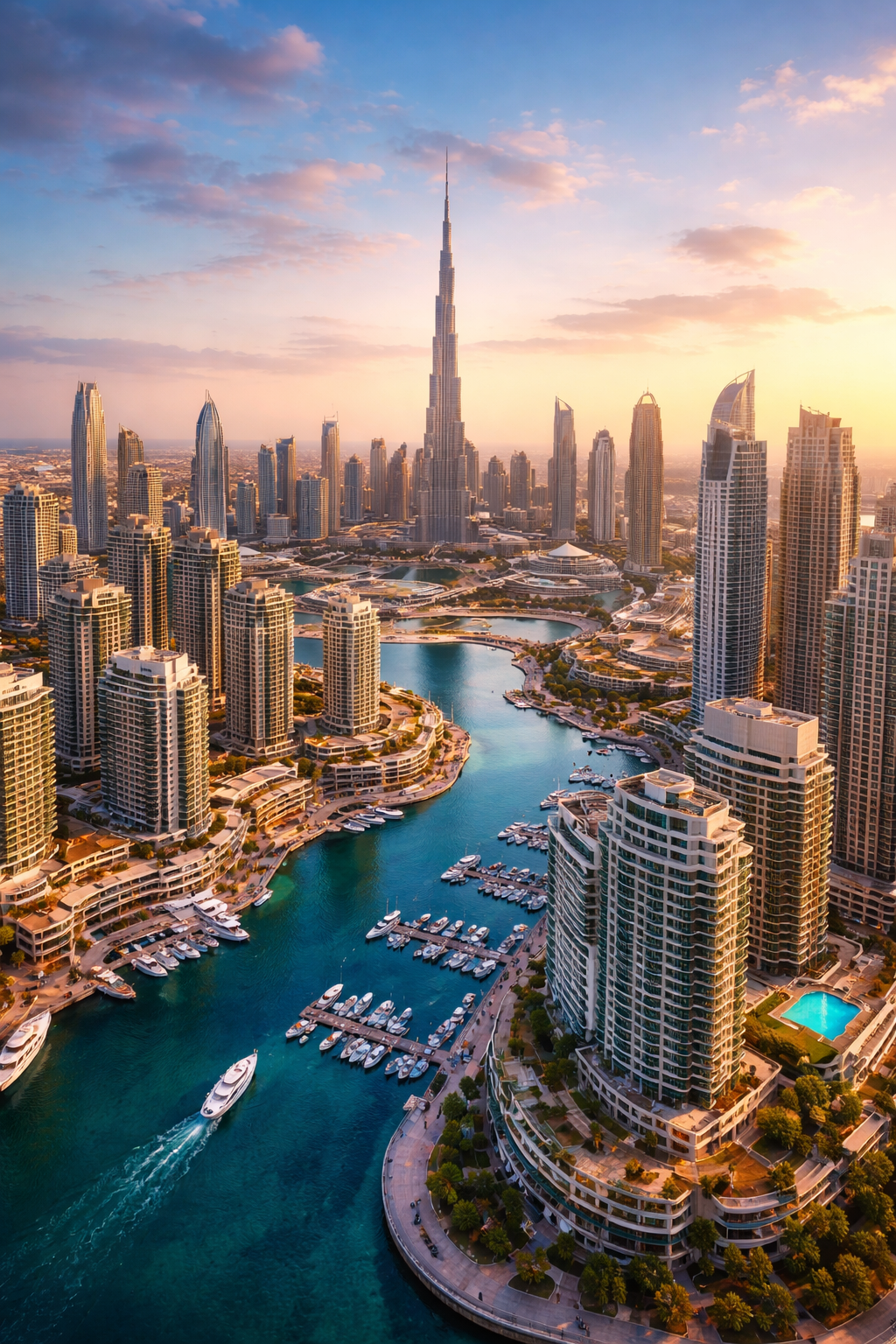
Dubai Marina
-
Palm Jumeirah
-
Business Bay
-
Jumeirah Village Circle (JVC)
These locations benefit from established infrastructure, lifestyle amenities, strong rental absorption, and consistent resale activity, reinforcing their status as institutional-grade residential zones.
Flexible Payment Plans Accelerate Absorption
Developers continue to deploy long-horizon payment structures, often extending beyond handover, enabling:
-
Lower upfront capital barriers
-
Higher transaction velocity
-
Rapid project sell-outs
These models significantly expand buyer participation while maintaining healthy developer cash flow pipelines.
Pipeline Expansion Reflects Demand Confidence
The scale of new project launches confirms that developers are responding to measured, data-driven demand rather than speculative oversupply. Launch volumes are aligned with:
-
Population growth forecasts
-
Employment expansion
-
Tourism-driven housing demand
This alignment stabilizes pricing while supporting continuous inventory renewal across all residential categories.
Foreign Investment Remains the Market’s Core Engine
Global Capital Diversification into Dubai Property
International buyers represent a substantial share of transaction value, drawn by:
-
Political stability
-
Investor-friendly regulations
-
Transparent land registration systems
-
High rental yields
Capital inflows originate from Europe, South Asia, CIS countries, East Asia, and the Middle East, creating a broad, diversified buyer base that mitigates reliance on any single region.
Residency Incentives Strengthen Ownership Demand
Long-term residence programs linked to property ownership have transformed real estate from a short-term investment vehicle into a permanent relocation strategy for high-net-worth individuals, entrepreneurs, and professionals.
This drives:
-
Higher-value purchases
-
Multi-property portfolios
-
Increased long-term occupancy stability
Luxury Property Market Expands Rapidly
Ultra-Prime Sales Reach New Price Ceilings
Dubai’s luxury market continues to post record-breaking individual transactions, with villas and penthouses frequently surpassing global pricing benchmarks per square foot in select waterfront and skyline-facing developments.
Key drivers include:
-
Limited ultra-prime supply
-
High global wealth migration
-
Preference for private, low-density assets
Branded Residences Redefine Premium Living
Global hotel and lifestyle brands are partnering with developers to launch branded residential towers, blending:
-
Hospitality services
-
Asset prestige
-
Strong rental appeal
These properties command premium pricing while maintaining high resale liquidity, making them attractive for both lifestyle buyers and portfolio investors.
Commercial and Mixed-Use Developments Add Market Depth
Office Sector Recovery Strengthens Asset Diversification
Demand for Grade A office space is rebounding, driven by:
-
Multinational company expansions
-
Startup ecosystem growth
-
Regional headquarters relocations
This supports mixed-use developments that integrate residential, retail, and office components, increasing land-use efficiency and long-term asset stability.
Retail and Hospitality Reinforce Community Value
Large-scale projects now emphasize:
-
Walkable retail boulevards
-
Community entertainment hubs
-
Integrated hospitality offerings
This enhances livability and supports sustained property valuations within master developments.
Rental Market Performance Supports Capital Appreciation
High Occupancy and Yield Stability
Rental demand remains robust across:
-
Urban apartments
-
Family villas
-
Serviced residences
Strong absorption ensures that investors benefit from:
-
Stable cash flow
-
Short vacancy cycles
-
Competitive gross yields
This income stability underpins property values and supports continued transaction momentum.
Tourism Growth Amplifies Short-Term Rental Returns
Dubai’s position as a global tourism hub strengthens demand for:
-
Holiday homes
-
Serviced apartments
-
Branded hospitality residences
This dual residential-tourism demand model allows investors to optimize yield strategies across multiple leasing formats.
Infrastructure Investment Enhances Long-Term Market Confidence
Transport and Connectivity Projects Expand Residential Corridors
Ongoing investment in:
-
Metro expansions
-
Express road networks
-
Smart city infrastructure
is unlocking new residential clusters while compressing commute times to commercial centers, raising the long-term value profile of emerging districts.
Urban Planning Supports Sustainable Density
Planning strategies focus on:
-
Balanced population distribution
-
Green spaces
-
Community self-sufficiency
This integrated development philosophy ensures that growth remains scalable, livable, and investment-secure.
Price Trajectories Indicate Continued Market Strength
Capital Appreciation Across Prime and Secondary Zones
Price indices show:
-
Sustained growth in premium districts
-
Accelerated appreciation in emerging communities
-
Strong resale premiums on completed off-plan units
This layered growth model distributes opportunity across budget categories while preserving high-end exclusivity in luxury markets.
Supply Management Maintains Pricing Stability
Developer launch pacing and regulatory oversight prevent oversupply cycles, supporting:
-
Inventory absorption
-
Controlled price escalation
-
Predictable market performance
This balance enhances Dubai’s reputation as a mature and investable real estate ecosystem.
Investment Outlook Remains Highly Favorable
Portfolio Allocation Shifts Toward Property Assets
Global investors increasingly allocate capital to tangible assets that provide:
-
Inflation hedging
-
Income generation
-
Capital appreciation
Dubai property fulfills all three objectives, positioning it as a core component of diversified global portfolios.
Institutional Participation Expands Market Sophistication
The rising presence of:
-
Private equity funds
-
Family offices
-
International developers
adds liquidity, governance discipline, and long-term project continuity, reinforcing the market’s global credibility and resilience.
Conclusion: A Market Defined by Scale, Stability, and Sustained Demand
Surpassing $544 billion in property sales within five years, Dubai’s real estate sector demonstrates unmatched transaction velocity, capital depth, and investor participation. The convergence of residential demand, luxury expansion, foreign investment, infrastructure development, and regulatory strength has transformed the market into a global benchmark for real estate performance.
As population growth, economic diversification, and global mobility continue to converge in the emirate, property transactions are positioned to maintain strong momentum, reinforcing Dubai’s status as one of the most strategically valuable real estate destinations worldwide.