Dubai’s real estate market is entering a critical consolidation phase as escalating land prices place intense pressure on developer margins, reshaping project feasibility, pricing strategies, and investment timelines. While demand fundamentals remain resilient, especially across residential, mixed-use, and prime commercial segments, the cost dynamics behind new developments are becoming increasingly complex.
The surge in land valuations across key zones such as Downtown Dubai, Business Bay, Dubai South, Jumeirah Village Circle, and Emaar South is compressing profitability, forcing developers to rethink land acquisition models, construction sequencing, and product positioning. This crunch year is not defined by weak demand, but by tightening margins, rising capital requirements, and a more disciplined development cycle.
Land Price Inflation: The Core Margin Challenge
Scarcity of Prime Plots Drives Competitive Bidding
At the heart of the margin squeeze lies land scarcity in strategic urban corridors. As Dubai continues to attract global investors, high-net-worth individuals, and institutional capital, competition for prime plots has intensified. Developers are paying premiums to secure land parcels close to infrastructure hubs, metro lines, lifestyle destinations, and waterfronts.
This aggressive bidding environment has pushed land prices to levels that significantly alter project economics. In many cases, land now accounts for a disproportionately high share of total development costs, leaving less room to absorb volatility in construction, financing, and marketing expenses.
Impact on Feasibility and Return Profiles
Higher land acquisition costs directly erode gross development margins, especially for mid-market and upper-mid residential projects. Developers targeting affordability are under the greatest pressure, as price sensitivity among buyers limits the ability to pass costs downstream.
Luxury and ultra-luxury developers retain more pricing power, but even premium segments face margin compression due to elevated expectations for design quality, amenities, sustainability, and branded partnerships.
Developer Strategies in a Margin-Constrained Environment
Shift Toward Phased and Mixed-Use Developments
To counter rising land costs, developers are increasingly adopting phased development models. By spreading capital deployment over multiple stages, developers reduce upfront exposure while retaining flexibility to respond to market demand and pricing trends.
Mixed-use developments combining residential, retail, hospitality, and office components are also gaining traction. These projects allow developers to diversify revenue streams, cross-subsidize components, and enhance overall land efficiency.
Smaller Units and Optimized Layouts
Another visible trend is the optimization of unit sizes. Developers are designing more compact apartments with highly efficient layouts to maintain attractive price points without sacrificing margins. Smart space utilization, modular construction techniques, and standardized specifications are becoming essential tools in cost management.
Construction Costs Compound the Pressure
Material and Labor Costs Remain Elevated
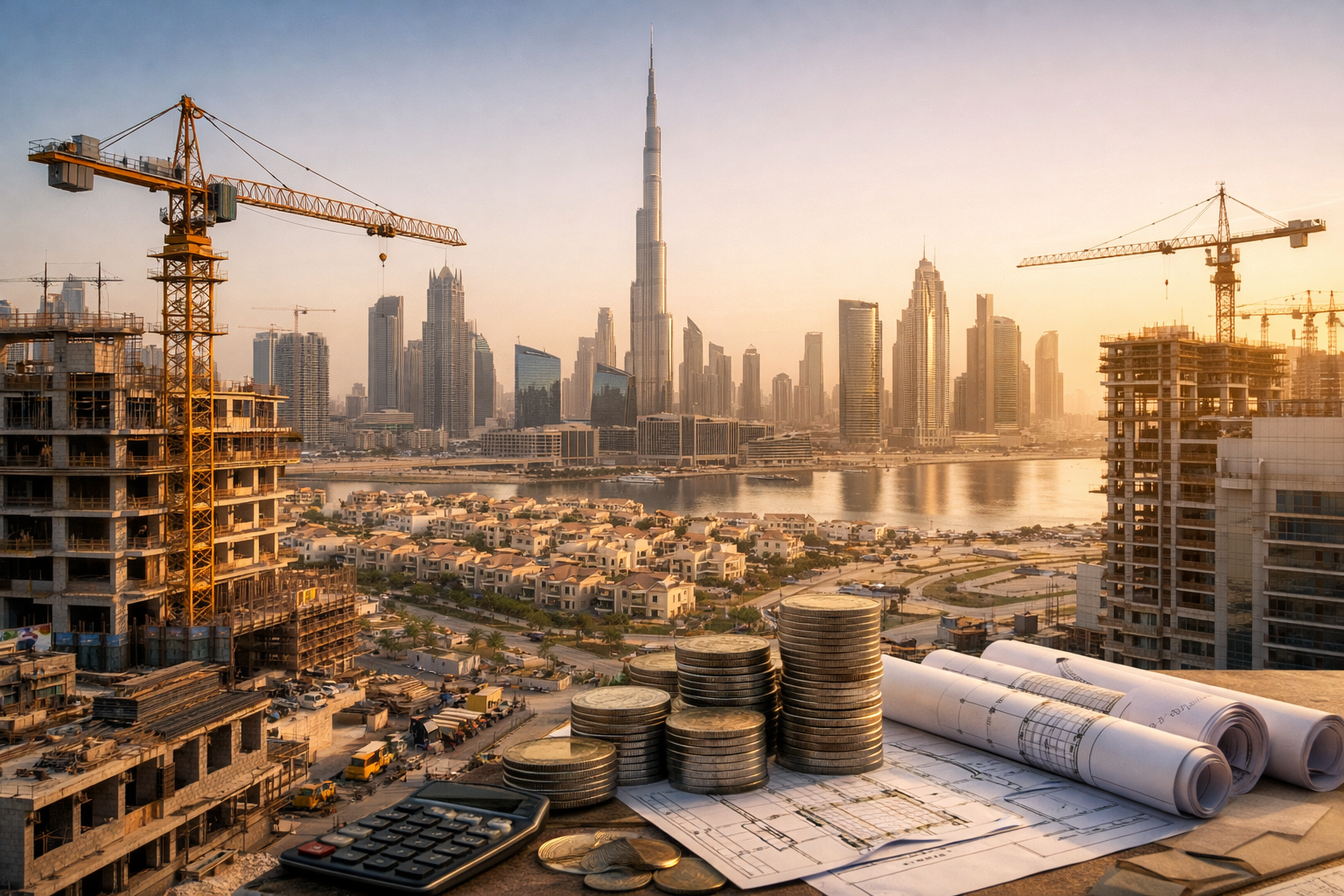
While land prices lead the margin squeeze narrative, construction costs continue to compound the challenge. Persistent inflation in raw materials, specialized labor shortages, and higher compliance standards have kept build costs elevated.
Developers are responding by renegotiating supplier contracts, locking in prices early, and leveraging long-term relationships with contractors. However, the ability to significantly reduce construction expenses remains limited without compromising quality or delivery timelines.
Value Engineering Becomes a Core Discipline
Value engineering has shifted from a cost-cutting exercise to a strategic discipline. Developers are reassessing design elements, material selections, and construction methodologies to maximize value per square foot. The focus is on durability, lifecycle efficiency, and buyer-perceived value rather than headline luxury features.
Financing Dynamics Tighten the Equation
Higher Capital Requirements and Risk Sensitivity
As margins narrow, lenders and equity partners are applying stricter feasibility assessments. Projects now require stronger pre-sales commitments, higher equity contributions, and conservative revenue assumptions to secure financing.
This environment favors well-capitalized developers with established track records, while smaller players face higher barriers to entry. Consolidation within the development sector is becoming more likely as financial discipline intensifies.
Off-Plan Sales Remain a Critical Lever
Despite margin pressures, off-plan sales continue to play a vital role in funding structures. However, developers are now balancing attractive payment plans with the need to protect cash flows and profitability. Overly aggressive incentives are being replaced with value-driven offerings, such as post-handover payment flexibility and service enhancements.
Investor Sentiment and Market Confidence
Selective Capital, Not Retreating Capital
Investor interest in Dubai real estate remains strong, but capital is becoming more selective and analytical. Investors are prioritizing projects with clear differentiation, reputable developers, and locations supported by long-term infrastructure planning.
Land price inflation has also shifted investor focus toward yield stability and exit visibility, rather than speculative appreciation alone. Developments that demonstrate sustainable rental demand and operational efficiency are attracting the most attention.
International Demand Anchors the Market
Foreign investors continue to underpin Dubai’s real estate demand, particularly from Europe, South Asia, the CIS, and the Middle East. Long-term residency programs, business-friendly regulations, and geopolitical stability reinforce Dubai’s position as a preferred real estate destination, even during margin-constrained cycles.
Pricing Power and Buyer Behavior
Limited Room for Price Escalation
While headline prices have risen in many areas, developers face limited flexibility to increase prices further without impacting absorption rates. Buyers are increasingly informed, comparing value across communities, developers, and project features.
As a result, pricing strategies are becoming more nuanced, focusing on value differentiation rather than broad-based price hikes. Projects offering superior design, community integration, and long-term livability are outperforming those relying solely on location branding.
End-User Demand Provides Stability
End-user buyers, particularly residents upgrading within Dubai, provide a stabilizing force amid margin pressures. Their preference for quality, functionality, and long-term ownership aligns with the market’s shift toward more disciplined, sustainable development practices.
Outlook: A Year of Discipline and Realignment
Margin Compression as a Market Filter
The current crunch year is acting as a natural filter within Dubai’s real estate sector. Projects with weak fundamentals, overleveraged structures, or speculative pricing are being delayed or redesigned, while well-planned developments continue to progress.
Margin compression is not signaling market weakness, but rather a transition toward maturity, where efficiency, scale, and execution capability define success.
Long-Term Resilience Remains Intact
Dubai’s long-term real estate outlook remains positive, supported by population growth, economic diversification, infrastructure investment, and global capital inflows. Developers who adapt to higher land costs through innovation, operational discipline, and strategic land banking are positioned to emerge stronger from this cycle.
Conclusion: Navigating the Crunch with Precision
Dubai real estate faces a defining year as land prices squeeze developer margins, reshaping how projects are conceived, financed, and delivered. The winners in this environment will be those who balance ambition with realism, leveraging data-driven planning, efficient design, and disciplined capital deployment.
This phase marks a shift from rapid expansion to strategic consolidation, reinforcing Dubai’s evolution into a globally competitive, professionally managed real estate market built for long-term sustainability rather than short-term speculation.