Dubai Property Market Overview 2025: Broad-Based Sales Momentum
Dubai’s real estate market in 2025 demonstrates robust, multi-segment expansion, with transaction volumes and deal values rising across luxury villas, branded residences, mid-income apartments, and affordable housing communities. Sales growth reflects strong end-user participation alongside consistent investor activity, reinforcing Dubai’s position as a global real estate investment and lifestyle destination.
This synchronized performance across price brackets signals a structurally balanced market supported by population growth, business inflows, infrastructure upgrades, and diversified residential products designed to meet multiple buyer profiles.
Luxury Real Estate Segment: Ultra-Prime Demand Remains Intense
Branded Residences and Waterfront Villas Lead Premium Sales
Luxury property sales in 2025 are driven by strong absorption in:
-
Branded residential towers linked to international hospitality groups
-
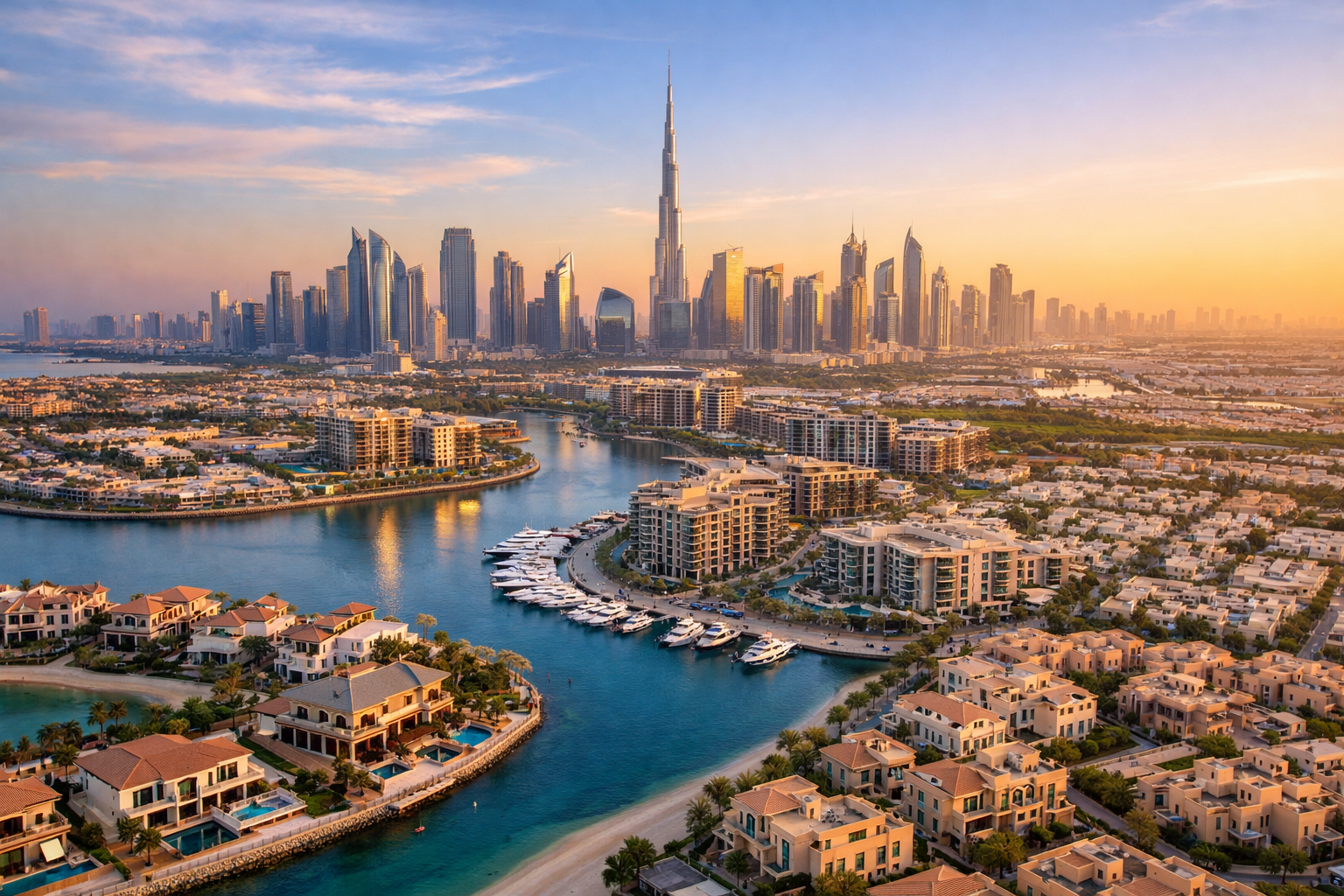
Beachfront villas in Palm Jumeirah, Jumeirah Bay, and emerging island districts
-
Canal-view penthouses in Business Bay and Dubai Water Canal corridors
High-net-worth buyers prioritize architectural exclusivity, privacy, concierge services, and curated lifestyle amenities, supporting premium pricing and rapid sell-outs of limited inventory.
Scarcity of waterfront plots and signature architecture sustains long-term capital value protection, reinforcing buyer confidence in trophy assets.
International Buyer Concentration in Prime Districts
Luxury transactions in prime districts continue to attract:
-
GCC private investors
-
European lifestyle buyers
-
Asian entrepreneurs seeking global diversification
Freehold ownership rights, transparent transaction systems, and long-term residency incentives enhance Dubai’s appeal as a stable wealth-preservation market.
Mid-Market Growth: Strong Absorption Across Urban Communities
Apartment Sales Surge in Transit-Oriented Zones
Mid-income residential communities show high sales velocity in:
-
Dubai South
-
Jumeirah Village Circle (JVC)
-
Dubai Hills Estate
-
Arjan and Motor City
These locations benefit from:
-
Expanding public transport access
-
Proximity to employment hubs
-
Integrated retail and educational facilities
Developers prioritize functional layouts, family-friendly amenities, and phased handovers, increasing buyer affordability while maintaining lifestyle standards.
Yield-Driven Investment in Mid-Range Assets
Mid-market properties continue to attract income-focused investors due to:
-
Competitive gross rental yields
-
Consistent tenant demand
-
Lower vacancy risks
These factors position mid-range assets as portfolio stabilizers, offering predictable returns alongside moderate capital appreciation.
Affordable Housing: Entry-Level Demand Expands Sharply
Suburban Communities See Rapid Sales Uptake
Affordable housing performs strongly in:
-
Dubailand residential zones
-
International City expansions
-
Al Furjan outskirts
-
Peripheral Dubai South districts
Projects focus on:
-
Compact yet efficient floor plans
-
Community retail clusters
-
Public transport connectivity
Price-sensitive buyers respond positively to low booking amounts and extended installment schedules, enabling ownership access for a wider workforce population.
Workforce Housing Supports Long-Term Urban Sustainability
Growth in logistics, aviation, healthcare, and education sectors sustains steady demand for:
-
Studio and one-bedroom apartments
-
Shared community housing
-
Budget-friendly family units
This demand profile ensures long-term occupancy stability, reinforcing sustainable development beyond speculative cycles.
Transaction Volume and Value Metrics Show Balanced Expansion
Rising Deal Counts Across All Price Bands
Transaction activity in 2025 reflects:
-
Higher off-plan registrations
-
Active resale market liquidity
-
Faster inventory turnover
Both primary sales and secondary market deals contribute to overall market velocity, maintaining pricing discipline without excessive volatility.
Average Sale Values Increase with Product Differentiation
Price movement varies based on:
-
Location hierarchy
-
Development quality
-
Unit positioning and views
Premium developments record stronger price acceleration, while affordable segments maintain measured appreciation aligned with income growth, preserving long-term affordability.
Developer Strategies: Adaptive Product Design and Payment Models
Flexible Financing Drives Sales Velocity
Developers stimulate demand using:
-
Post-handover payment plans
-
Deferred installment schedules
-
Reduced down payments
These financing structures lower entry barriers and encourage early buyer participation, especially in competitive master-planned communities.
Master-Planned Communities Enhance Buyer Confidence
Large-scale developments integrate:
-
Green open spaces and walking trails
-
Neighborhood retail centers
-
Schools and healthcare facilities
This integrated planning model improves livability and long-term resale value, attracting both end-users and institutional investors.
Commercial Real Estate Supports Residential Demand
Office Leasing Growth Attracts Long-Term Residents
Expansion in:
-
Free-zone company registrations
-
Financial and technology sectors
-
Professional services hubs
Creates housing demand near employment centers, supporting live-work community models and boosting residential transaction volumes.
Retail and Hospitality Reinforce Mixed-Use Appeal
Mixed-use districts benefit from:
-
High pedestrian activity
-
Tourism-driven retail sales
-
Dining and entertainment ecosystems
This diversification strengthens project cash flows and improves investment resilience across economic cycles.
Infrastructure Investment Strengthens Market Accessibility
Transport Connectivity Expands Residential Catchment Areas
Major infrastructure upgrades include:
-
Metro network extensions
-
Expressway capacity enhancements
-
Inter-emirate road links
Improved accessibility unlocks value in suburban districts, promoting geographically balanced growth across the city.
Smart City Frameworks Elevate Urban Experience
New developments increasingly incorporate:
-
Smart energy monitoring systems
-
Digital building management platforms
-
Automated access and parking solutions
These features support operational efficiency and align with sustainability benchmarks and investor ESG strategies.
Rental Market Strength Enhances Investment Attractiveness
High Occupancy Rates Sustain Investor Confidence
Rental absorption remains strong due to:
-
Continuous population inflows
-
Corporate relocations
-
Academic and healthcare employment growth
High occupancy levels stabilize income streams and reduce speculative risk.
Short-Term Leasing Boosts Prime Asset Returns
Tourism and business travel support demand for:
-
Serviced apartments
-
Branded residence rental pools
-
Flexible leasing arrangements
This layered rental market enhances revenue optimization for premium property owners.
Regulatory Framework Encourages Capital Inflows
Transparent Registration Systems Improve Market Trust
Digitized land registry platforms and escrow protections:
-
Reduce transaction risks
-
Improve cross-border investment confidence
-
Accelerate deal execution timelines
This regulatory clarity supports institutional-grade investment participation.
Residency Incentives Enhance Buyer Commitment
Ownership-linked residency options promote:
-
Long-term settlement
-
Family relocation planning
-
Business establishment decisions
Property acquisition becomes part of broader lifestyle and investment strategies, strengthening market continuity.
Sectoral Diversification Supports Sustainable Sales Growth
Healthcare and Education Expand Residential Catchments
Hospital clusters and academic zones generate:
-
Stable professional housing demand
-
Long-term family residency
-
Community-oriented neighborhood growth
These anchors stabilize demand beyond short-term market cycles.
Logistics and Trade Hubs Drive Workforce Housing Needs
Industrial corridors stimulate:
-
Affordable housing absorption
-
Transit-oriented residential development
-
Mid-market apartment leasing
This alignment between employment and housing sustains multi-tiered demand resilience.
Market Outlook: Continued Strength Across Property Categories
Project Launch Pipeline Reflects Developer Confidence
Developers advance:
-
Phased community expansions
-
Vertical residential towers
-
Mixed-use lifestyle districts
Launch strategies align closely with presales performance and demographic demand patterns.
Balanced Supply Maintains Pricing Stability
Phased construction schedules help prevent:
-
Inventory oversupply
-
Price distortions
-
Demand saturation
This disciplined delivery framework preserves long-term market equilibrium.
Conclusion: Dubai’s 2025 Real Estate Market Demonstrates Structural Depth
Dubai’s real estate sales growth across luxury, mid-market, and affordable housing segments confirms the market’s capacity to serve diverse buyer profiles while sustaining premium global positioning. Integrated urban planning, regulatory transparency, infrastructure investment, and developer innovation collectively drive transaction momentum.
This broad-based performance establishes Dubai as a multi-layered property ecosystem capable of delivering value through capital appreciation, rental income, and lifestyle-driven ownership, supporting sustained growth across all residential categories in 2025 and beyond.