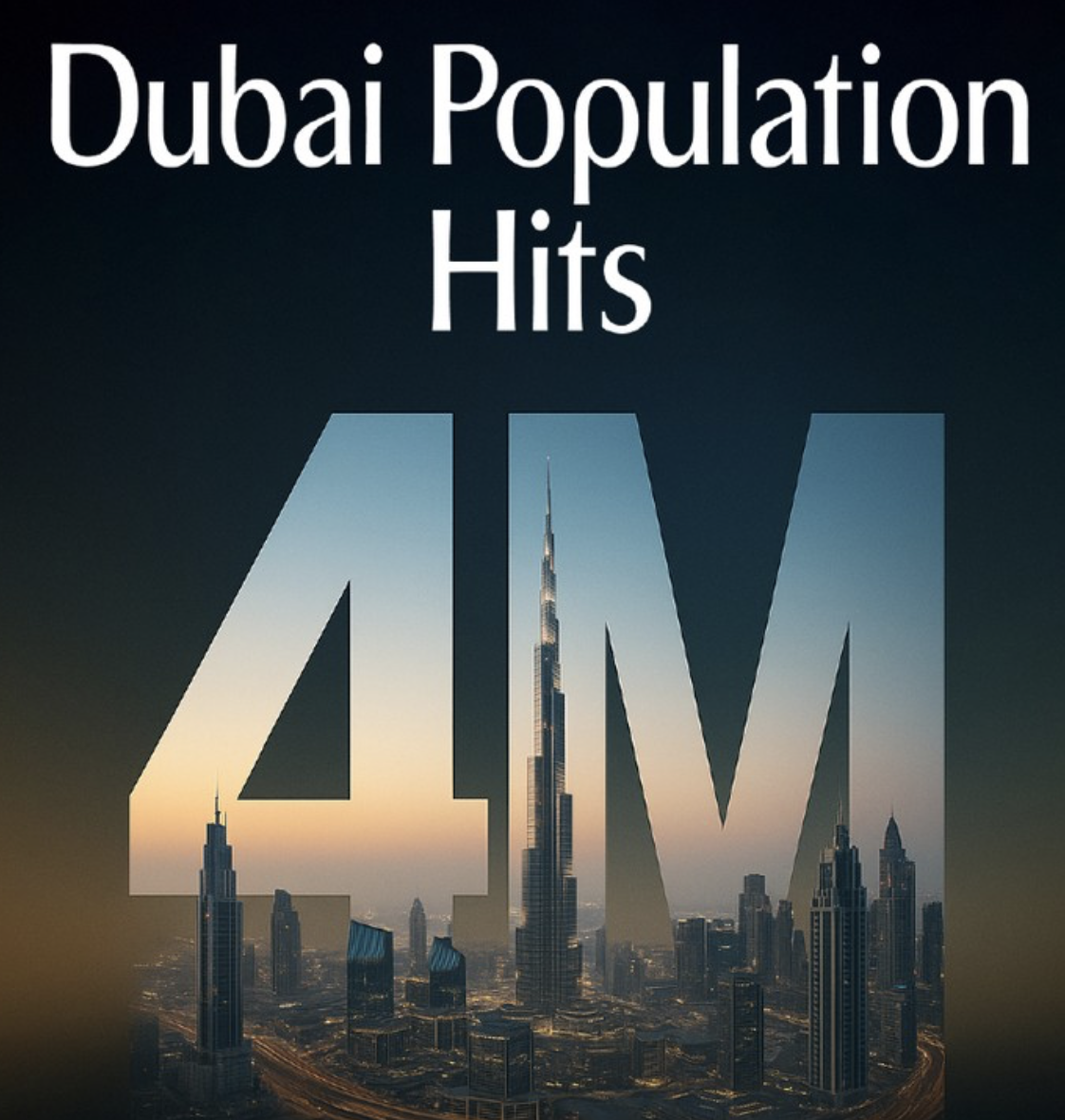
Dubai has officially crossed a significant milestone in 2025, with its population exceeding 4 million residents. This achievement underscores the emirate’s rapid transformation into a global hub for business, tourism, real estate, and innovation. The population surge is not merely a statistic—it reflects Dubai’s strong economic strategies, visionary leadership, and its ability to attract global talent. Understanding the implications of this growth is vital to assess the future of Dubai’s economy, infrastructure, and urban development.
The Driving Forces Behind Population Growth
Strategic Economic Vision
Dubai’s leadership has consistently pursued economic diversification, reducing reliance on oil revenues and focusing on trade, finance, tourism, technology, and real estate. This economic vision has created job opportunities that attract expatriates from across the globe.
Migration and Expatriate Community
With more than 85% of Dubai’s population consisting of expatriates, migration plays a dominant role in population expansion. The introduction of long-term residency visas, golden visas, and retirement options has encouraged expatriates to settle permanently.
Tourism and Hospitality Growth
Dubai welcomed millions of tourists annually, many of whom later transitioned into long-term residents. The success of Expo 2020, futuristic developments like Dubai Creek Harbour, and global events continue to attract new residents seeking business and lifestyle opportunities.
Innovation and Technology Hub
Dubai’s push toward becoming a smart city powered by AI, blockchain, and fintech innovations attracts global entrepreneurs, tech professionals, and startups who see the city as a launchpad for the Middle East and beyond.
Economic Implications of Crossing 4 Million
Real Estate and Housing Demand
The increase in residents directly fuels housing demand, especially in premium communities such as Downtown Dubai, Dubai Marina, and newer affordable zones like Dubailand and Dubai South. Real estate developers are expected to accelerate mixed-use projects, luxury villas, and affordable apartments to meet the rising demand.
Employment Opportunities
With population growth comes the need for expanded workforce opportunities. Sectors such as construction, healthcare, IT, logistics, and retail are experiencing a surge in demand for skilled labor. Dubai is also creating pathways for freelancers and entrepreneurs, boosting innovation-driven job creation.
Retail and Consumer Market Expansion
A population of over 4 million residents means a broader consumer base for retail, e-commerce, and lifestyle services. From luxury shopping at Dubai Mall to online grocery platforms, businesses are poised to thrive with increased purchasing power.
Urban Infrastructure and Transportation Challenges
Transportation Upgrades
Population growth necessitates expanding transportation systems. Dubai Metro expansions, new bus and tram lines, and the upcoming Dubai Autonomous Transportation Strategy aim to reduce congestion and support sustainability goals.
Smart City Initiatives
Dubai’s smart city roadmap ensures efficient services across utilities, traffic management, and public safety. AI-driven systems are already being deployed to manage traffic flow, emergency services, and renewable energy optimization.
Housing and Urban Planning
The government is focused on sustainable urban development, ensuring housing projects align with environmental goals. Green communities, energy-efficient buildings, and enhanced public amenities are part of the city’s long-term vision.
Healthcare and Education Expansion
Healthcare Services
With a growing population, the demand for healthcare infrastructure is at an all-time high. Dubai continues to invest in world-class hospitals, telemedicine services, and AI-powered diagnostics to ensure quality healthcare for residents.
Education Sector Growth
The influx of expatriate families has increased demand for international schools, universities, and vocational training centers. Dubai aims to establish itself as a global education hub, attracting students from around the world.
Sustainability and Environmental Impact
Energy and Resources
A population beyond 4 million requires sustainable energy management. Dubai is advancing solar power projects like the Mohammed bin Rashid Al Maktoum Solar Park to secure renewable energy for the future.
Water and Waste Management
Dubai is investing in desalination technologies, recycling facilities, and waste-to-energy plants to address the environmental impact of population growth.
Sustainable Living Initiatives
Green transportation, electric vehicles, and sustainable urban communities are being prioritized to align with Dubai’s goal of achieving net-zero carbon emissions by 2050.
Opportunities for Investors and Businesses
Real Estate Investments
Crossing the 4-million milestone strengthens investor confidence in Dubai’s property market. From luxury projects like Palm Jebel Ali to affordable housing, opportunities abound for global investors.
Startup and Innovation Ecosystem
Dubai’s pro-business policies, tax incentives, and global connectivity make it an attractive destination for startups. The surge in residents ensures a growing customer base for innovative solutions in fintech, healthtech, and e-commerce.
Retail and Hospitality Expansion
With millions of residents and tourists, Dubai’s retail and hospitality sectors continue to expand. Investors are eyeing new malls, entertainment hubs, and high-end resorts, ensuring steady returns.
Future Outlook: What Lies Ahead for Dubai
Global Competitiveness
Dubai aims to solidify its position as a leading global city, competing with hubs like Singapore, Hong Kong, and London. Population growth ensures a diverse talent pool and a dynamic workforce.
Technological Advancements
With continued investments in AI, blockchain, and smart infrastructure, Dubai is set to remain a future-ready city capable of adapting to global economic shifts.
Balanced Growth and Sustainability
While growth brings opportunities, Dubai’s leadership remains committed to balancing economic expansion with sustainability and quality of life for residents.
Conclusion
Dubai crossing the 4-million population milestone in 2025 is more than just a demographic achievement—it symbolizes the city’s rising global influence. From real estate and infrastructure development to technology and sustainability initiatives, this growth unlocks a new chapter in Dubai’s journey. As the emirate continues to welcome talent, businesses, and investors, its future remains firmly positioned as one of the world’s most dynamic and forward-thinking cities.