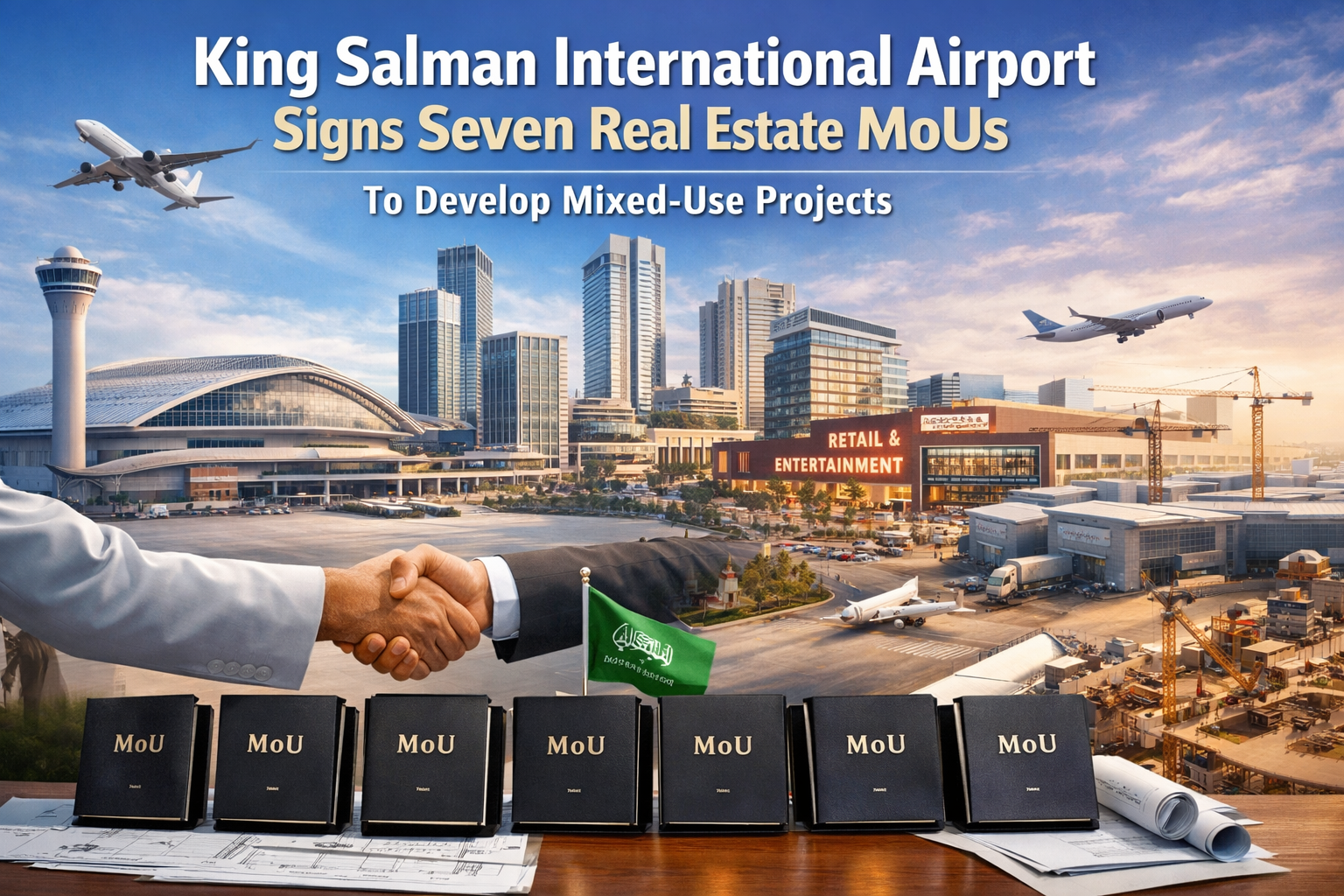
King Salman International Airport has signed seven real estate Memoranda of Understanding (MoUs) to accelerate the development of transformative mixed-use projects across its expansive master plan. The agreements mark a decisive step in positioning the airport as a fully integrated aviation-centric urban destination, aligned with the ambitious objectives of Saudi Vision 2030.
The newly signed MoUs focus on the design, construction, and operation of high-value real estate assets, including commercial complexes, hospitality developments, logistics hubs, office towers, retail destinations, entertainment districts, and residential communities. These projects will redefine airport-driven urbanization in the region and create a globally competitive aerotropolis ecosystem in Riyadh.
Seven MoUs to Drive Mixed-Use Urban Development
The seven real estate MoUs introduce a structured framework for public-private collaboration, leveraging institutional investors, regional developers, and international operators to deliver scalable mixed-use assets. The agreements target:
-
Commercial office districts designed for multinational corporations and aviation-linked enterprises
-
Hospitality clusters with premium hotels and serviced apartments
-
Retail and lifestyle boulevards anchored by global brands
-
Integrated logistics parks supporting air cargo and supply chain networks
-
Residential communities catering to airport workforce and business professionals
-
Entertainment and leisure facilities to support passenger transit and local visitors
-
Smart mobility infrastructure enhancing connectivity within the airport zone
These developments are embedded within a long-term real estate strategy aimed at transforming the airport into a self-sustaining economic zone.
Alignment with Saudi Arabia’s Economic Diversification Strategy
The MoUs reinforce the Kingdom’s strategic direction to diversify beyond hydrocarbons and strengthen non-oil GDP contributions. As a flagship project under Public Investment Fund, King Salman International Airport serves as a catalyst for infrastructure-led economic expansion.
The airport is projected to handle up to 120 million passengers annually by 2030, with capacity expected to scale significantly in subsequent decades. The integrated real estate developments will complement aviation operations, enabling diversified revenue streams from:
-
Commercial leasing
-
Hospitality management
-
Retail concessions
-
Property sales and long-term leases
-
Logistics and warehousing services
This model reflects global best practices in airport city planning while maintaining alignment with Saudi Arabia’s regulatory and investment frameworks.
Aviation-Led Urban Transformation in Riyadh
The real estate MoUs are structured around a master-planned urban concept designed to convert the airport footprint into a multi-functional economic district. Rather than functioning solely as a transport hub, King Salman International Airport is being engineered as a destination in its own right.
Commercial and Business District Development
Dedicated office and commercial zones will attract international companies seeking proximity to air connectivity and logistics infrastructure. The integration of Grade A office space within airport grounds enhances Riyadh’s competitiveness as a regional business headquarters hub.
Key features include:
-
Smart building technologies
-
Sustainable architectural design
-
Flexible leasing models
-
Direct transport links to terminals
These features position the development as a high-performance commercial ecosystem rather than a traditional airport periphery zone.
Hospitality and Lifestyle Infrastructure
The MoUs incorporate the establishment of luxury and mid-scale hospitality brands, conference centers, and lifestyle destinations. With Riyadh emerging as a major tourism and events market, the airport’s hospitality cluster will support:
-
Business travel demand
-
Transit passenger accommodation
-
International conferences and exhibitions
-
Cultural and entertainment programming
The hospitality component ensures that the airport environment remains commercially vibrant beyond passenger throughput.
Integrated Logistics and Cargo Real Estate Solutions
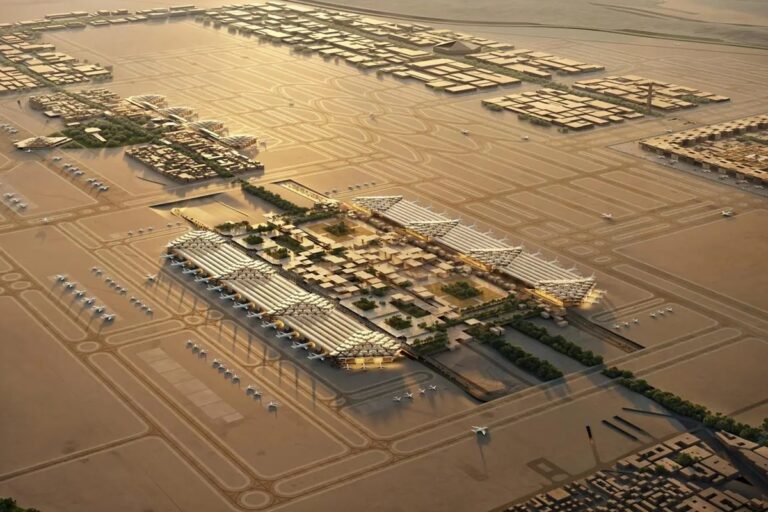
Given Riyadh’s growing role in global trade corridors, logistics-focused real estate forms a central pillar of the MoU strategy. Warehousing facilities, cold storage units, and advanced cargo terminals will be developed to enhance supply chain efficiency.
Strategic advantages include:
-
Direct runway access
-
High-capacity cargo handling facilities
-
Digitized inventory systems
-
Cross-border trade facilitation
The logistics ecosystem will strengthen Saudi Arabia’s position as a regional distribution hub linking Asia, Europe, and Africa.
Sustainability and Smart Infrastructure Framework
Each MoU embeds sustainability benchmarks consistent with the Kingdom’s environmental commitments. The real estate projects will prioritize:
-
Energy-efficient building systems
-
Renewable energy integration
-
Water conservation technologies
-
Smart traffic and mobility management
Green infrastructure standards will ensure long-term operational resilience while reducing environmental impact. This approach enhances investor confidence and supports international ESG compliance standards.
Investment and Capital Mobilization Impact
The seven MoUs represent substantial capital inflows into Riyadh’s real estate market. Institutional investors and private developers will deploy structured financing mechanisms, including:
-
Joint venture partnerships
-
Real estate investment trusts (REITs)
-
Long-term concession agreements
-
Build-operate-transfer (BOT) models
This diversified capital structure reduces fiscal exposure while accelerating project delivery timelines. The agreements also signal strong market confidence in the airport’s long-term commercial viability.
Employment Generation and Economic Multipliers
The mixed-use developments are expected to generate significant employment opportunities across construction, operations, hospitality, retail, and logistics sectors. Indirect economic multipliers will further benefit:
-
SMEs supporting service contracts
-
Technology providers delivering smart infrastructure
-
Transportation and mobility operators
-
Supply chain vendors
The integration of real estate and aviation operations amplifies economic value creation beyond direct airport revenues.
Riyadh’s Positioning as a Global Aviation and Business Hub
The signing of seven real estate MoUs enhances Riyadh’s global competitiveness in aviation-linked urban development. By combining infrastructure expansion with diversified property assets, King Salman International Airport establishes a scalable blueprint for airport-centric cities worldwide.
The development reinforces Riyadh’s strategic position as:
-
A gateway to regional and international markets
-
A center for multinational corporate operations
-
A logistics and cargo distribution powerhouse
-
A destination for tourism and global events
This multi-dimensional framework ensures sustained growth across aviation, real estate, and commercial sectors.
Long-Term Vision and Phased Implementation
The MoUs will be executed through phased development cycles, aligned with airport expansion milestones. Each phase will integrate land-use planning, infrastructure deployment, and commercial leasing strategies to maintain synchronized growth.
Projected outcomes include:
-
Increased land value appreciation
-
Diversified revenue streams
-
Enhanced passenger experience
-
Strengthened investor returns
The phased approach mitigates risk while enabling adaptive scalability based on market demand.
Conclusion: A Landmark Step in Aviation-Driven Real Estate Development
The signing of seven real estate MoUs by King Salman International Airport represents a decisive advancement in Saudi Arabia’s infrastructure modernization agenda. The integration of mixed-use projects within the airport master plan establishes a sustainable, investment-ready urban ecosystem capable of delivering long-term economic returns.
With strategic alignment to Saudi Vision 2030, robust institutional backing from the Public Investment Fund, and Riyadh’s accelerating global prominence, the development marks a defining chapter in the evolution of aviation-linked real estate across the Middle East.