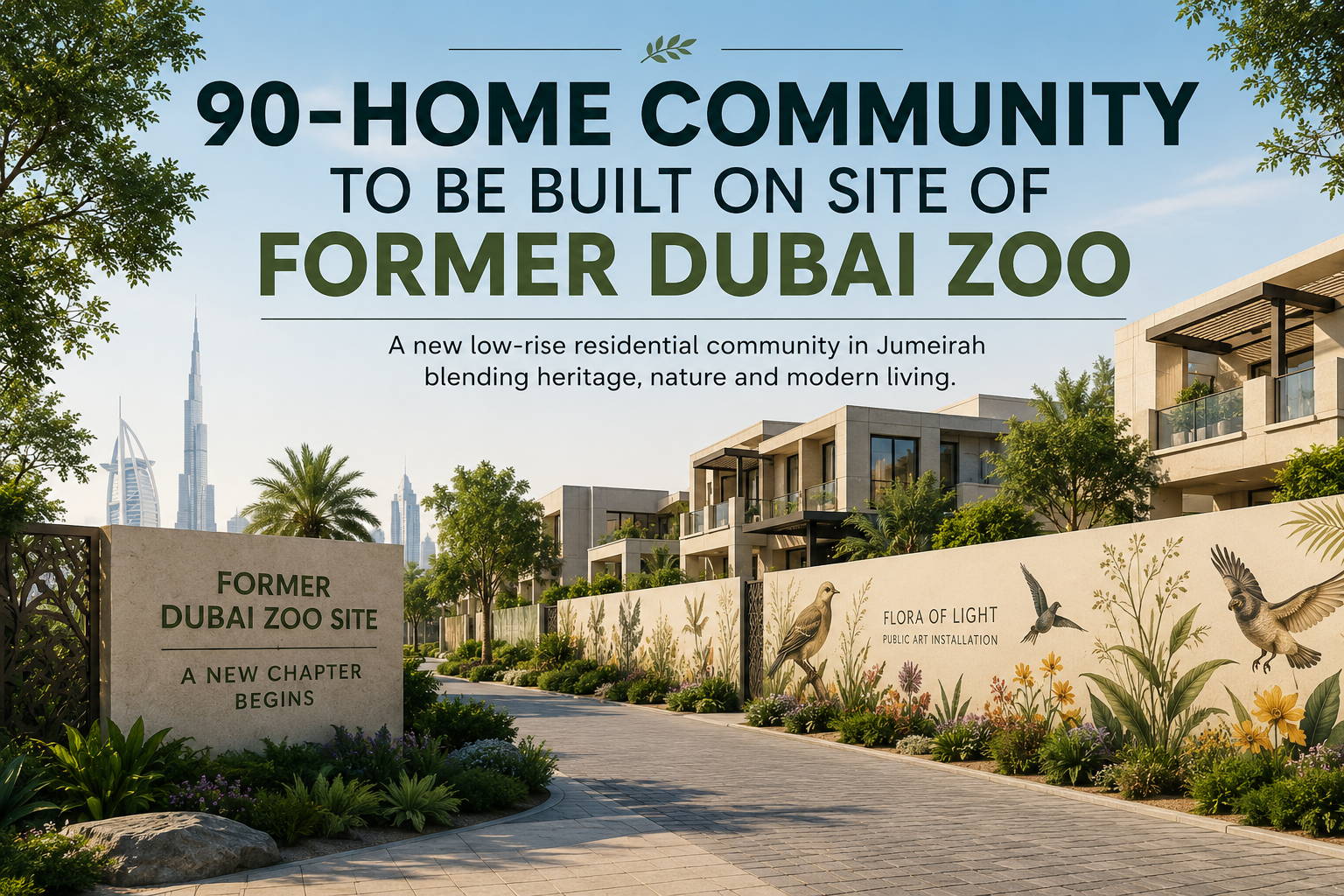
A landmark piece of Dubai’s history is preparing for a major transformation. The former Dubai Zoo site in Jumeirah 1 is being redeveloped into a new low-rise residential community featuring 90 homes, landscaped courtyards and green spaces.
The redevelopment represents a significant change for a site that has remained part of Dubai’s collective memory for decades. The former zoo closed in 2017, and the location is now moving towards a residential future while retaining elements that recognise its cultural and environmental heritage.
The project is being developed by Shamal Holding, with Dutco Construction appointed to carry out the main construction works. The construction contract marks an important step forward for the development.
From Dubai Zoo to a Modern Residential Community
The former Dubai Zoo was once a familiar destination for generations of Dubai residents and visitors. Its transformation into a residential development illustrates how established urban sites are being repurposed as Dubai continues to evolve.
Rather than introducing a large high-rise development, the project is planned as a low-rise community of 90 homes. The design places emphasis on privacy, landscaped areas, open spaces and natural elements, creating a residential environment that is intended to feel different from Dubai’s more densely developed urban districts.
The development’s relatively limited number of homes could also give the project a more private and community-oriented character.
90 Homes Surrounded by Green Spaces
One of the defining characteristics of the new community will be its emphasis on greenery.
The 90 homes are planned around landscaped courtyards and green spaces, creating a residential setting that integrates nature into the development. This approach reflects the growing importance of outdoor areas, walkability and landscaping in contemporary Dubai residential projects.
For residents, landscaped communal areas can provide spaces for relaxation and interaction while helping create a stronger sense of place.
The project’s low-rise format is also particularly relevant to its Jumeirah setting, where residential neighbourhoods often have a more established, low-density character compared with Downtown Dubai, Business Bay and other high-rise districts.
Public Art Celebrates the Site’s History
The redevelopment is not simply about replacing an old landmark with new homes. Shamal Holding has also incorporated a cultural element into the site’s transition.
A 710-metre-long public art installation has been created around the former Dubai Zoo site. Called “Flora of Light”, the project features 12 original artworks by Dubai-based multidisciplinary artist Solimar Miller.
The artworks draw inspiration from the UAE’s indigenous flora and fauna and are designed to acknowledge the site’s natural heritage while introducing a visual connection between its past and future.
The installation forms part of Dubai’s wider Public Art Strategy and will remain on display for two years.
What Is Flora of Light?
“Flora of Light” uses ecological storytelling to reinterpret the identity of the former zoo site.
The 12-piece collection draws inspiration from indigenous UAE trees, plants and wildlife. Instead of treating the construction hoardings as temporary barriers, the project transforms them into a public-facing art canvas.
This approach gives pedestrians and residents an opportunity to experience the site’s cultural transformation while construction progresses.
It also demonstrates how public art can become part of the placemaking process rather than being added only after a development has been completed.
Shamal Holding’s Approach to Place-Led Development
The project is part of Shamal Holding’s broader approach to creating distinctive destinations and residential communities in Dubai.
The company’s real estate portfolio includes master-planned communities, residential districts and major destinations across the emirate. Its involvement in the former Dubai Zoo site demonstrates an approach that combines property development with cultural and environmental considerations.
By retaining a connection with the site’s history, the development aims to create a stronger identity than a conventional residential project.
This is increasingly important in Dubai, where new communities compete not only on location and property specifications but also on lifestyle, landscaping, architecture and the overall experience they offer residents.
Why Jumeirah Makes the Project Significant
Location is likely to be one of the most important aspects of the development.
Jumeirah is one of Dubai’s most established residential areas and is known for its coastal setting, established communities and proximity to major destinations. A new low-rise residential development in such an established district is therefore notable.
Unlike newly emerging areas on Dubai’s outskirts, Jumeirah has an existing urban environment, established infrastructure and a strong residential identity.
The redevelopment of the former zoo site could therefore contribute to the continued evolution of one of Dubai’s most recognisable neighbourhoods.
A Different Direction for Dubai Residential Development
Dubai’s property market is well known for its skyscrapers, luxury towers and large master-planned communities. However, the former Dubai Zoo project demonstrates another side of the city’s residential development strategy.
The 90-home community is relatively small compared with many major Dubai projects. Its focus appears to be on low-rise living, landscaping, privacy and placemaking rather than simply maximising the number of residential units.
This could appeal to buyers and residents looking for a quieter residential environment while remaining close to the city’s major attractions and business districts.
The Importance of Green Space in Dubai Communities
Green spaces are becoming increasingly important in residential development across Dubai.
As the city becomes more densely populated, landscaped courtyards, gardens, shaded walkways and outdoor communal areas can help improve the everyday residential experience.
For developers, green spaces can also contribute to a property’s identity and market positioning. For residents, they provide opportunities for outdoor recreation, relaxation and community interaction.
The former Dubai Zoo development’s emphasis on landscaped areas therefore aligns with a broader shift towards creating residential communities that combine built environments with natural elements.
A Link Between Dubai’s Past and Future
Perhaps the most interesting aspect of the project is the relationship between its historical identity and its future purpose.
The former zoo represents an earlier stage of Dubai’s development. The new community represents the city’s continued growth and changing approach to urban planning.
The public art installation provides a bridge between those two periods. By celebrating local wildlife and plant life, “Flora of Light” acknowledges the site’s history while preparing it for a completely different use.
This combination of heritage, art, landscaping and residential development gives the project a distinctive narrative.
What the Development Could Mean for Dubai Property

The new community also highlights the continuing evolution of Dubai’s residential property market.
Developers are increasingly competing through location, design, amenities and community experience rather than relying solely on the size of a development.
A limited collection of 90 homes in an established neighbourhood could attract interest from buyers who prioritise exclusivity and location.
However, the investment potential of any individual property will ultimately depend on factors such as pricing, property specifications, ownership structure, service charges, surrounding supply, rental demand and future market conditions.
Construction Marks a Major Milestone
The appointment of Dutco Construction to begin the main works represents an important milestone for the project.
Construction activity signals that the former zoo site is moving beyond the planning and concept stage and towards physical transformation.
For Dubai’s wider real estate market, construction progress on projects in established locations can also provide an indication of how developers are continuing to bring new residential inventory into mature communities.
A New Residential Identity for a Historic Site
The former Dubai Zoo site is now positioned to become a completely different type of destination.
Instead of animal enclosures and visitor facilities, the site will eventually contain homes, landscaped courtyards and residential spaces. Yet the development’s public art initiative ensures that the site’s historical identity is not completely forgotten.
The 710-metre “Flora of Light” installation provides a temporary but highly visible reminder of the location’s past while construction progresses.
Dubai’s Urban Transformation Continues
The redevelopment of the former Dubai Zoo site reflects a broader pattern across Dubai: established sites are being reimagined to meet the needs of a growing and increasingly sophisticated city.
The emirate’s property sector is continuing to evolve beyond traditional towers and large-scale developments. Smaller, carefully planned residential communities with strong identities are becoming an important part of the city’s real estate landscape.
The 90-home Jumeirah project demonstrates how redevelopment can combine residential needs with cultural storytelling, landscaping and public art.
Final Thoughts
The transformation of the former Dubai Zoo site into a 90-home residential community marks a significant new chapter for one of Jumeirah’s most recognisable historic locations.
Led by Shamal Holding, with Dutco Construction appointed for the main works, the project will introduce a low-rise residential environment featuring landscaped courtyards, green spaces and a strong emphasis on privacy.
Meanwhile, the 710-metre “Flora of Light” public art installation by Solimar Miller provides a creative tribute to the site’s history and UAE’s indigenous natural heritage.
As Dubai continues to expand and modernise, projects like this demonstrate that urban development does not always mean starting from scratch. Sometimes, the most interesting developments emerge when a historic location is carefully reimagined for the next generation.
Frequently Asked Questions
What is being built on the former Dubai Zoo site?
The former Dubai Zoo site in Jumeirah 1 is being redeveloped into a low-rise residential community comprising 90 homes, with landscaped courtyards and green spaces.
Who is developing the former Dubai Zoo site?
The project is being developed by Shamal Holding, which has appointed Dutco Construction to undertake the main construction works.
Where is the new 90-home community located?
The development is located on the site of the former Dubai Zoo in Jumeirah 1, Dubai.
What is the Flora of Light installation?
“Flora of Light” is a public art project created by Dubai-based artist Solimar Miller. It consists of 12 original artworks displayed across a 710-metre-long installation surrounding the former zoo site.
How long will the public art installation remain?
The “Flora of Light” installation is planned to remain on display for two years as part of Dubai’s Public Art Strategy.
Why is the former Dubai Zoo redevelopment important?
The project is significant because it transforms a historically important Dubai site into a modern residential community while incorporating public art, landscaping and references to the site’s natural heritage.
Will the new development be high-rise?
No. The project is planned as a low-rise residential community, with 90 homes surrounded by landscaped courtyards and green spaces.
What does the project indicate about Dubai’s property market?
The development highlights Dubai’s continuing focus on creating diverse residential environments, including smaller, low-rise communities that emphasise privacy, greenery, lifestyle and location alongside conventional high-rise developments.
Sources: Arabian Business, Gulf News and Shamal Holding project information.