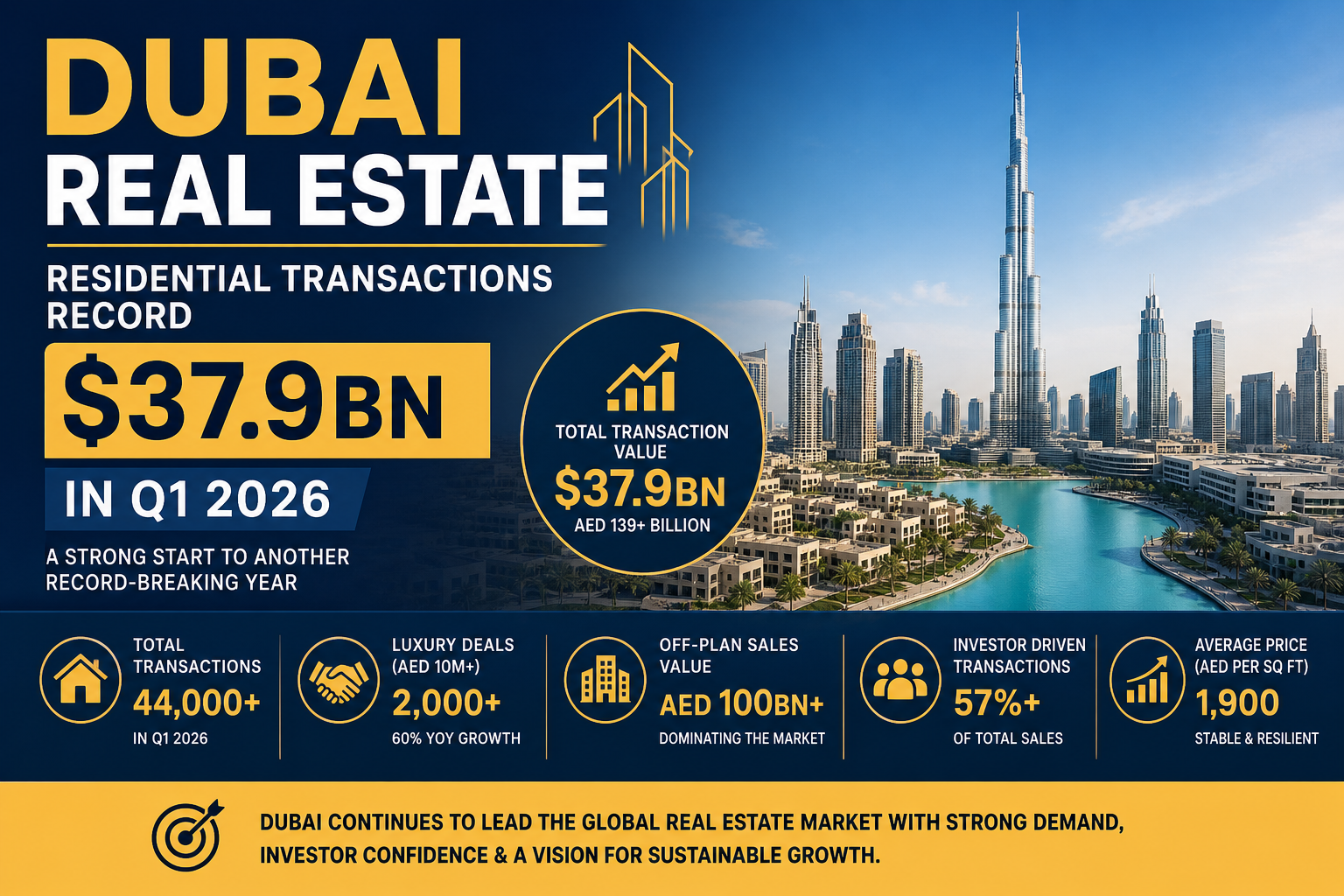
Dubai’s real estate sector has once again proven why it sits at the center of global investment conversations. In the first quarter of 2026, residential property transactions surged to approximately $37.9 billion (AED 139+ billion), reflecting a powerful combination of sustained demand, strategic investment inflows, and high-value property deals. According to recent market data, the city recorded over 44,000 transactions during this period, showcasing not just volume but remarkable value growth.
What’s particularly interesting is that while transaction volumes showed slight moderation compared to late 2025, the overall transaction value remained strong, indicating a clear shift toward higher-priced assets. This means buyers aren’t stepping back—they’re simply becoming more selective, focusing on premium properties and long-term returns.
When you step back and look at the broader picture, Dubai’s Q1 performance isn’t just about numbers—it reflects a maturing market. Instead of speculative buying, we’re seeing data-driven, strategic investment behavior, which is often a sign of a stable and sustainable property ecosystem.
What’s Driving the $37.9bn Residential Boom?
The surge in residential transactions didn’t happen in isolation. It’s the result of several overlapping forces that continue to position Dubai as a magnet for global investors.
First, high-net-worth individuals (HNWIs) are pouring capital into Dubai’s property market. The city’s tax-free environment, strong infrastructure, and luxury lifestyle offerings make it an attractive destination for wealth preservation. In fact, transactions above AED 10 million jumped significantly, with more than 2,000 luxury deals recorded in just one quarter, marking a sharp increase year-on-year.
Second, Dubai’s population growth is playing a critical role. With continuous inflows of expatriates and entrepreneurs, housing demand remains structurally strong. This demand isn’t limited to affordable housing; it spans across mid-range and luxury segments, ensuring balanced growth across the market.
Finally, investor psychology has evolved. Buyers today are no longer chasing quick flips—they’re focusing on long-term capital appreciation and rental yields. This shift has helped stabilize the market and reduce volatility, making Dubai even more appealing to institutional investors.
Off-Plan Properties Dominating the Market
If there’s one segment that clearly stands out in Q1 2026, it’s off-plan real estate. These properties accounted for a massive share of total transactions, contributing over AED 100 billion in value during the quarter.
Why is this happening? The answer lies in flexibility and future potential. Developers are offering attractive payment plans, often spreading costs over several years. This lowers the entry barrier for investors and allows them to secure premium assets without immediate full capital commitment.
Another factor is price appreciation potential. Off-plan properties are typically priced lower than completed units, giving investors room for capital gains by the time the project is delivered.
Flexible Payment Structures Explained
These plans often include:
- Minimal upfront payments
- Post-handover installment options
- Developer-backed financing alternatives
This financial flexibility is reshaping how people invest in real estate, making Dubai one of the most accessible luxury markets globally.
Rise of Luxury and Ultra-Luxury Properties
Dubai’s luxury property segment is no longer niche—it’s a driving force. The city recorded a surge in ultra-luxury transactions, with properties priced above $10 million seeing over 60% year-on-year growth.
What’s fueling this trend? It’s a mix of lifestyle appeal and investment logic. High-end buyers are drawn to waterfront villas, branded residences, and exclusive communities that offer privacy and prestige.
At the same time, these properties are viewed as safe-haven assets, especially during periods of global uncertainty. Investors are diversifying portfolios by allocating funds into tangible, high-value real estate in stable markets like Dubai.
Market Behavior Shift: From Fast Growth to Smart Investing
Here’s where things get interesting. The market isn’t just growing—it’s evolving. Buyers are becoming more analytical, focusing on value rather than hype.
This “selective phase,” as analysts describe it, means:
- Increased due diligence before purchase
- Greater emphasis on location and developer reputation
- Preference for properties with strong rental yields
This shift doesn’t indicate weakness—it actually signals market maturity, which is crucial for long-term sustainability.
Apartment vs Villa Demand Trends
Dubai’s property landscape offers a fascinating contrast between apartments and villas. Apartments continue to dominate transaction volumes, largely due to affordability and availability. However, villas and townhouses are seeing strong demand due to limited supply and lifestyle preferences.
Post-pandemic trends have pushed buyers toward larger living spaces, especially among families. This has created a unique dynamic where apartments drive volume, but villas drive value.
Regional and Global Influences on Dubai Real Estate
Global events are always a factor in real estate markets, and Dubai is no exception. In Q1 2026, geopolitical tensions briefly impacted transaction volumes, particularly in March, causing a temporary slowdown.
However, the resilience of Dubai’s market is evident in how quickly it stabilized. Investors continued to focus on long-term opportunities, reinforcing the city’s reputation as a safe and reliable investment hub.
Mortgage vs Cash Buyers in 2026
Another notable trend is the shift in financing behavior. Mortgage-backed purchases accounted for around 50% of transactions, slightly lower than the previous year.
This indicates that more buyers are using strategic financing, not out of necessity but as a tool to maintain liquidity. It’s a sophisticated approach that reflects the evolving profile of Dubai’s investor base.
Supply Pipeline and Future Inventory
Looking ahead, Dubai has a significant supply pipeline, with tens of thousands of units expected to be delivered in 2026 alone.
This raises an important question: will supply outpace demand?
While there are concerns about oversupply, current demand levels—driven by population growth and investor interest—suggest that the market can absorb new inventory, especially in well-located communities.
Rental Market Trends and Yield Analysis
The rental market is showing signs of stabilization. After years of rapid growth, rental increases are now moderating, creating a more balanced environment for tenants and landlords alike.
This is actually a positive development. A stable rental market ensures sustainable yields and reduces the risk of sudden price corrections.
Top Investment Areas in Dubai
Certain communities continue to dominate investor interest, including:
- Jumeirah Village Circle
- Dubai South
- DAMAC Islands
These areas offer a mix of affordability, infrastructure development, and future growth potential, making them hotspots for both local and international buyers.
Price Trends and Per Square Foot Analysis
Average property prices have remained resilient, with figures hovering around AED 1,900 per square foot for residential properties.
| Property Type | Average Price (AED/sq ft) |
|---|---|
| Apartments | ~2,100 |
| Villas | ~2,350 |
This pricing stability is a key factor behind investor confidence.
Investor Sentiment and Market Confidence
Investor sentiment remains strong, driven by:
- Stable economic policies
- High rental yields
- Global demand
More than 57% of transactions are driven by investors, highlighting Dubai’s appeal as a global investment destination.
Dubai vs Global Real Estate Markets
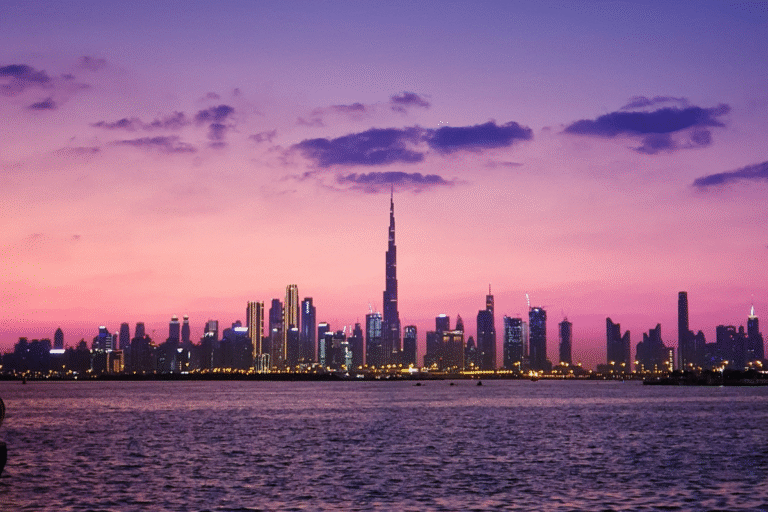
Compared to cities like London or New York, Dubai offers:
- Higher rental yields
- No property tax
- Strong capital appreciation potential
This unique combination gives Dubai a competitive edge on the global stage.
Opportunities for First-Time Buyers
For new buyers, the market offers multiple entry points, especially in off-plan developments. Flexible payment plans and competitive pricing make it easier than ever to enter the market.
Risks and Challenges in 2026
No market is without risks. Key concerns include:
- Potential oversupply
- Global economic uncertainty
- Geopolitical tensions
However, Dubai’s track record suggests resilience in navigating such challenges.
Government Policies and Regulatory Impact
Dubai continues to introduce investor-friendly policies, including long-term visas and streamlined property ownership laws. These initiatives are key drivers of sustained market growth.
Technology and Innovation in Real Estate
PropTech is transforming how properties are bought and sold. From virtual tours to blockchain-based transactions, technology is enhancing transparency and efficiency.
Expert Insights and Market Predictions
Analysts widely agree that Dubai’s market is entering a more disciplined growth phase, characterized by stability rather than speculation. This is a positive sign for long-term investors.
Conclusion
Dubai’s residential real estate market hitting $37.9 billion in Q1 2026 isn’t just a milestone—it’s a signal. A signal that the city has transitioned from rapid expansion to structured, intelligent growth. Investors are more informed, transactions are more valuable, and the market is more resilient than ever.
If current trends continue, Dubai is well on its way to strengthening its position as one of the world’s most dynamic and attractive real estate markets.
FAQs
1. Why did Dubai real estate reach $37.9bn in Q1 2026?
Strong investor demand, luxury property growth, and off-plan sales contributed to the surge.
2. Is Dubai real estate still a good investment in 2026?
Yes, due to high yields, tax benefits, and strong long-term growth potential.
3. Which properties are most in demand?
Off-plan apartments and luxury villas are leading the market.
4. Are property prices rising in Dubai?
Prices remain stable with moderate growth, especially in premium segments.
5. What risks should investors consider?
Oversupply and global economic conditions are key factors to watch.