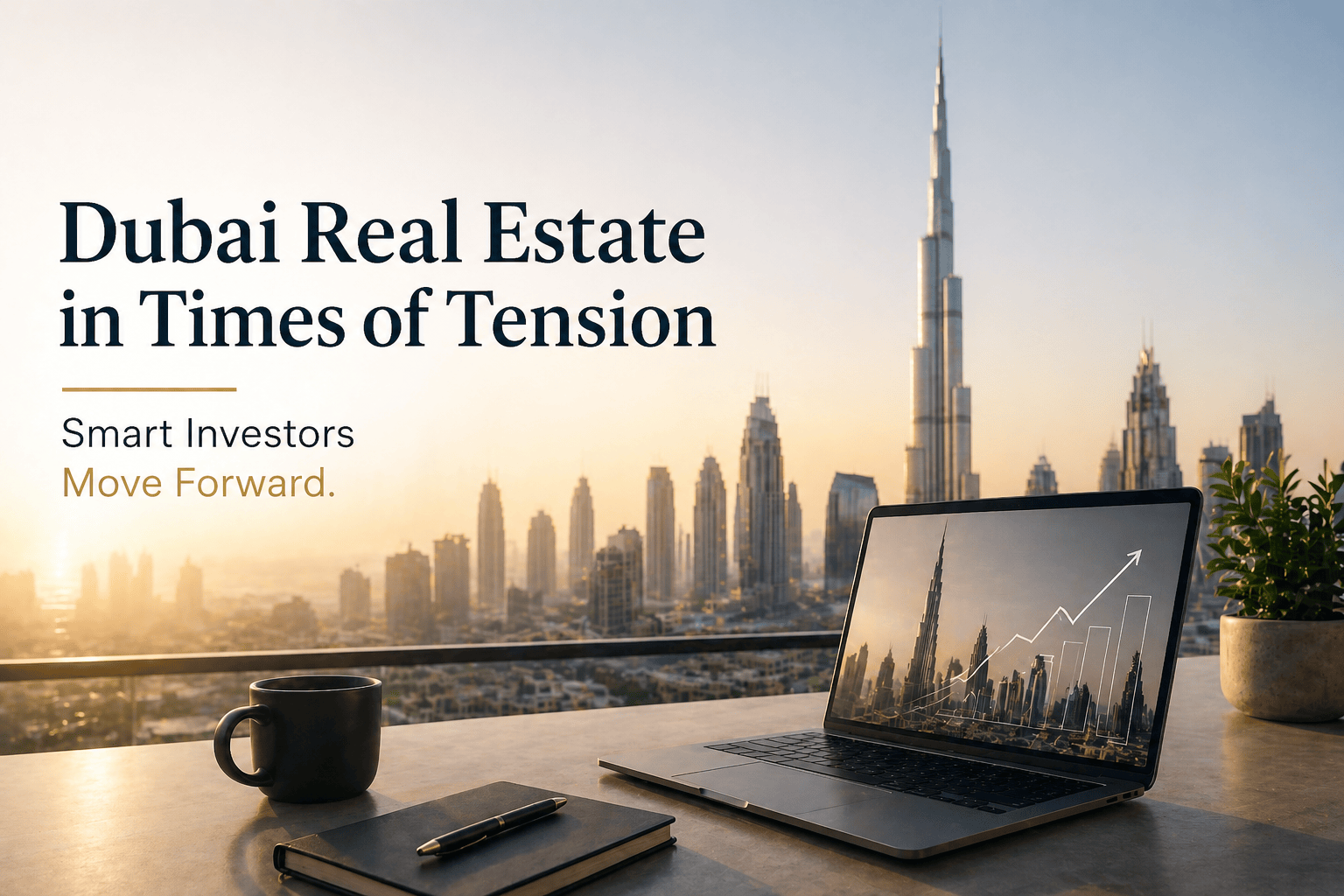
Dubai has a strange reputation in global real estate discussions. Whenever geopolitical uncertainty rises, people assume capital will flee risky regions. Yet Dubai consistently behaves differently. Instead of collapsing under pressure, it often experiences recalibration rather than retreat. Recent market data shows that even during heightened regional tension, transaction activity remains active, just more selective and segmented rather than frozen.
The key reason behind this resilience is structural. Dubai is not just a property market; it is a capital migration hub. Investors from Europe, Asia, and the Middle East continue to view it as a stable, tax-efficient gateway for wealth preservation. Even when short-term sentiment weakens, long-term allocation strategies rarely change dramatically. This creates a pattern where hesitation replaces panic, and opportunity emerges within uncertainty rather than outside it.
Understanding the Current Global Tension Landscape
Geopolitical tension affects markets in subtle but predictable ways. In real estate, it rarely causes immediate price crashes. Instead, it reshapes investor behavior first. Buyers delay decisions, lenders tighten sentiment, and developers adjust incentives. In Dubai’s case, external regional risks influence perception more than fundamentals.
What matters most is not the existence of tension, but its duration and intensity. Short-term disruptions typically create temporary slowdowns in transactions rather than structural damage. Historically, Dubai’s property sector has shown a pattern where global uncertainty increases demand for “safe jurisdiction assets” rather than decreasing it. This counterintuitive behavior is one of the reasons sophisticated investors continue to watch the market closely during volatile periods.
Dubai Real Estate Market Snapshot (2026)
Dubai’s real estate market in 2026 is not in decline—it is in a transition phase. Data indicates continued growth in overall pricing, although at a more moderate pace compared to previous boom cycles. According to recent market analysis, price growth in many segments has been reported in the mid single to low double digits year-on-year, with variation depending on location and property type.
Transaction activity remains strong, but behavior has shifted. Off-plan sales still dominate a significant share of activity, reflecting continued developer-driven demand cycles. However, buyers are becoming more selective, focusing heavily on project credibility, payment flexibility, and location fundamentals rather than speculative appreciation alone.
Price Movement Trends
Price behavior is no longer uniform. Prime districts continue to show resilience, while oversupplied areas experience stabilization. Luxury waterfront properties and established communities tend to hold value better due to limited supply elasticity and strong international demand.
Transaction Volume Behavior
Market liquidity is active but more cautious. Buyers are still participating, but decision cycles are longer. This creates a gap between intent and execution, which often leads to negotiation-driven opportunities.
Demand Segmentation Across Luxury and Mid-Market
Luxury segments remain strong due to wealth migration trends, while mid-market segments are driven by expat housing demand. Affordable housing segments show steady absorption but are more sensitive to supply increases.
Why Dubai Remains a Safe-Haven for Capital
Dubai’s appeal during global uncertainty is rooted in structural advantages that do not disappear during geopolitical tension. Investors prioritize jurisdictions that offer stability, liquidity, and predictable regulatory environments.
Tax Advantages and Investor-Friendly Policies
One of the strongest drivers is the absence of property tax, capital gains tax, and inheritance tax. This creates a net return advantage compared to many global cities where taxation significantly reduces yield efficiency.
Foreign Ownership Flexibility
Full foreign ownership rights in designated zones make Dubai accessible to global capital. Combined with long-term residency pathways such as investment-linked visas, the city positions itself as both an investment hub and a lifestyle destination.
How Tension Impacts Real Estate Cycles
Real estate markets respond to tension in a layered sequence rather than a single reaction. The first shift is psychological, not financial. Investors pause, reassess risk, and slow decision-making.
Liquidity Before Pricing Adjustment
The earliest measurable impact is usually a decline in transaction volume. Prices, however, tend to remain stable initially. This creates a lag effect where sentiment weakens before valuations adjust.
Buyer Hesitation vs Market Fundamentals
A critical distinction exists between emotional hesitation and structural weakness. In Dubai’s case, fundamentals such as population growth, infrastructure expansion, and long-term residency demand continue to support the market even when sentiment fluctuates.
Institutional and Foreign Investor Behavior
Global capital flows into Dubai have remained resilient, particularly from high-net-worth individuals and institutional investors seeking diversification. Even during periods of uncertainty, capital tends to rotate rather than exit.
High-Net-Worth Inflows
Luxury property demand continues to attract wealthy investors seeking asset protection and currency diversification. These buyers are less sensitive to short-term volatility and more focused on jurisdictional stability.
Golden Visa Influence
Long-term residency programs tied to property investment further reinforce demand stability. Investors are not just buying property—they are securing residency-linked strategic assets.
Supply, Demand, and Market Balance in Dubai
Dubai’s property market is heavily influenced by its development pipeline. While supply is increasing, absorption rates remain relatively strong due to population growth and international migration.
New Project Pipeline Effects
New launches create both opportunity and pressure. While they expand choice for buyers, they can also introduce short-term pricing competition in certain districts.
End-User Demand Stability
A large portion of demand comes from end-users rather than pure speculation. This creates a stabilizing effect during volatile periods, as housing demand does not disappear during geopolitical uncertainty.
The Role of Off-Plan Properties During Uncertainty
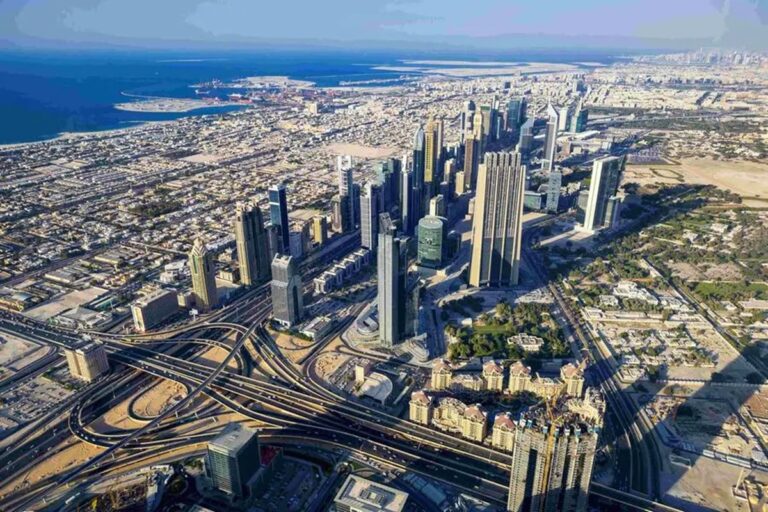
Off-plan real estate is often the most sensitive segment during periods of tension because it relies heavily on forward-looking confidence.
Risk vs Reward Dynamics
Investors are increasingly analyzing developer credibility, delivery timelines, and historical performance before committing. Risk awareness has increased significantly, leading to more disciplined capital allocation.
Developer Incentives and Payment Plans
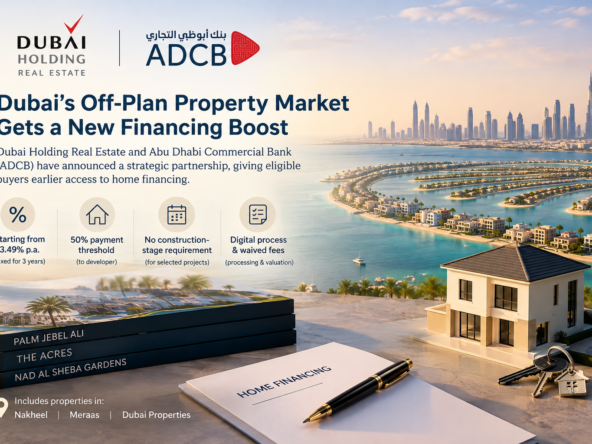
To maintain momentum, developers often introduce flexible payment structures. These incentives help sustain demand even when market sentiment softens.
Why Smart Investors Continue Entering the Market
Contrary to popular belief, uncertainty often attracts sophisticated capital rather than repelling it. Experienced investors understand that volatility creates mispricing opportunities.
Strategic Buying During Uncertainty
Periods of hesitation often produce negotiation leverage. Sellers become more flexible, and pricing inefficiencies appear in specific micro-markets.
Long-Term Capital Appreciation Logic
Dubai’s long-term growth story is driven by structural expansion—population growth, infrastructure investment, and global business migration. Smart investors prioritize these fundamentals over short-term noise.
Risks Investors Must Still Consider
While opportunities exist, risk is not absent. Investors must evaluate exposure carefully, especially in high-supply segments.
Global Volatility Exposure
Geopolitical escalation can temporarily impact liquidity and sentiment. While Dubai is resilient, it is not completely insulated from global financial cycles.
Supply Saturation in Certain Districts
Some emerging communities may face short-term oversupply pressure, leading to slower price growth or rental yield compression.
Future Outlook for Dubai Real Estate
The outlook for Dubai remains structurally positive but more segmented than before. Broad-based rapid appreciation is unlikely, replaced by selective, fundamentals-driven growth.
Moderate Growth Expectations
Recent market projections suggest steady rather than explosive price increases, with annual growth moderating compared to previous cycles.
Segment-Based Performance Divergence
Luxury and prime assets are expected to outperform, while mid-market and affordable segments will show more stable, slower growth patterns depending on supply absorption.
Conclusion
Dubai real estate during times of tension does not behave like fragile speculative markets. Instead, it adapts, segments, and recalibrates. The presence of geopolitical uncertainty influences sentiment, but it does not dismantle the structural drivers that attract global capital to the city.
Smart investors recognize a simple truth: volatility does not eliminate opportunity—it redistributes it. When others hesitate, disciplined capital identifies pricing inefficiencies, negotiates better entry points, and positions for long-term structural growth.
Dubai continues to function less like a reactive market and more like a strategic capital hub where global investors reposition wealth during uncertainty rather than retreat from it.