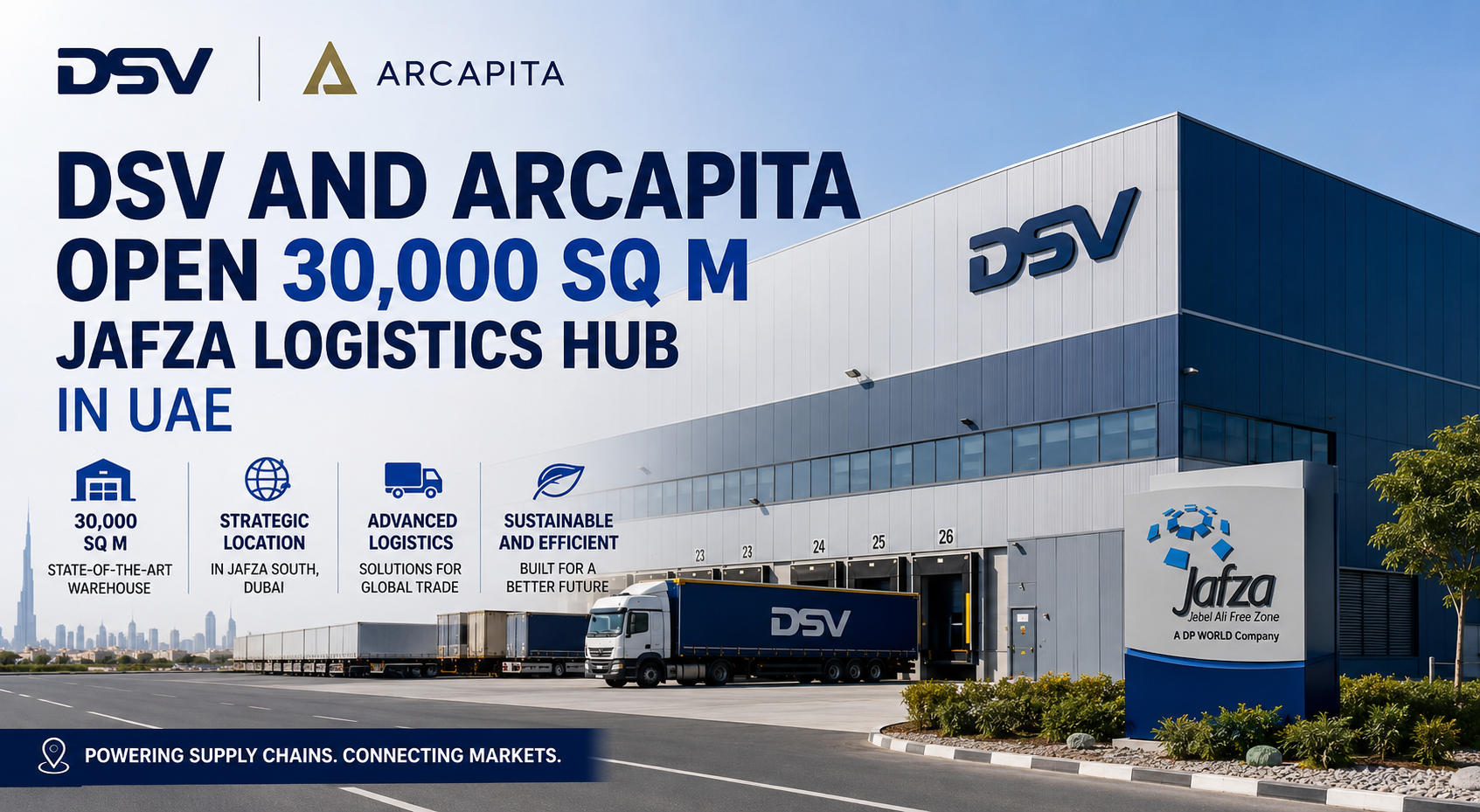
The UAE has added another major asset to its rapidly expanding logistics ecosystem as global transport giant DSV and investment firm Arcapita, through its real estate platform Lintara Properties, officially unveiled a new 30,000-square-meter logistics warehouse in Dubai’s Jebel Ali Free Zone (Jafza). The facility marks one of the most notable logistics infrastructure developments announced in the region during 2026 and reinforces Dubai’s position as a critical gateway connecting Asia, Europe, and Africa. According to company statements released during the inauguration, the warehouse is strategically designed to support increasingly complex supply chains and provide scalable logistics solutions for customers operating across the GCC and wider Middle East and Africa markets. The opening ceremony welcomed more than 100 customers, industry stakeholders, and partners, highlighting the significance of the project within the regional logistics community. Industry experts view this development as another signal that international corporations continue to see long-term value in the UAE despite global economic uncertainty and supply chain disruptions.
A Major Logistics Milestone for Dubai
Dubai has spent decades transforming itself into a global trade and logistics powerhouse. The launch of this new facility adds another important chapter to that story. Located within Jafza South, the warehouse provides direct access to deep-sea shipping terminals, major air cargo gateways, and GCC transportation corridors. That connectivity is crucial because modern supply chains depend on speed, flexibility, and multimodal transport options. Businesses can no longer afford delays caused by fragmented logistics networks, especially in sectors such as healthcare, retail, and technology where inventory management directly impacts customer satisfaction and profitability.
What makes this development particularly important is its timing. Global supply chains continue to evolve after years of disruptions caused by geopolitical tensions, changing trade routes, and shifts in consumer behavior. Companies are increasingly searching for logistics hubs that offer resilience, scalability, and strategic positioning. Dubai checks all those boxes. The city’s ability to integrate sea, air, road, and future rail transportation into one ecosystem has become a significant competitive advantage. The DSV-Arcapita facility is expected to help businesses reduce transit times, improve inventory visibility, and optimize regional distribution strategies. As global commerce becomes more interconnected, facilities like this serve as the backbone supporting seamless trade movement between continents.
Why the New Facility Matters
The significance of the warehouse goes beyond its impressive size. Modern logistics facilities must do much more than store goods. They need to function as intelligent distribution centers capable of handling complex operational requirements. DSV designed the new hub to support industries with highly specialized logistics needs, including pharmaceutical products, temperature-sensitive cargo, automotive components, and high-value technology equipment. Such flexibility allows customers to consolidate operations under one roof rather than relying on multiple facilities spread across different locations.
The warehouse also reflects a broader trend toward regional supply chain localization. Companies increasingly want inventory positioned closer to customers while maintaining access to international trade routes. By establishing a major logistics base in Jafza, DSV can provide businesses with both regional reach and global connectivity. This combination creates a powerful value proposition, particularly for multinational corporations seeking to strengthen supply chain resilience across the Middle East and Africa.
Strategic Importance of Jafza
Jafza remains one of the world’s most influential free zones. Thousands of companies operate within its ecosystem, benefiting from favorable business regulations, customs efficiencies, and proximity to Jebel Ali Port. The location provides direct access to some of the busiest shipping routes in the world, making it an ideal environment for logistics investments. Businesses operating from Jafza can reach markets throughout the GCC, South Asia, East Africa, and beyond with remarkable efficiency.
Another advantage is infrastructure integration. Jafza connects businesses to transportation networks that facilitate rapid movement of goods between maritime ports, airports, and inland destinations. As trade volumes continue growing across the Gulf region, demand for high-quality logistics facilities inside Jafza is expected to increase significantly. The DSV-Arcapita development directly addresses that demand by delivering Grade-A warehousing capabilities tailored for modern supply chain requirements.
Understanding the DSV-Arcapita Partnership
Successful logistics projects often require collaboration between operational experts and real estate specialists. The partnership between DSV and Arcapita demonstrates how combining these strengths can produce world-class infrastructure. DSV contributes extensive experience in transport, warehousing, and supply chain management, while Arcapita and its development platform Lintara Properties bring expertise in delivering complex logistics real estate assets.
The collaboration began with a vision to create a purpose-built facility capable of supporting evolving customer requirements. Construction focused on efficiency, scalability, and sustainability, ensuring the warehouse could adapt to future market needs. Rather than developing a generic storage facility, the partners created a build-to-suit environment specifically designed for advanced logistics operations. This approach reflects growing demand for specialized infrastructure rather than traditional warehousing models.
DSV’s Growing Presence in the Middle East
DSV has steadily expanded its footprint across the Middle East over recent years. The company views the region as a strategic growth market due to rising trade activity, population growth, and increasing investment in infrastructure. The new Dubai warehouse represents a tangible demonstration of that commitment. According to company executives, demand for integrated logistics solutions continues to grow across the GCC and broader MEA region, creating opportunities for expanded operations and customer partnerships.
Elias Monem, CEO of Contract Logistics for the Middle East and Africa, emphasized that the facility positions DSV to meet growing customer demand well into the future. His comments highlight a broader industry reality: businesses increasingly expect logistics providers to offer comprehensive end-to-end solutions rather than simple transportation services. Warehouses like the one in Jafza enable DSV to deliver those capabilities at scale.
Arcapita and Lintara Properties’ Development Role
Arcapita’s involvement showcases the increasing role of institutional investment in logistics real estate. Through Lintara Properties, the firm focuses on creating high-specification facilities designed to meet evolving industrial and commercial requirements. The Jafza warehouse demonstrates the platform’s ability to deliver technically sophisticated developments for global tenants.
According to Arcapita executives, the facility was designed to accommodate complex logistics operations including temperature-controlled products and specialized storage requirements. These features reflect the growing sophistication of supply chains throughout the Middle East. Investors increasingly recognize logistics infrastructure as a high-growth asset class, particularly in regions benefiting from expanding trade volumes and e-commerce activity.
Key Features of the New 30,000 sq m Logistics Hub
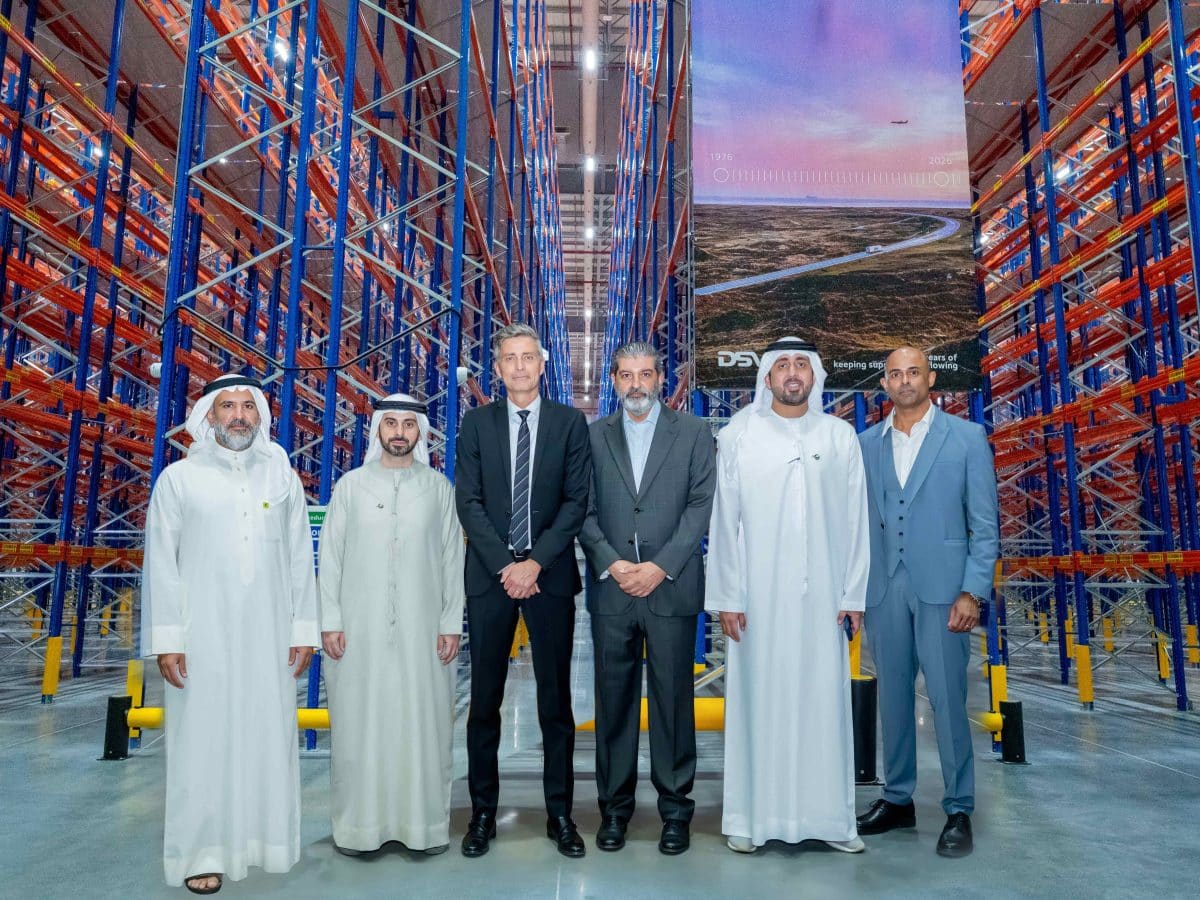
The warehouse incorporates numerous features that distinguish it from conventional storage facilities. Designed as a Grade-A logistics asset, the development combines operational efficiency, technological readiness, and scalability. Every aspect of the facility reflects modern supply chain requirements, from cargo handling capabilities to workflow optimization.
One notable characteristic is the emphasis on flexibility. Businesses often experience seasonal fluctuations, changing inventory patterns, and evolving customer expectations. A flexible warehouse environment enables operators to adapt quickly without significant disruption. That capability becomes especially valuable in sectors experiencing rapid growth or unpredictable demand patterns.
Build-to-Suit Warehouse Design
Unlike speculative developments, build-to-suit facilities are created with specific operational objectives in mind. The Jafza warehouse was developed around DSV’s logistics expertise and customer requirements. This approach allows for optimized layouts, efficient cargo flow, and better utilization of available space.
Purpose-built infrastructure often delivers long-term operational advantages because every component is designed to support business objectives. Loading areas, storage zones, automation capabilities, and transportation access points can all be customized to improve productivity. Such design considerations may seem technical, but they directly impact service quality and cost efficiency.
Advanced Supply Chain Capabilities
Modern logistics hubs function as command centers rather than storage locations. Advanced facilities support inventory management, order fulfillment, cross-docking operations, and distribution activities simultaneously. The new DSV warehouse has been positioned to serve customers requiring integrated logistics services across multiple markets.
This capability becomes increasingly important as supply chains grow more complex. Companies need visibility into inventory movement, faster fulfillment cycles, and improved responsiveness to market demand. Facilities that support these objectives create competitive advantages for both logistics providers and their customers.
Sustainability and Operational Efficiency
Sustainability has become a major consideration in logistics real estate development. The original project plans emphasized environmentally responsible construction practices and advanced energy-efficient features. Such investments help reduce operational costs while supporting corporate sustainability goals. Many multinational companies now evaluate environmental performance when selecting logistics partners, making sustainable infrastructure an increasingly important differentiator.
How the Facility Strengthens UAE Trade Infrastructure
The UAE’s success as a global trade hub depends heavily on continuous infrastructure investment. Logistics facilities serve as critical links connecting manufacturers, distributors, retailers, and consumers. Each new warehouse strengthens the country’s ability to support international commerce and attract foreign investment.
The DSV-Arcapita facility contributes to this ecosystem by increasing logistics capacity and enhancing service capabilities. Businesses operating across regional markets can leverage the warehouse to streamline distribution activities and improve supply chain performance. This creates benefits that extend beyond individual companies and contribute to broader economic growth.
Connectivity to Global Shipping Networks
Few locations offer the connectivity advantages available in Jafza. Businesses can access maritime shipping routes through Jebel Ali Port, air freight services through Dubai’s airports, and road transportation networks connecting GCC markets. This integrated infrastructure enables efficient movement of goods regardless of destination.
Such connectivity is especially valuable for companies operating international supply chains. Products can arrive by sea, be processed and stored in the warehouse, and then distributed across regional markets through multiple transportation modes. This flexibility helps organizations respond quickly to changing market conditions and customer requirements.
Supporting GCC and MEA Supply Chains
The warehouse is expected to play a significant role in supporting trade flows throughout the GCC and wider Middle East and Africa region. As cross-border commerce continues expanding, demand for reliable logistics infrastructure is increasing. Businesses need facilities capable of handling diverse product categories while maintaining high service standards.
The strategic location of the warehouse allows DSV to provide integrated solutions spanning multiple markets. Customers benefit from centralized operations, improved visibility, and reduced complexity. These advantages become increasingly valuable as supply chains expand across different countries and regulatory environments.
Industries Expected to Benefit
A major strength of the new logistics hub is its ability to support multiple industries. Rather than focusing on a single sector, the facility has been designed to accommodate diverse operational requirements. This versatility increases utilization potential and broadens the customer base.
The ability to serve multiple sectors also reflects the UAE’s diversified economy. Businesses operating in healthcare, retail, technology, and automotive markets all require specialized logistics support. Facilities capable of meeting these needs become important enablers of economic growth.
Healthcare and Pharmaceuticals
Healthcare supply chains require exceptional precision. Pharmaceuticals, medical devices, and healthcare products often have strict storage and handling requirements. Reliable logistics infrastructure helps ensure product integrity and regulatory compliance. The new warehouse is expected to provide capabilities supporting these critical operations.
Retail and E-commerce
E-commerce continues transforming consumer expectations. Customers want faster delivery, accurate order fulfillment, and seamless shopping experiences. Logistics hubs play a central role in achieving those objectives. By positioning inventory closer to end markets, retailers can reduce delivery times and improve customer satisfaction.
Technology and Electronics
Technology products often require secure handling, inventory control, and rapid distribution. Supply chains must respond quickly to product launches, seasonal demand spikes, and changing market conditions. Advanced logistics facilities provide the flexibility necessary to manage these challenges effectively.
Automotive Logistics
The automotive sector relies heavily on efficient logistics operations. Components, spare parts, and finished vehicles move through complex distribution networks spanning multiple countries. The warehouse’s strategic location and connectivity make it well-suited for supporting automotive supply chain activities.
Economic Impact on Dubai and the UAE
Large-scale logistics investments generate benefits extending beyond warehouse operations. New facilities create employment opportunities, attract supporting businesses, and strengthen regional competitiveness. The DSV-Arcapita project contributes to these objectives by increasing logistics capacity and reinforcing confidence in the UAE market.
Economic impact also emerges through indirect channels. Service providers, transportation companies, technology vendors, and maintenance contractors often benefit from increased logistics activity. As facilities expand operations, surrounding business ecosystems frequently experience growth as well.
Investment Confidence in the UAE Market
International companies continue investing in the UAE because of its stable business environment, advanced infrastructure, and strategic location. The decision by DSV and Arcapita to complete this major development demonstrates confidence in the country’s long-term economic prospects. Such investments send positive signals to global markets and encourage additional capital inflows.
Job Creation and Business Expansion
Although specific employment figures have not been disclosed, logistics developments typically create opportunities across operations, management, transportation, and support services. The warehouse also provides businesses with infrastructure necessary for expansion, enabling companies to scale operations without facing capacity constraints.
Future of Logistics Real Estate in the Gulf
The logistics real estate sector across the Gulf is entering a period of sustained growth. E-commerce expansion, supply chain diversification, and increased regional trade are driving demand for modern warehousing facilities. Investors, developers, and logistics operators increasingly view the sector as a strategic growth opportunity.
The DSV-Arcapita warehouse represents the type of infrastructure likely to define the next generation of logistics assets. Facilities must combine technology, sustainability, flexibility, and connectivity to remain competitive. Those capable of delivering these attributes will play a central role in supporting future trade growth.
Rising Demand for Grade-A Warehousing
Grade-A logistics facilities continue attracting strong demand because businesses increasingly prioritize operational efficiency. Older warehouses often lack the infrastructure necessary to support modern logistics processes. New developments provide capabilities that improve productivity, reduce costs, and enhance customer service.
Growth Opportunities Beyond 2026
Looking ahead, the Gulf’s logistics sector appears positioned for continued expansion. Infrastructure investments, regional economic diversification initiatives, and growing international trade volumes are expected to support long-term demand. Facilities like the new Jafza warehouse will likely serve as foundational assets supporting future growth across multiple industries.
Conclusion
The opening of the 30,000-square-meter logistics hub in Jafza by DSV and Arcapita represents more than a new warehouse launch. It reflects Dubai’s continued evolution as a global logistics powerhouse and highlights growing confidence in the UAE’s role within international trade networks. With advanced infrastructure, strategic connectivity, and the ability to support complex supply chains across multiple industries, the facility is positioned to become a key operational hub for businesses serving the GCC and broader Middle East and Africa region. As global commerce becomes increasingly dependent on resilient and efficient logistics networks, investments like this will continue shaping the future of trade throughout the region.
FAQs
1. Where is the new DSV-Arcapita logistics hub located?
The facility is located in Jebel Ali Free Zone (Jafza) South, Dubai, offering direct access to ports, airports, and major GCC transportation corridors.
2. How large is the new logistics warehouse?
The warehouse spans 30,000 square meters, making it one of the notable logistics infrastructure additions in Dubai during 2026.
3. Which companies developed the facility?
The project was developed by DSV in partnership with Arcapita, through its logistics real estate platform Lintara Properties.
4. Which industries will benefit from the warehouse?
The facility is designed to support healthcare, pharmaceuticals, retail, e-commerce, technology, electronics, and automotive sectors.
5. Why is Jafza considered important for logistics operations?
Jafza offers exceptional connectivity through Jebel Ali Port, major airports, and GCC road networks, making it one of the world’s leading trade and logistics hubs.