Dubai’s property market has entered a fascinating phase in 2026. After several years of remarkable growth, the market is transitioning into a more mature and selective environment. Real estate transactions remain strong, and investor interest continues to flow into the emirate, but buyers are becoming increasingly cautious about where and how they invest. According to recent market reports, Dubai recorded over AED 252 billion in real estate transactions during the first quarter of 2026, demonstrating that demand remains healthy despite global economic uncertainties.
What makes today’s market different is that it no longer moves as a single unit. Prime waterfront communities, villa neighborhoods, luxury developments, and apartment-heavy districts are all performing differently. Areas with limited inventory continue to command strong prices, while locations facing significant upcoming supply are seeing slower growth and increased negotiation activity. This segmentation means sellers and investors can no longer rely solely on broad market headlines when making decisions.
Market Performance in 2026
Recent data suggests that Dubai’s housing market remains supported by strong population growth, international investor confidence, and sustained demand from end users. Residential sales activity continues to be robust, although price growth is moderating compared to the exceptional gains witnessed during 2023 and 2024. Analysts increasingly describe the market as stable rather than explosive.
Why Uncertainty Has Entered the Conversation
Several factors have contributed to uncertainty in the market. Regional geopolitical tensions, changing investor sentiment, rising global economic concerns, and a growing supply pipeline have encouraged buyers to become more selective. Reports indicate that transaction volumes have softened in some segments, while certain luxury transactions continue to occur at significant values, illustrating a market that is adjusting rather than collapsing.
The Importance of Correct Property Pricing
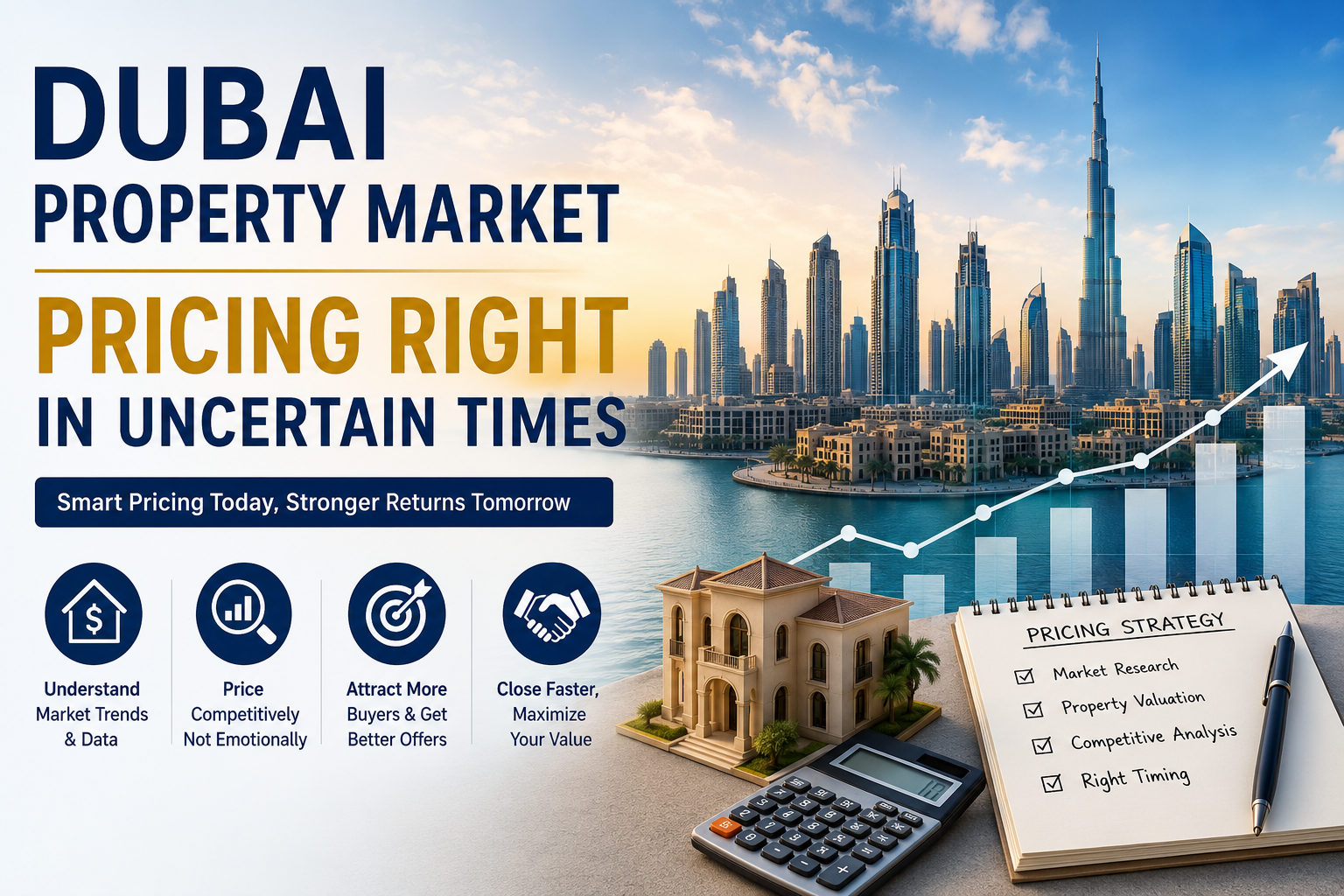
In uncertain markets, pricing becomes one of the most powerful tools available to sellers. Think of pricing as setting the sail on a ship. Even in favorable winds, a poorly positioned sail can slow progress dramatically. Similarly, an incorrectly priced property can remain unsold despite healthy demand.
Buyers today have access to extensive market information. They compare listings, study transaction histories, analyze rental yields, and evaluate future supply. This transparency means unrealistic pricing is quickly identified and often ignored.
How Overpricing Impacts Sellers
Overpricing remains one of the most common mistakes in Dubai real estate. Sellers often anchor their expectations to peak market values or neighboring transactions that may no longer reflect current conditions. An overpriced property typically receives fewer inquiries, spends longer on the market, and eventually undergoes multiple price reductions.
Ironically, a property that begins at an unrealistic price often sells for less than it would have achieved if priced correctly from the start. Buyers interpret prolonged listings as signs of hidden problems or seller desperation.
The Risks of Underpricing
While overpricing creates challenges, underpricing also carries risks. Sellers may leave substantial equity on the table, particularly in high-demand communities where scarcity supports pricing power. The goal is not to be the cheapest property available but rather the most compelling value proposition.
Professional valuation, market comparables, and neighborhood-specific data should form the foundation of any pricing strategy. Emotion should never replace evidence.
Key Factors Influencing Dubai Property Prices
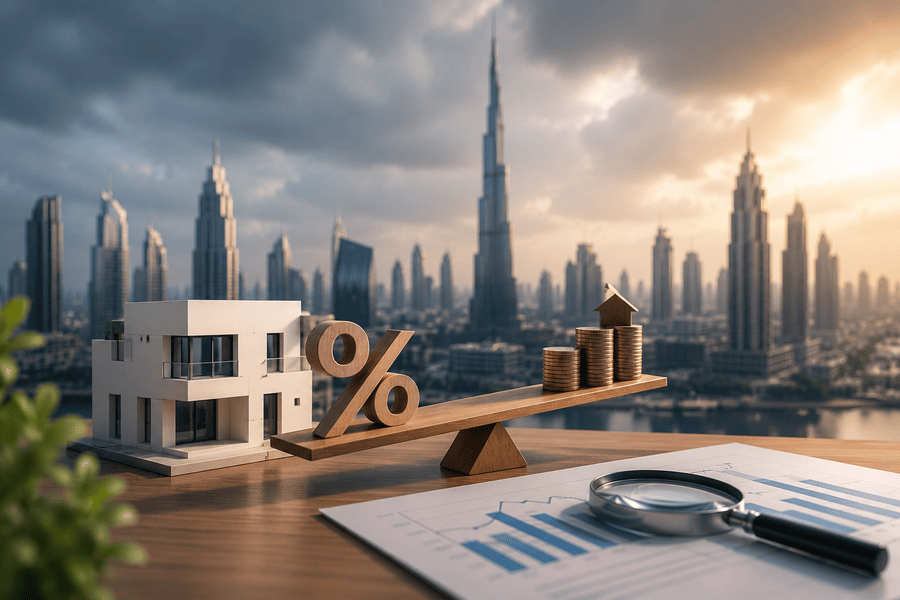
Property values in Dubai are shaped by a combination of local and global factors. Understanding these influences helps both buyers and sellers make informed decisions.
Supply and Demand Dynamics
Supply remains one of the most important variables in 2026. Apartment-heavy districts are experiencing increased competition due to significant project launches and upcoming handovers. In contrast, villas and low-density communities continue to benefit from relative scarcity. Analysts consistently note that villa communities are outperforming many apartment segments because demand exceeds available inventory.
Population Growth and Investor Inflows
Dubai’s population growth continues to support housing demand. The city’s population has surpassed 3.8 million, with thousands of new residents arriving each year. Many are entrepreneurs, professionals, and high-net-worth individuals attracted by Dubai’s tax advantages, infrastructure, and quality of life. This demographic growth creates a strong foundation for both sales and rental demand.
Geopolitical and Economic Influences
Global events increasingly influence buyer sentiment. Recent regional tensions temporarily affected transaction volumes and investor confidence, particularly among international buyers. However, Dubai has repeatedly demonstrated resilience during periods of uncertainty, supported by its diversified economy and global appeal.
Dubai Market Drivers at a Glance
| Factor | Impact on Prices |
|---|---|
| Population Growth | Positive |
| Foreign Investment | Positive |
| Limited Villa Supply | Strong Positive |
| New Apartment Supply | Moderately Negative |
| Rental Demand | Positive |
| Geopolitical Uncertainty | Short-Term Negative |
| Infrastructure Development | Positive |
| Interest Rate Changes | Variable |
Segment-by-Segment Market Analysis
The phrase “Dubai property market” often oversimplifies reality. Different segments behave differently, and pricing strategies must reflect those differences.
Luxury Properties
Luxury real estate remains one of Dubai’s strongest sectors. Prime locations such as Palm Jumeirah, waterfront communities, and exclusive branded residences continue attracting global wealth. While transaction volumes may fluctuate, high-quality luxury assets retain strong pricing power due to limited availability and international demand. Market reports suggest that prime communities continue outperforming broader market averages.
Buyers in this segment prioritize exclusivity, location, and long-term value preservation. Sellers should focus less on aggressive discounting and more on highlighting unique property characteristics.
Villas and Townhouses
Villa communities remain among the most resilient segments in Dubai. Family-oriented buyers continue seeking larger living spaces, private gardens, and community amenities. Since supply remains relatively constrained, villas have maintained stronger pricing stability than many apartment markets. Analysts continue to identify villas as one of the most structurally supported asset classes in Dubai real estate.
For sellers, this means there is less pressure to discount aggressively, provided the property is priced realistically relative to comparable inventory.
Apartments and Mid-Market Communities
Apartment markets require a more nuanced approach. Some established communities continue delivering strong rental yields and stable demand. Others face increased competition due to extensive new supply. Areas with substantial project pipelines may experience flatter pricing growth and longer selling periods.
This does not mean apartments are poor investments. Instead, success depends on choosing the right location, developer, building quality, and rental fundamentals. Buyers are increasingly selective and willing to negotiate where inventory is abundant.
Pricing Strategies for Sellers in 2026
Using Data Instead of Emotions
One of the biggest mistakes property owners make is allowing emotions to dictate pricing decisions. Sellers often associate personal memories and renovation investments with market value. Buyers, however, evaluate properties based on objective criteria.
Successful sellers study recent transactions, active listings, rental yields, and competing inventory. They understand that pricing is a business decision rather than a personal one. Data-driven pricing generates stronger inquiry levels and faster transactions.
Competitive Market Positioning
Imagine walking into a shopping mall with ten nearly identical stores selling the same product. Which store receives the most customers? Usually, the one offering the best perceived value.
The same principle applies to real estate. A property positioned slightly below competing listings often generates significantly more interest, leading to greater competition among buyers and potentially stronger final sale prices.
Timing the Listing Correctly
Timing can influence outcomes, particularly during uncertain periods. Sellers who enter the market with realistic pricing from day one often achieve better results than those who repeatedly adjust their expectations after months of inactivity.
The first few weeks of a listing typically generate the highest level of buyer interest. Making a strong initial impression is essential.
What Buyers Should Look For
Buyers currently enjoy more opportunities to negotiate than they did during the peak years of rapid market growth. However, not every discount represents a good deal.
Identifying Fairly Priced Properties
A fairly priced property typically aligns with recent comparable transactions and demonstrates sustainable rental potential. Buyers should focus on fundamentals rather than short-term market noise. Location, accessibility, developer reputation, service charges, and future infrastructure remain critical considerations.
Communities supported by genuine end-user demand often provide greater long-term stability than areas driven primarily by speculation.
Negotiation Opportunities in Select Areas
In apartment-heavy communities with substantial upcoming supply, buyers may find greater negotiating leverage. Sellers facing increased competition are often more willing to discuss pricing, payment terms, or additional incentives.
At the same time, buyers should recognize that highly desirable villa communities and premium waterfront assets may offer limited room for negotiation due to persistent demand.
Dubai Property Market Forecast
Short-Term Outlook
The most realistic outlook for Dubai’s property market involves moderation rather than dramatic correction. Experts generally expect selective growth, with prime communities and scarce asset types outperforming oversupplied areas. Transaction activity may remain sensitive to geopolitical developments and global economic conditions, but fundamental demand drivers remain intact.
Recent market commentary suggests that growth rates are slowing from previous highs, creating a healthier and more sustainable environment. Buyers are becoming more analytical, and sellers are adapting to a market that rewards realistic pricing.
Long-Term Opportunities
Looking beyond short-term uncertainty, Dubai continues to benefit from strong structural advantages. Population growth, business-friendly policies, infrastructure investment, and international connectivity support long-term demand.
Major development announcements, including multi-billion-dollar master-planned communities, demonstrate ongoing confidence in Dubai’s future. Large-scale projects continue reshaping the city’s landscape and expanding opportunities for investors and residents alike.
The key lesson for both buyers and sellers is simple: success increasingly depends on selecting the right property and pricing it appropriately rather than relying on overall market momentum.
Conclusion
The Dubai property market in 2026 is not defined by fear, panic, or unchecked optimism. Instead, it is entering a more sophisticated phase where data, location, and value matter more than ever. While uncertainty exists, the market remains supported by strong fundamentals including population growth, international investment, and continued economic expansion.
For sellers, pricing correctly is no longer optional—it is essential. Properties positioned realistically attract attention, generate competition, and achieve stronger outcomes. For buyers, today’s environment presents opportunities to negotiate selectively while focusing on communities with enduring demand drivers.
Dubai remains one of the world’s most dynamic real estate markets. The difference today is that success belongs to those who approach the market strategically, rely on evidence rather than emotion, and understand that every community has its own unique story.
FAQs
1. Is Dubai property still a good investment in 2026?
Yes. Dubai continues to offer strong rental yields, international demand, tax advantages, and long-term growth potential, although performance varies significantly by location.
2. Are Dubai property prices expected to fall?
Most analysts expect selective growth or stabilization rather than a major market-wide decline. Some oversupplied areas may experience slower growth or modest corrections.
3. Which property segment is performing best?
Villa communities and prime luxury locations are generally outperforming apartment-heavy districts due to stronger demand and limited supply.
4. Should sellers reduce their asking prices?
Not necessarily. Sellers should evaluate comparable sales, competing inventory, and market conditions before adjusting prices. The goal is realistic pricing rather than indiscriminate discounting.
5. What is the biggest pricing mistake sellers make?
The most common mistake is overpricing based on emotional attachment or outdated market expectations, which often leads to longer selling periods and lower final sale prices.