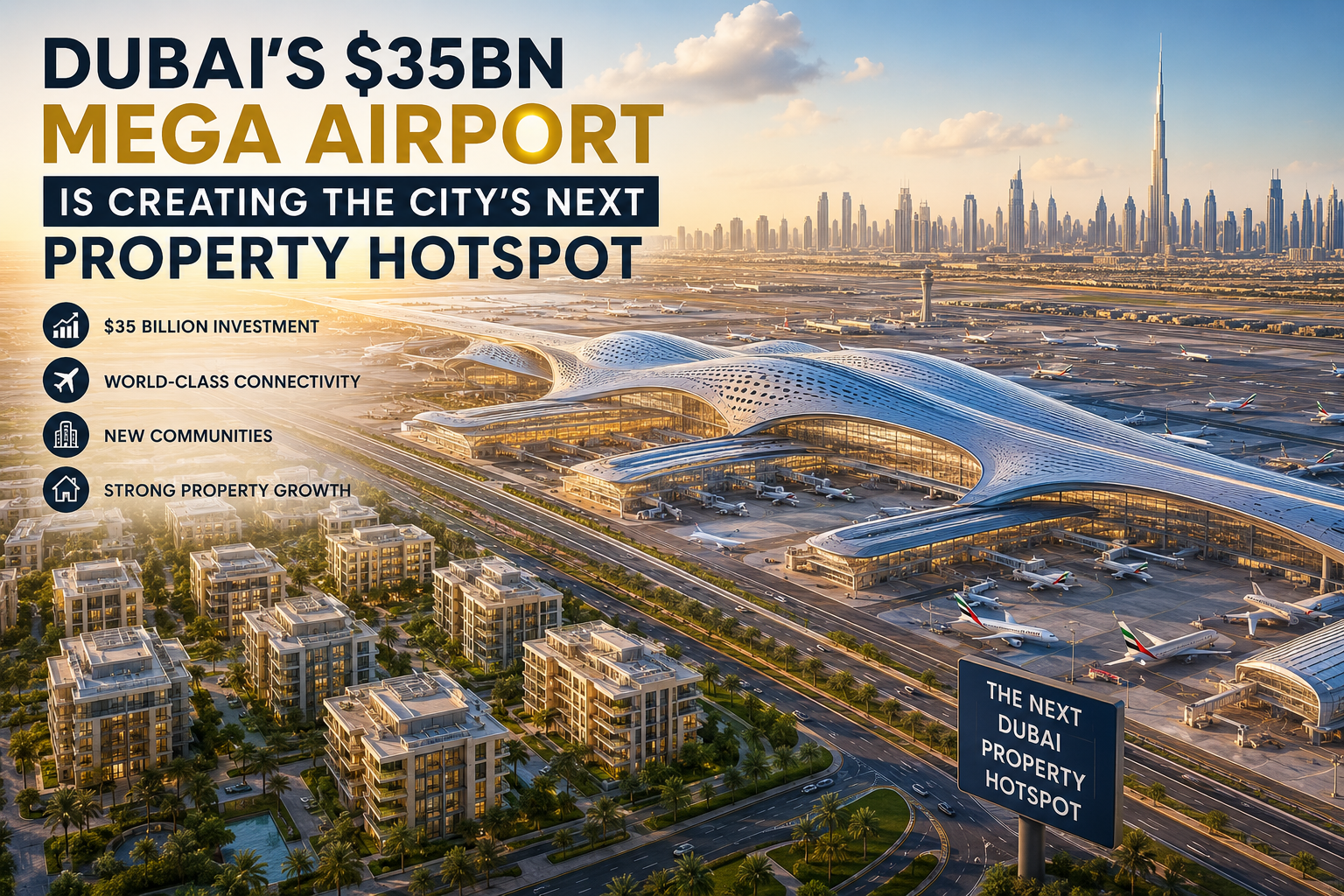
Dubai’s ambitious $35 billion mega airport expansion is set to redefine the emirate’s urban landscape and create one of the most promising real estate investment corridors in the Middle East. As construction accelerates on the new aviation hub, investors, developers, and homebuyers are increasingly focusing on surrounding communities expected to benefit from improved connectivity, new infrastructure, and long-term economic growth. The airport project is not merely a transport upgrade—it is a catalyst for a new generation of residential, commercial, and mixed-use developments that could shape Dubai’s property market for decades.
Why Dubai’s Mega Airport Matters
Dubai has built its global reputation on infrastructure-led growth. From world-class highways and metro networks to iconic developments such as Downtown Dubai and Dubai Marina, major infrastructure projects have consistently driven property appreciation.
The new mega airport continues this strategy on an unprecedented scale. Designed to become one of the world’s largest aviation hubs, the airport will significantly expand passenger capacity, cargo handling, and international connectivity. As aviation activity shifts towards this new location, neighbouring districts are expected to experience substantial residential and commercial demand.
The project strengthens Dubai’s position as a global logistics, tourism, and business destination while creating thousands of employment opportunities across multiple industries.
A New Real Estate Growth Corridor Is Emerging

Historically, Dubai property hotspots have developed around major infrastructure investments. The new airport is expected to follow a similar pattern by attracting developers eager to launch communities that cater to professionals, investors, and international buyers.
Areas surrounding the airport are witnessing increased attention due to:
- Improved road connectivity
- Future Metro expansion
- New schools and healthcare facilities
- Retail and entertainment developments
- Growing demand for workforce housing
- Expansion of logistics and commercial zones
These factors are creating a complete ecosystem rather than a standalone transport hub, making the surrounding districts increasingly attractive for long-term property investment.
Why Investors Are Moving Early
Experienced investors often seek locations before they reach maturity. The areas surrounding Dubai’s mega airport remain comparatively affordable when compared with established communities closer to the city centre.
Buying during the early development phase offers several potential advantages:
- Lower entry prices
- Strong capital appreciation potential
- Attractive rental demand
- Increasing developer incentives
- Opportunity to benefit from future infrastructure completion
As connectivity improves, property values typically rise alongside population growth and commercial activity.
Residential Communities Expected to Benefit
Several communities located near Dubai South and the airport development are already experiencing heightened buyer interest. These locations are becoming popular among both end-users and investors seeking future growth.
Key residential segments include:
Affordable Apartments
Professionals working within aviation, logistics, hospitality, and business parks will require modern, affordable housing close to employment centres.
Family Villas
Master-planned villa communities offering schools, parks, healthcare facilities, and retail destinations are expected to attract families seeking larger homes outside central Dubai.
Luxury Developments
As infrastructure matures, premium waterfront and branded residential projects may emerge, targeting international investors seeking long-term capital growth.
Dubai South Continues to Lead Growth
Dubai South has become one of the strongest beneficiaries of the airport project. Originally designed as an integrated economic city, it combines residential neighbourhoods, commercial districts, logistics facilities, and aviation infrastructure.
Its strategic location provides residents with easy access to:
- Al Maktoum International Airport
- Expo City Dubai
- Sheikh Mohammed Bin Zayed Road
- Emirates Road
- Major logistics hubs
- Business parks
This integrated planning supports sustainable population growth while creating diverse real estate opportunities.
Infrastructure Is Driving Property Prices
Infrastructure remains one of the strongest indicators of future property appreciation. The airport project is accompanied by billions of dollars in complementary investments, including:
- Road upgrades
- Public transport expansion
- Utility infrastructure
- Commercial centres
- Educational institutions
- Healthcare facilities
- Green public spaces
These improvements enhance quality of life while increasing the long-term attractiveness of surrounding communities.
Demand from International Investors
Dubai continues to attract overseas investors thanks to its tax-friendly environment, political stability, high-quality infrastructure, and investor-friendly regulations.
The airport expansion further strengthens investor confidence by demonstrating the government’s long-term commitment to economic diversification and global connectivity.
Foreign buyers are particularly attracted by:
- Freehold ownership opportunities
- Competitive rental yields
- Long-term residency options
- Stable regulatory environment
- Strong tourism sector
- Growing business ecosystem
These advantages continue to support healthy demand across Dubai’s residential property market.
Commercial Real Estate Will Also Benefit
The airport is expected to stimulate demand beyond residential housing. Logistics companies, freight operators, multinational businesses, hospitality groups, and retailers are likely to establish operations nearby.
This could increase demand for:
- Office space
- Warehousing
- Industrial facilities
- Hotels
- Retail centres
- Serviced apartments
Commercial expansion often supports residential price growth by creating sustainable employment opportunities and increasing local spending.
Rental Market Outlook
As employment opportunities expand around the airport, rental demand is expected to rise steadily. Aviation professionals, logistics workers, hospitality employees, and business executives will all require accommodation close to their workplaces.
Investors purchasing early may benefit from:
- Growing tenant demand
- Strong occupancy rates
- Competitive rental yields
- Long-term income stability
This combination makes the surrounding districts attractive for buy-to-let investors seeking consistent returns.
Long-Term Investment Perspective
Major infrastructure projects typically unfold over several years, meaning their impact on property values often develops gradually rather than immediately. Investors with a medium- to long-term outlook may be well positioned to benefit as transport links, commercial activity, and residential communities mature.
Dubai’s strategic planning approach has historically demonstrated how infrastructure can transform previously overlooked locations into thriving urban centres. If this pattern continues, the districts surrounding the $35 billion mega airport could become among the city’s most desirable investment destinations.
Conclusion
Dubai’s $35 billion mega airport represents far more than an aviation project—it is a powerful engine for economic development and real estate expansion. Improved connectivity, large-scale infrastructure investment, employment growth, and integrated community planning are combining to create what many market observers consider Dubai’s next major property hotspot.
For investors seeking long-term capital appreciation, developers looking for emerging opportunities, and homebuyers searching for future-ready communities, the airport corridor offers compelling potential. As construction progresses and supporting infrastructure comes online, this rapidly evolving region is expected to play a central role in the next chapter of Dubai’s property market.
Frequently Asked Questions (FAQs)
Why is Dubai’s $35bn mega airport important for real estate?
The airport is expected to boost surrounding property values by improving connectivity, attracting businesses, creating jobs, and encouraging large-scale residential and commercial development.
Which areas are likely to benefit the most?
Communities around Dubai South, Al Maktoum International Airport, and nearby master-planned developments are expected to see increased investor interest and long-term growth.
Is now a good time to invest near the airport?
Many investors consider the early stages of infrastructure development an attractive time to enter the market, as property prices may appreciate as construction progresses and demand increases.
Will the airport increase rental demand?
Yes. Growth in aviation, logistics, tourism, and business activity is expected to attract a larger workforce, supporting demand for apartments, villas, and serviced residences.
What makes this project different from previous developments?
The airport is part of a broader urban development strategy that combines transport infrastructure with residential communities, commercial districts, logistics hubs, and public amenities, creating a sustainable ecosystem for long-term growth.