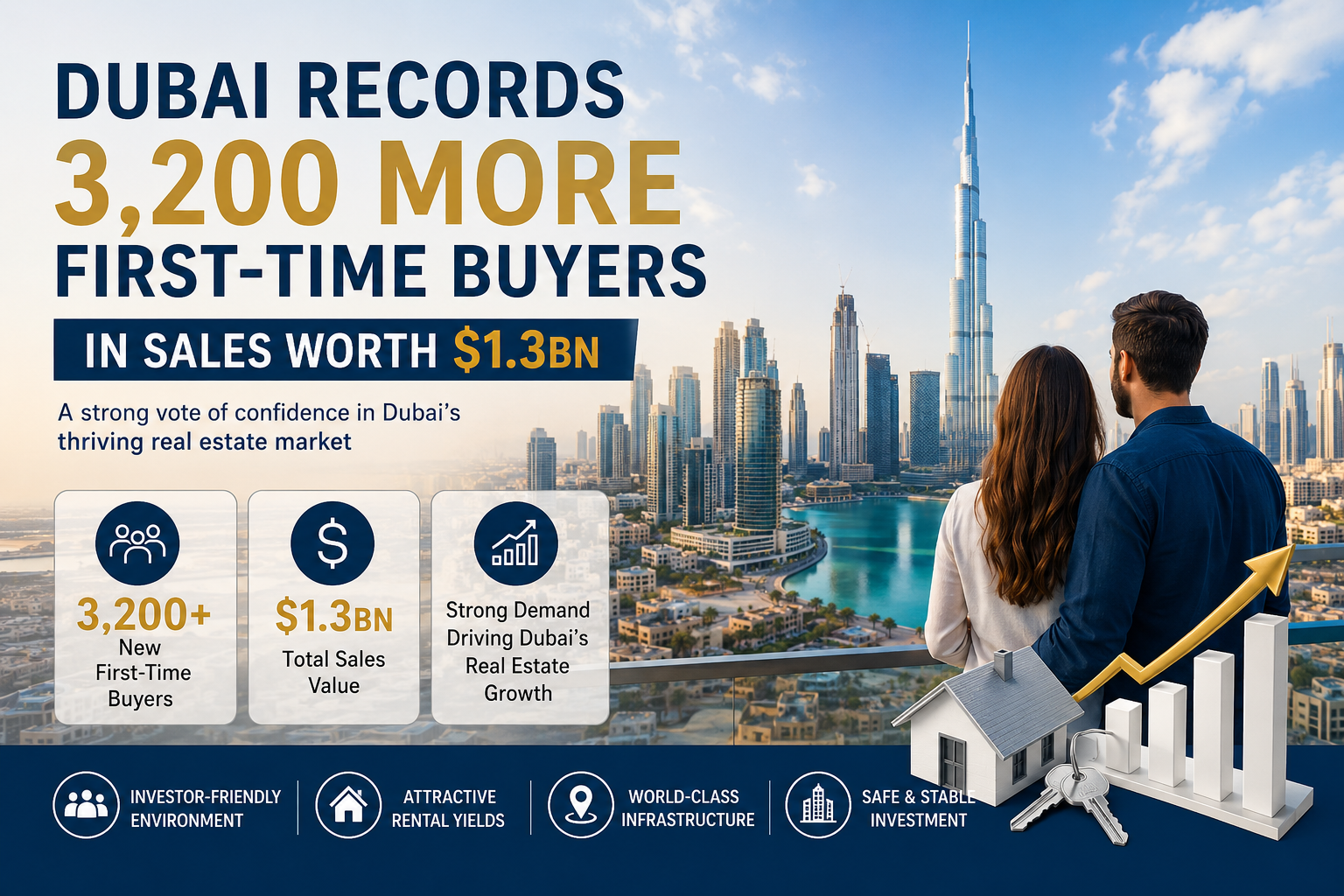
Dubai’s real estate market continues to set new benchmarks as the emirate records approximately 3,200 additional first-time property buyers, generating sales valued at around $1.3 billion. This development highlights the growing appeal of Dubai as a global investment destination and demonstrates the confidence both residents and international investors have in the city’s property sector. The market has experienced sustained momentum thanks to strong economic fundamentals, population growth, business-friendly regulations, and attractive property ownership opportunities. Dubai remains one of the world’s most dynamic cities, with its economy supported by tourism, trade, aviation, financial services, and real estate. The emirate’s population continues to expand while international demand for residential properties remains strong. These factors collectively create a favorable environment for first-time buyers seeking both lifestyle and investment opportunities. The latest figures indicate that new entrants are increasingly viewing property ownership as a practical alternative to renting, particularly in a market known for competitive rental yields and long-term capital appreciation potential. Dubai’s ability to attract global talent and investors continues to reinforce its position as one of the most desirable real estate markets worldwide.
What the 3,200 New Buyers Figure Represents
The addition of 3,200 first-time buyers is significant because it signals broadening participation in Dubai’s property market rather than dependence solely on institutional investors or repeat purchasers. First-time buyers often serve as a key indicator of market health because their purchasing decisions reflect confidence in future economic prospects. When newcomers enter the market in large numbers, it typically suggests favorable financing conditions, accessible property options, and positive expectations regarding future property values. These buyers include expatriate professionals, entrepreneurs, foreign investors, and residents who previously rented homes but now see ownership as a smarter long-term financial strategy.
This influx also reflects changing demographics within Dubai. The city’s growing population, expanding employment opportunities, and enhanced residency options have encouraged many individuals to establish deeper roots in the emirate. Unlike speculative activity, first-time buyer participation often indicates genuine end-user demand. Such demand creates greater market stability because owner-occupiers tend to hold properties for longer periods. The increasing number of first-time buyers suggests that Dubai’s housing market is evolving into a more mature and diversified ecosystem capable of supporting sustained growth over the coming years.
Breaking Down the $1.3 Billion Sales Volume
A sales volume of $1.3 billion generated by first-time buyers alone underscores the scale and resilience of Dubai’s property sector. This figure represents more than just transaction activity; it reflects substantial capital inflows into the local economy. Property purchases contribute to multiple sectors including construction, banking, legal services, property management, and retail. Every real estate transaction creates a ripple effect that stimulates broader economic growth and supports employment across various industries.
The substantial sales value also indicates that buyers are not exclusively targeting entry-level units. Many purchasers are exploring mid-market apartments, townhouses, and even premium developments that offer long-term investment potential. Flexible payment plans introduced by developers have further expanded accessibility, enabling buyers to secure properties with manageable financial commitments. The result is a market characterized by diverse buyer profiles and strong transaction volumes across multiple price segments. As demand continues to increase, Dubai’s property market benefits from enhanced liquidity and stronger confidence among both developers and investors.
Why Dubai Continues to Attract First-Time Property Buyers
Investor-Friendly Policies
One of the biggest reasons behind Dubai’s growing first-time buyer activity is its investor-friendly regulatory framework. Over the past decade, authorities have introduced several reforms designed to attract foreign investment and encourage long-term residency. Property investors can benefit from ownership rights in designated freehold areas, while various residency pathways provide additional incentives for buyers seeking stability and flexibility. These measures have helped position Dubai as a preferred destination for global investors looking for secure and transparent real estate opportunities.
The government’s ongoing commitment to innovation and economic diversification also plays a crucial role. Dubai consistently ranks among the world’s leading cities for business, infrastructure, and quality of life. The city’s reputation for efficient governance and openness to international business enhances investor confidence. Buyers often view property ownership not only as an investment vehicle but also as a gateway to broader personal and professional opportunities. This combination of financial and lifestyle benefits creates a compelling proposition that few competing markets can match.
Attractive Rental Yields
Rental yields remain one of Dubai’s strongest selling points. Compared to many major global cities, Dubai frequently offers higher returns on residential property investments. Investors seeking steady income streams are naturally attracted to markets where rental demand remains robust and vacancy rates are relatively manageable. The city’s expanding population, driven largely by expatriate professionals and entrepreneurs, creates continuous demand for quality housing.
For first-time buyers, strong rental yields provide an additional layer of financial security. Even if a buyer initially purchases a property for personal use, the option to generate rental income later adds flexibility and value. This dual-purpose nature of real estate ownership appeals to both end-users and investors. The combination of income generation and potential capital appreciation makes Dubai properties particularly attractive during periods of global economic uncertainty when investors seek stable asset classes.
The Economic Forces Driving Demand
Population Growth and Business Expansion
Dubai’s population growth continues to be a major catalyst for property demand. As businesses expand operations and multinational corporations establish regional headquarters, the city attracts skilled professionals from around the world. This steady influx of residents increases housing requirements across all market segments, from affordable apartments to luxury residences. Population growth also supports retail activity, infrastructure development, and overall economic expansion.
The emirate’s strategic location between Europe, Asia, and Africa further strengthens its appeal as a global business hub. Companies benefit from world-class connectivity, modern infrastructure, and a supportive regulatory environment. These advantages create employment opportunities that attract new residents, many of whom eventually transition from renting to property ownership. As the workforce grows and incomes rise, demand for residential real estate naturally increases, supporting long-term market growth.
Foreign Investment Confidence
International investors continue to view Dubai as a safe and attractive destination for capital allocation. The city has built a reputation for economic resilience, efficient governance, and forward-thinking development strategies. Recent years have demonstrated Dubai’s ability to adapt to changing global conditions while maintaining strong economic performance. This resilience encourages investors to commit capital with confidence.
Foreign buyers are particularly attracted by the city’s tax-efficient environment, modern infrastructure, and global connectivity. Dubai International Airport remains one of the world’s busiest hubs for international passengers, reinforcing the city’s role as a global gateway. The resulting accessibility enhances the attractiveness of property ownership for investors who frequently travel or maintain international business interests. These factors collectively contribute to sustained demand and support continued market expansion.
Most Popular Communities Among First-Time Buyers
Affordable Emerging Neighborhoods
Many first-time buyers are gravitating toward emerging communities that offer attractive pricing and future growth potential. These neighborhoods often feature modern amenities, improved connectivity, and ambitious master-planned developments. Buyers are increasingly looking beyond established districts to areas where infrastructure investments may drive future appreciation. This trend reflects a more sophisticated approach to property investment, with purchasers carefully evaluating long-term value rather than focusing solely on current market conditions.
Affordable communities also appeal to younger professionals and families seeking homeownership without excessive financial strain. Developers have responded by introducing projects that balance affordability with quality, offering amenities such as parks, fitness centers, retail outlets, and community facilities. These features enhance lifestyle appeal while supporting long-term property values.
Mid-Market Communities with High Growth Potential
Mid-market developments continue to attract significant attention from first-time buyers seeking a balance between affordability and premium living standards. These communities often provide access to transportation networks, schools, healthcare facilities, and commercial centers. Buyers appreciate the combination of convenience, lifestyle benefits, and investment potential.
The popularity of mid-market communities reflects broader demographic shifts within Dubai. As more professionals establish long-term careers in the city, demand for well-located family-friendly housing continues to increase. Developers have responded by creating integrated communities designed to meet evolving lifestyle expectations. These projects help maintain strong buyer interest and contribute to the overall strength of the market.
The Rise of Off-Plan Property Investments
Flexible Payment Plans
Off-plan properties have become increasingly popular among first-time buyers because they offer accessible entry points into the market. Developers frequently provide flexible payment structures that allow purchasers to spread costs over extended periods. This approach reduces upfront financial pressure and makes property ownership achievable for a wider audience.
Flexible payment plans also enable buyers to secure properties in desirable developments before completion, potentially benefiting from future price appreciation. For investors, this creates opportunities to build equity while managing cash flow effectively. As competition among developers intensifies, payment plans continue to evolve, providing even greater flexibility and convenience.
Developer Incentives
Developers are actively competing for buyers by offering attractive incentives such as fee waivers, post-handover payment plans, and enhanced amenities. These incentives can significantly improve the overall value proposition for first-time purchasers. In many cases, buyers gain access to premium facilities that might otherwise be beyond their budget.
The competitive landscape encourages innovation and quality improvements across the sector. Developers recognize that first-time buyers represent a critical growth segment and are increasingly tailoring offerings to meet their needs. This customer-focused approach contributes to stronger transaction volumes and higher levels of buyer satisfaction.
Impact on Dubai’s Real Estate Sector
Increased Market Liquidity
The entry of thousands of first-time buyers enhances market liquidity by increasing transaction activity across multiple property categories. Greater liquidity benefits sellers, developers, investors, and financial institutions alike. Active markets generally support more accurate pricing, improved transparency, and stronger investor confidence.
Higher transaction volumes also encourage new project launches and stimulate construction activity. As demand remains healthy, developers gain confidence to pursue ambitious developments that further expand housing supply. This dynamic creates a positive cycle of investment, development, and economic growth that strengthens the broader real estate ecosystem.
Growing Competition Among Developers
As buyer demand increases, developers are under greater pressure to differentiate their projects. This competition often results in better design standards, improved amenities, and more innovative financing options. Buyers ultimately benefit from a wider range of choices and higher-quality products.
Competition also encourages developers to focus on sustainability, smart technologies, and community-oriented planning. These features are increasingly important to modern buyers who value convenience, environmental responsibility, and long-term livability. The result is a market that continues to evolve and improve while maintaining strong international appeal.
Opportunities and Risks for New Buyers
Key Advantages
First-time buyers entering Dubai’s market today can benefit from several advantages. These include strong rental yields, diverse property options, modern infrastructure, and a favorable business environment. Buyers also gain exposure to a city that continues to attract global talent, investment, and tourism. Such factors contribute to long-term demand and support potential capital appreciation.
Property ownership can also provide financial stability by reducing dependence on rental markets. For many residents, purchasing a home represents both a lifestyle decision and a wealth-building strategy. The ability to generate rental income adds another dimension of value, enhancing overall investment returns.
Important Considerations Before Investing
Despite the opportunities, buyers should conduct thorough due diligence before making purchasing decisions. Factors such as location, developer reputation, service charges, financing terms, and market conditions should be carefully evaluated. Real estate remains a long-term investment, and buyers should ensure their financial objectives align with their chosen property.
Working with experienced advisors and conducting detailed market research can help mitigate risks. Buyers who take a disciplined and informed approach are generally better positioned to achieve favorable outcomes. Understanding market cycles and maintaining realistic expectations are essential components of successful property investment.
Future Outlook for Dubai Property Market
Trends Expected in 2026 and Beyond
The outlook for Dubai’s property market remains positive. Continued economic diversification, population growth, infrastructure development, and foreign investment are expected to support sustained demand. The city’s ongoing commitment to innovation and global competitiveness positions it favorably for future expansion. Recent discussions around Dubai’s growth philosophy emphasize execution, ambition, and long-term development planning, qualities that continue to attract investors and residents alike.
Industry observers expect first-time buyer participation to remain a key driver of market activity. As financing options improve and new developments enter the market, ownership opportunities will likely become accessible to an even broader audience. This trend should contribute to a healthier and more balanced real estate ecosystem capable of supporting sustainable growth over the long term.
Conclusion
Dubai’s achievement of attracting 3,200 additional first-time buyers and generating $1.3 billion in property sales demonstrates the remarkable strength of its real estate sector. The combination of investor-friendly policies, strong economic fundamentals, attractive rental yields, and continuous population growth creates an environment where both residents and international investors feel confident purchasing property. As new buyers enter the market and developers respond with innovative projects and flexible payment solutions, Dubai’s position as a leading global real estate destination continues to strengthen. The latest figures are not merely a reflection of current demand but a powerful indication of the city’s long-term investment appeal and economic resilience.
FAQs
1. Why are first-time buyers increasingly choosing Dubai?
First-time buyers are attracted by strong rental yields, residency opportunities, modern infrastructure, and a business-friendly environment that supports long-term investment growth.
2. What does the $1.3 billion sales figure indicate?
It reflects significant buyer confidence and demonstrates the substantial contribution first-time purchasers are making to Dubai’s real estate market.
3. Are off-plan properties popular among new buyers?
Yes. Flexible payment plans, lower entry costs, and potential future appreciation make off-plan developments particularly attractive.
4. What are the main risks for first-time property investors?
Potential risks include market fluctuations, choosing unsuitable locations, underestimating service charges, and insufficient due diligence.
5. Is Dubai’s property market expected to continue growing?
Current economic indicators, population growth, foreign investment, and ongoing development projects suggest positive long-term prospects for the market.