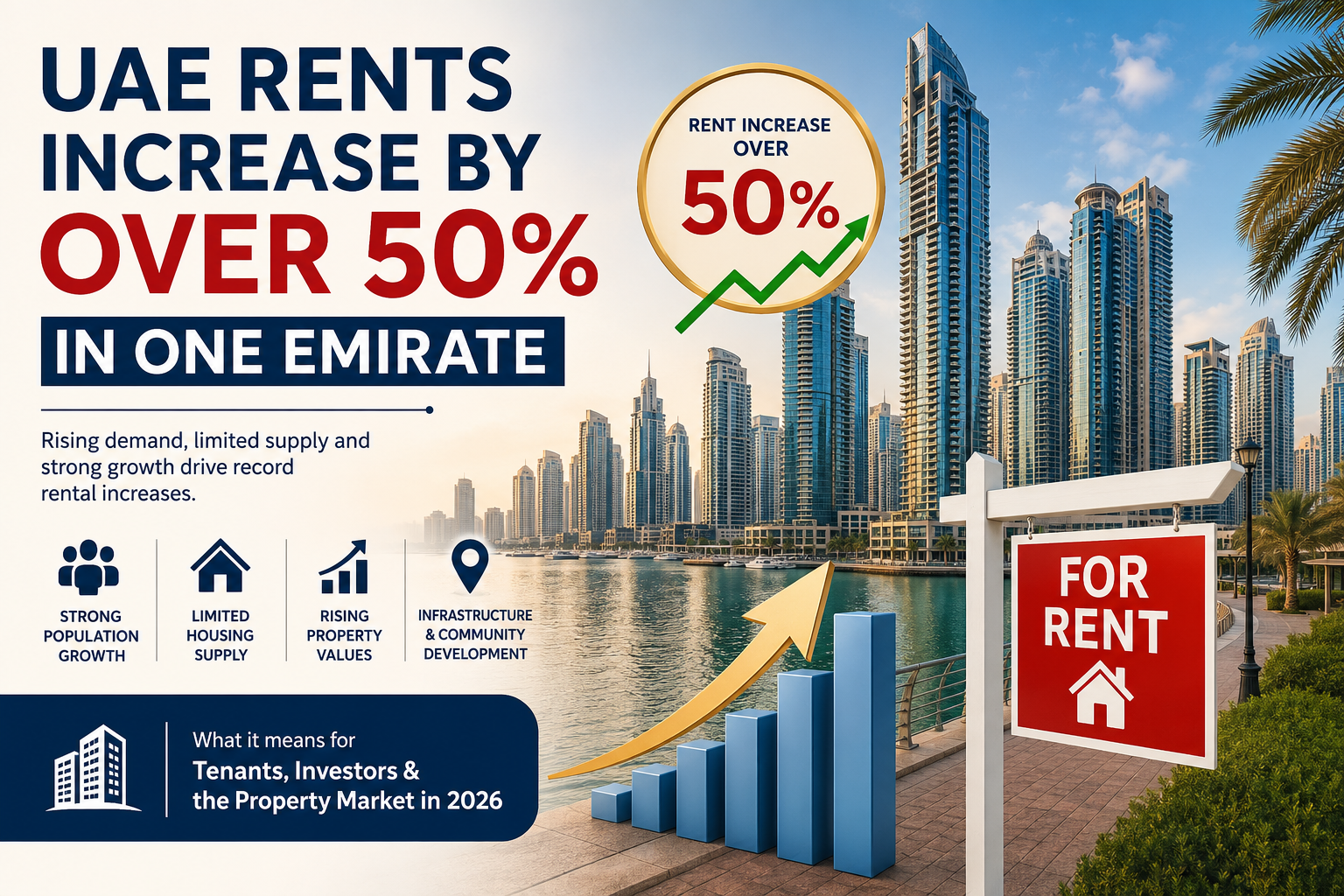
The UAE real estate market continues to demonstrate remarkable resilience and growth in 2026. While Dubai and Abu Dhabi often dominate headlines, another emirate has recently witnessed a dramatic increase in residential rental prices, with rents rising by more than 50% in certain areas.
This significant jump reflects changing economic conditions, increasing population growth, higher investor confidence, and an expanding demand for quality residential properties. For tenants, landlords, and property investors, understanding these market trends is essential to making informed real estate decisions.
In this article, we explore why UAE rents have increased by over 50% in one emirate, the key factors driving rental growth, the impact on residents, and what experts expect in the coming months.
Why Are UAE Rental Prices Rising So Rapidly?
The UAE property market has experienced exceptional momentum over the past few years. Strong economic performance, government reforms, and an influx of expatriates have significantly increased housing demand.
Several factors have contributed to the recent rental surge.
Strong Population Growth
One of the primary reasons behind rising rental prices is the continuous increase in the UAE’s population. Professionals from around the world are relocating to the country due to:
- Attractive employment opportunities
- Business-friendly regulations
- Long-term residency options
- High quality of life
- Excellent healthcare and education
As more residents enter the housing market, rental demand naturally increases.
Limited Housing Supply
Although developers continue launching new residential projects, housing supply has not kept pace with rapidly growing demand in certain emirates.
Limited availability of:
- Affordable apartments
- Family villas
- Waterfront communities
- Premium residential developments
has created increased competition among tenants, pushing rental prices higher.
Which Emirate Recorded the Highest Rental Growth?
Recent market reports indicate that one UAE emirate has experienced rental increases exceeding 50% in selected residential districts over the past year.
Several neighborhoods have become increasingly popular due to:
- Better infrastructure
- Improved transportation
- New commercial developments
- Tourism growth
- Employment opportunities
These improvements have transformed previously affordable communities into highly sought-after residential destinations.
Growing Demand from Professionals and Families
Many professionals are relocating from higher-priced cities to neighboring emirates where larger homes and better value remain available.
This migration has significantly boosted rental demand.
Families particularly seek properties offering:
- Spacious layouts
- Schools nearby
- Parks
- Shopping malls
- Public transportation
- Community facilities
As demand rises faster than supply, landlords gain stronger negotiating power.
Government Initiatives Supporting Real Estate Growth
The UAE government has introduced numerous initiatives that continue strengthening the property sector.
These include:
- Long-term residency visas
- Golden Visa programs
- Business-friendly policies
- Foreign investment reforms
- Economic diversification initiatives
Such measures encourage professionals, entrepreneurs, and investors to establish long-term residence, increasing demand for rental housing.
Rising Property Values Influence Rental Prices
As property prices continue climbing across many parts of the UAE, landlords often adjust rental rates to reflect increased investment costs and stronger market conditions.
Higher purchase prices generally result in:
- Increased rental expectations
- Better investment returns
- Higher yields for landlords
This trend is particularly noticeable in rapidly developing communities.
Infrastructure Development Drives Rental Demand
Large-scale infrastructure projects play a major role in transforming residential areas.
New developments including:
- Road networks
- Public transport
- Schools
- Hospitals
- Retail centers
- Entertainment venues
make communities more attractive to residents.
Improved connectivity often leads to higher property values and rental rates.
Impact on Tenants
While landlords benefit from rising rental income, tenants face increasing financial pressure.
Many residents now consider:
Relocating to Affordable Areas
Some tenants are moving to nearby communities where rental prices remain comparatively lower.
Negotiating Lease Renewals
Long-term tenants often negotiate with landlords to secure more manageable rent increases before renewing contracts.
Choosing Smaller Properties
Many families are downsizing to reduce housing costs while remaining close to work and schools.
Benefits for Property Investors
For investors, rising rental prices create attractive opportunities.
Key advantages include:
Higher Rental Yield
Increased monthly rental income improves annual returns on investment.
Strong Capital Appreciation
Growing demand often supports long-term property value appreciation.
Lower Vacancy Rates
Popular residential communities experience faster tenant occupancy, reducing vacancy periods.
Stable Investment Environment
The UAE remains one of the Middle East’s most attractive property investment destinations due to:
- Political stability
- Transparent regulations
- Tax-friendly environment
- Growing economy
Popular Property Types Experiencing High Demand
Several residential segments continue attracting strong tenant interest.
Apartments
Modern apartments remain popular among young professionals and couples.
Demand is highest for:
- Studio apartments
- One-bedroom units
- Two-bedroom apartments
Villas
Families increasingly prefer villas offering:
- Private gardens
- Larger living spaces
- Community amenities
- Parking
- Security
Townhouses
Townhouses provide an affordable alternative to standalone villas while offering spacious family living.
Challenges Facing the Rental Market
Despite positive growth, several challenges remain.
Affordability
Rapid rent increases may reduce affordability for middle-income households.
Supply Constraints
Developers must accelerate project delivery to balance supply with growing demand.
Inflation Pressure
Higher housing costs contribute to increased living expenses for residents.
What Experts Expect for the UAE Rental Market

Industry experts believe rental growth is likely to continue, although at a more moderate pace as additional residential projects enter the market.
Future trends may include:
- Continued population growth
- More off-plan project completions
- Increased foreign investment
- Higher demand for premium communities
- Expansion of suburban residential developments
Market stability will largely depend on the balance between new housing supply and sustained demand.
Tips for Tenants Facing Rising Rental Costs
If you’re renting in the UAE, consider these practical strategies:
- Renew your lease early if possible.
- Compare rental prices across nearby communities.
- Negotiate with your landlord before renewal.
- Review your tenancy contract carefully.
- Set a realistic housing budget before moving.
- Explore newly developed areas offering better value.
Advice for Property Investors
Investors looking to capitalize on the current rental market should:
- Focus on high-demand residential communities.
- Evaluate rental yields alongside capital appreciation potential.
- Invest near major infrastructure projects.
- Consider off-plan developments with strong growth prospects.
- Monitor population and employment trends before purchasing.
The Future of the UAE Property Market
The UAE real estate sector continues evolving as one of the region’s strongest investment markets. Rising rents reflect increasing confidence in the country’s economy, expanding population, and ongoing urban development.
Although affordability remains a concern for some residents, long-term fundamentals remain positive. Government initiatives, international investment, and continuous infrastructure improvements are expected to support sustainable growth across the housing market.
For buyers, investors, and landlords, the current environment presents attractive opportunities, while tenants may benefit from planning ahead and exploring emerging residential communities that offer better value.
Conclusion
The news that UAE rents have increased by over 50% in one emirate highlights the strength and resilience of the country’s real estate market. Rising demand, limited housing supply, economic expansion, and investor confidence are reshaping rental trends across the UAE.
Whether you are a tenant searching for affordable accommodation, a landlord seeking improved rental returns, or an investor looking for long-term growth, understanding these market dynamics is essential. As new developments come online and government initiatives continue attracting residents and businesses, the UAE property market is expected to remain one of the most dynamic and competitive in the region.
Frequently Asked Questions (FAQs)
Why have rents increased by over 50% in one UAE emirate?
The increase is primarily driven by strong population growth, limited housing supply, infrastructure development, rising property values, and increased demand from professionals and families.
Will UAE rental prices continue to rise?
Many analysts expect rental prices to remain elevated, though the pace of growth may slow as more residential projects are completed and new housing supply enters the market.
Is investing in UAE real estate still a good option?
Yes. The UAE continues to offer attractive rental yields, strong capital appreciation potential, investor-friendly regulations, and a stable economic environment.
Which property types are most in demand?
Apartments, villas, and townhouses remain the most sought-after residential property types due to their appeal to professionals, couples, and families.
How can tenants manage rising rental costs?
Tenants can negotiate lease renewals, compare prices across different communities, renew contracts early, and consider emerging neighborhoods that offer better value for money.