The Middle East real estate market may be heading toward one of its most dramatic comeback stories. A UAE-based property developer is reportedly evaluating a staggering $50 billion investment in two large-scale real estate projects in Syria, signaling a possible turning point for the war-torn country’s reconstruction ambitions. Reports indicate that the projects could be located in Damascus and Latakia, with UAE developer Eagle Hills, founded by Mohamed Alabbar, emerging as a key name linked to the discussions.
Article Outline
- H1: UAE Developer Considering $50bn Investment in Two Real Estate Projects in Syria
- H2: Why This Investment Is Making Headlines
- H3: The Scale of the Proposed Investment
- H3: Why Syria Is Back on Investors’ Radar
- H2: Who Is Behind the Potential Mega Project?
- H3: Eagle Hills and Mohamed Alabbar
- H3: UAE Developers Expanding Across the Region
- H2: The Two Proposed Real Estate Projects
- H3: Damascus Development Vision
- H4: Residential and Commercial Expansion
- H3: Latakia Waterfront Opportunity
- H4: Tourism and Hospitality Potential
- H3: Damascus Development Vision
- H2: Syria’s Reconstruction Economy
- H3: Infrastructure Needs After Years of Conflict
- H3: Estimated Value of Reconstruction
- H2: Why UAE Investors Are Interested in Syria
- H3: Strategic Geographic Position
- H3: Long-Term Economic Potential
- H2: Challenges Facing the Investment
- H3: Political and Sanctions Risks
- H3: Financing and Operational Concerns
- H2: Impact on the Middle East Real Estate Market
- H3: New Regional Investment Trends
- H3: Competition Among Gulf Developers
- H2: What This Means for Syria’s Future
- H2: Conclusion
- H2: FAQs
- H2: Why This Investment Is Making Headlines
Why This Investment Is Making Headlines
The idea of a $50 billion real estate investment in Syria is not just another property story. It represents a possible geopolitical and economic shift that could reshape investment dynamics across the Middle East. Syria has spent more than a decade dealing with conflict, infrastructure destruction, sanctions, and economic collapse. Because of this, any large-scale foreign investment immediately attracts regional and global attention. The proposed developments are reportedly tied to urban regeneration projects in Damascus and the coastal city of Latakia, two locations with strategic economic importance.
What makes the announcement even more significant is the size of the proposed capital injection. Fifty billion dollars is not a routine real estate budget; it is the kind of figure usually associated with national transformation projects. To put it into perspective, that amount rivals the budgets of some of the Gulf’s largest mega developments. Investors, analysts, and policymakers are all watching closely because this could mark the beginning of a new phase in Syria’s economic recovery. For years, international companies largely stayed away due to instability and sanctions. Now, Gulf developers appear increasingly willing to evaluate opportunities in markets once considered too risky.
There is also a symbolic element here. Real estate developments are often viewed as confidence indicators. When a developer begins planning massive residential towers, tourism districts, or mixed-use communities, it sends a message that someone believes long-term stability is achievable. That perception matters enormously for Syria, which has been trying to rebuild diplomatic and economic ties with regional neighbors.
Who Is Behind the Potential Mega Project?
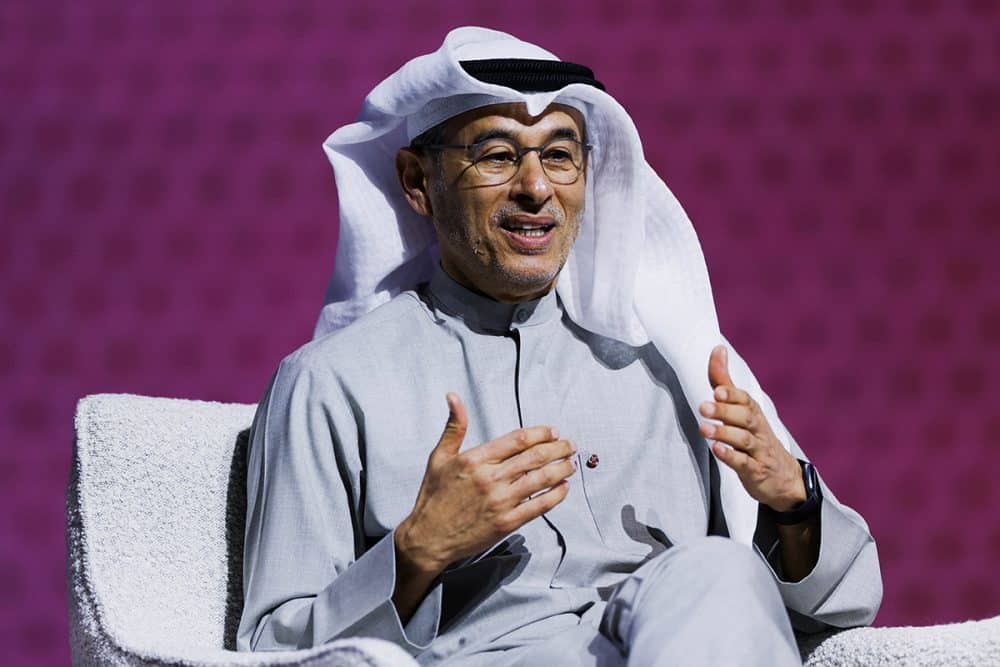
The company most frequently linked to the discussions is Eagle Hills, a UAE-based developer founded by Mohamed Alabbar. Alabbar is already a major figure in Middle Eastern real estate due to his leadership role in Emaar Properties, the developer behind iconic projects such as the Burj Khalifa.
Eagle Hills has established a reputation for entering emerging markets and developing large urban projects. The company has previously explored opportunities in countries undergoing redevelopment or modernization phases, making Syria a logical — though highly complex — extension of its strategy. Reports suggest the proposed Syrian developments could involve integrated communities, commercial districts, waterfront areas, tourism infrastructure, and residential housing.
What is interesting is how UAE developers have increasingly expanded beyond Dubai and Abu Dhabi over the last decade. The Gulf property sector has matured significantly, forcing companies to seek growth opportunities elsewhere. Some firms entered Egypt, Morocco, Serbia, Albania, and parts of East Africa. Syria, despite its risks, offers something unique: the possibility of rebuilding major urban areas almost from scratch. That creates opportunities for master-planned developments on a scale rarely available in established markets.
The UAE itself has been strengthening diplomatic and economic engagement with Syria in recent years. This warming relationship may be opening doors for Emirati companies seeking early-mover advantages. Real estate developers often move alongside broader political and economic normalization trends. If diplomatic ties continue improving, Gulf investment into Syria could accelerate far beyond property development alone.
The Two Proposed Real Estate Projects
According to current reports, the proposed developments are expected to focus on Damascus and Latakia. These two cities represent completely different investment opportunities, which is part of what makes the plan strategically interesting.
Damascus Development Vision
As Syria’s capital, Damascus remains the country’s political, commercial, and administrative center. Years of conflict damaged significant portions of infrastructure and disrupted urban growth. A large-scale redevelopment project in Damascus could include residential towers, shopping districts, office spaces, healthcare facilities, and transportation infrastructure.
The demand for modern housing is substantial. Many Syrians were displaced during the conflict, while much of the existing housing stock deteriorated or became unusable. Developers see long-term potential in creating mixed-use communities designed around modern urban planning standards. Think of it like giving an old city a new operating system while preserving its historical identity. That balance between modernization and heritage preservation could become one of the defining challenges of the project.
Commercial opportunities are also massive. Damascus historically functioned as a business gateway connecting the Levant region. If economic activity gradually recovers, demand for office spaces, retail centers, logistics facilities, and hospitality projects could increase sharply. Real estate developers are not simply building apartments; they are effectively creating economic ecosystems that support employment, commerce, and tourism.
Residential and Commercial Expansion
One of the likely priorities would be integrated developments that combine living, shopping, entertainment, and workspaces within one master-planned district. This model has become increasingly popular across the Gulf because it creates self-contained urban communities that attract residents and investors alike.
Such projects could also help Syria modernize its property sector. Smart infrastructure, sustainable construction methods, and digital city management systems may become part of future developments. Gulf developers already possess expertise in luxury urban planning, and they may attempt to replicate some of those concepts in Syrian cities.
Latakia Waterfront Opportunity
Latakia presents a very different investment case. Located on the Mediterranean coast, the city has long been viewed as one of Syria’s most strategically valuable locations for tourism, trade, and logistics. A waterfront development there could potentially transform the city into a regional tourism and hospitality destination.
Waterfront real estate has always carried premium value in the Middle East. From Dubai Marina to Abu Dhabi’s coastal projects, developers understand how seaside destinations attract investors, tourists, and affluent buyers. Latakia could become Syria’s equivalent of a Mediterranean lifestyle destination if stability improves.
Tourism and Hospitality Potential
Tourism infrastructure would likely play a major role in the project. Hotels, resorts, marinas, entertainment zones, and retail promenades could all form part of the broader master plan. Syria possesses deep cultural and historical heritage, and a revived tourism sector could become a key contributor to future economic growth.
The challenge, however, lies in perception. Tourism depends heavily on security, political stability, and international confidence. Even the most luxurious resort project cannot succeed if travelers remain hesitant to visit. That means developers may be thinking in very long timelines, perhaps spanning decades rather than just a few years.
Syria’s Reconstruction Economy
Experts have repeatedly estimated that Syria’s reconstruction needs could exceed hundreds of billions of dollars. Entire neighborhoods, roads, utilities, hospitals, schools, and industrial facilities require rebuilding or modernization. The scale of destruction has created what some analysts call one of the largest reconstruction opportunities in modern history.
This is where real estate becomes more than just property development. Construction activity drives employment, attracts foreign capital, stimulates banking activity, and boosts consumer spending. Large urban projects can create ripple effects across dozens of industries including cement, steel, logistics, engineering, architecture, retail, and tourism.
At the same time, reconstruction is not simply about pouring concrete. Syria’s economy requires institutional rebuilding as well. Investors need transparent regulations, reliable banking systems, enforceable contracts, and predictable governance structures. Without these foundations, even ambitious mega projects may struggle to attract long-term financing.
Another major factor is demographics. Syria still has millions of displaced citizens, both internally and abroad. Any serious reconstruction effort will eventually intersect with housing demand and population return dynamics. Developers entering the market may view housing as both a commercial opportunity and part of a broader rebuilding narrative.
Why UAE Investors Are Interested in Syria
The UAE’s growing interest in Syria reflects a combination of strategic, political, and economic motivations. Geography alone makes Syria important. Positioned between the Gulf, Turkey, the Mediterranean, and Europe, the country historically served as a regional trade crossroads. Investors often think decades ahead, and many Gulf firms may believe Syria’s long-term geographic advantages remain intact despite current challenges.
There is also the matter of timing. Entering a market during its early recovery phase can create enormous upside potential. Land values, infrastructure costs, and development opportunities may currently be available at prices significantly below those seen in more mature markets. For experienced developers, that creates a high-risk but potentially high-reward environment.
UAE firms also possess experience managing mega projects under difficult conditions. Developers from Dubai helped transform desert landscapes into global tourism and business hubs. That track record gives them confidence in handling large urban transformation initiatives. Companies such as DAMAC Properties, Binghatti, and Eagle Hills have all demonstrated aggressive regional expansion strategies in recent years.
There is another important angle: competition. Gulf developers are constantly seeking the next major frontier market. As Saudi Arabia pushes massive domestic projects and Dubai’s market becomes increasingly competitive, developers are searching for new territories where large-scale urban planning opportunities still exist.
Challenges Facing the Investment
Despite the excitement surrounding the reports, the obstacles are enormous. Syria remains subject to international sanctions, and these restrictions complicate financing, banking operations, international partnerships, and material procurement. Any foreign investor entering the Syrian market must navigate a highly complex legal and geopolitical environment.
Political risk remains another critical factor. Stability is essential for long-term real estate success because property development often requires decades to generate full returns. Investors need confidence that regulations, ownership rights, and operating conditions will remain relatively stable over time.
Financing is also a major challenge. Large mega projects usually involve international lenders, institutional investors, sovereign wealth funds, and insurance structures. Sanctions and political uncertainty can discourage traditional financing institutions from participating. Developers may therefore need alternative financing models or direct state-backed support.
Operationally, infrastructure limitations could increase costs significantly. Construction materials, electricity, transportation systems, and skilled labor availability all influence project feasibility. Rebuilding in post-conflict environments is often far more expensive and complicated than initial headlines suggest.
The reputational aspect cannot be ignored either. International companies entering controversial or politically sensitive markets often face scrutiny from regulators, advocacy groups, and stakeholders. Developers must carefully balance commercial opportunity with reputational considerations.
Impact on the Middle East Real Estate Market
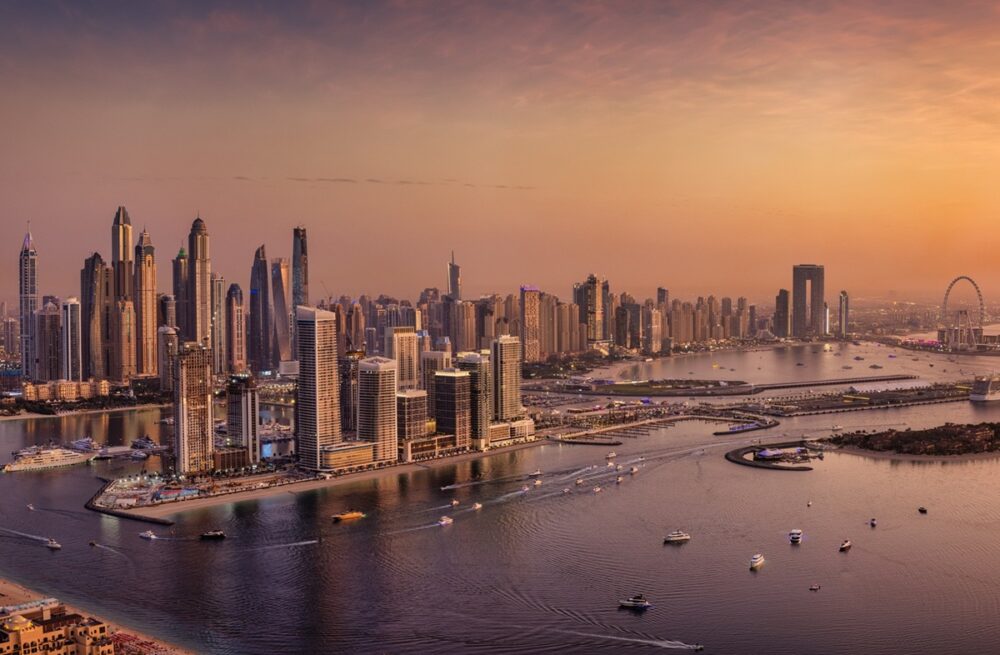
If the projects move forward, they could reshape regional real estate dynamics in several ways. First, they may trigger a broader wave of Gulf investment into Syria. Once one major developer commits capital, competitors often begin exploring opportunities as well. That domino effect has occurred repeatedly in emerging markets.
Second, the projects could strengthen the UAE’s role as a regional investment power. Emirati firms already dominate major property sectors across the Gulf and beyond. Expanding into Syria would reinforce their influence over regional urban development trends.
Third, the developments may create new competition for tourism and investment flows. If Syrian coastal projects eventually become operational, they could compete with destinations across the Eastern Mediterranean. That may sound distant today, but real estate investors frequently operate on 15- to 30-year timelines.
There is also a symbolic dimension for Middle Eastern economic integration. Cross-border investments often reflect broader regional cooperation patterns. As diplomatic ties evolve, economic partnerships usually follow. Large real estate projects become visible indicators of those changing relationships.
What This Means for Syria’s Future
For ordinary Syrians, the biggest question is whether these projects would genuinely improve economic conditions. Mega developments often generate headlines, but their real value depends on job creation, infrastructure improvement, housing accessibility, and broader economic spillover effects.
If executed properly, large-scale investment could stimulate employment across construction, engineering, retail, tourism, and services sectors. It could also encourage additional foreign investors to reconsider Syria as a viable market. Confidence tends to spread gradually — like cracks of sunlight through a heavy storm cloud.
At the same time, critics may question whether luxury developments should take priority over basic reconstruction needs such as healthcare, utilities, education, and affordable housing. That debate is common in post-conflict reconstruction economies. Governments and developers often prioritize high-visibility projects that attract foreign capital, while local populations focus on everyday living conditions.
The outcome will likely depend on how inclusive and balanced these developments become. Projects designed solely for wealthy investors may face criticism, while mixed-income developments connected to broader infrastructure upgrades could gain stronger public support.
Conclusion
The proposed $50 billion UAE-backed investment in Syria could become one of the Middle East’s most significant real estate stories in years. With reports linking Eagle Hills and Mohamed Alabbar to potential developments in Damascus and Latakia, the project represents far more than property construction. It symbolizes the possibility of economic reintegration, reconstruction, and renewed regional investment momentum.
Still, the path ahead is filled with uncertainty. Political risk, sanctions, financing challenges, and operational difficulties remain substantial obstacles. Real estate alone cannot rebuild a country, but it can become a catalyst for broader economic revival when combined with infrastructure, governance reforms, and international cooperation.
For now, investors across the Middle East are watching carefully. If these projects materialize, Syria could gradually re-emerge as one of the region’s most important long-term reconstruction and development markets.
FAQs
1. Which UAE developer is reportedly considering the Syria investment?
Reports indicate that Eagle Hills, founded by Mohamed Alabbar, is studying the projects.
2. What is the estimated value of the proposed projects?
The combined estimated value of the two projects is reportedly around $50 billion.
3. Which Syrian cities are expected to host the projects?
Current reports mention Damascus and Latakia as the likely locations.
4. Why are Gulf developers interested in Syria now?
Developers see long-term reconstruction potential, strategic geography, and early-entry opportunities in a recovering market.
5. What are the biggest risks facing the investment?
Major risks include international sanctions, political instability, financing challenges, and infrastructure limitations.