Dubai’s real estate sector continues to defy conventional market cycles, showing resilience even as global economic conditions remain unpredictable. Entering 2026, the emirate is riding on the momentum of record-breaking transaction volumes achieved in previous years. The property market is no longer just booming—it is maturing into a structured, data-driven ecosystem where both investors and end-users play equally critical roles. This shift is evident in the way transactions are executed, with a growing emphasis on long-term value rather than speculative gains.
What makes this phase particularly interesting is that the pace hasn’t slowed in a dramatic way—it has simply evolved. Buyers are still active, but they are more analytical, more cautious, and significantly more informed. This transformation is shaping a healthier market environment where demand is sustained by fundamentals instead of hype. The narrative has shifted from “buy now or miss out” to “buy smart and hold value,” which ultimately supports long-term stability.
Key Statistics Driving Headlines
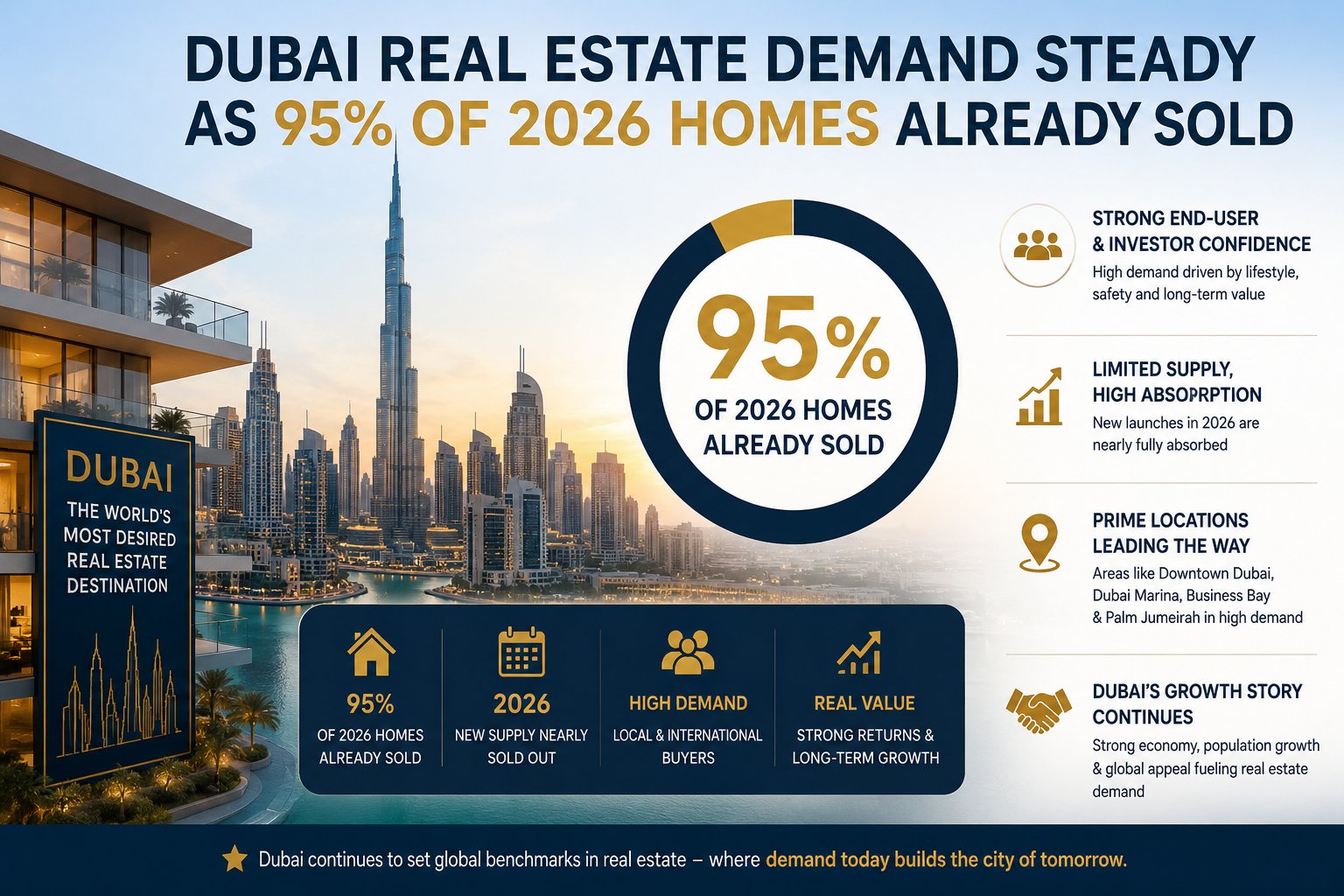
The headline figure—approximately 95% of homes scheduled for completion in 2026 already sold—is not just impressive; it’s structurally significant. It indicates that demand is not reacting to supply but actually staying ahead of it. In addition, more than 71% of Dubai’s property pipeline extending to 2029 has already been purchased, demonstrating deep-rooted investor confidence in future growth.
This level of absorption is rare in global real estate markets, where oversupply often leads to stagnation. In Dubai, however, forward sales suggest that developers are aligning closely with demand patterns. The numbers also reflect a diversified buyer base, including international investors, residents, and institutional players. Instead of a single demand driver, Dubai benefits from multiple layers of sustained interest, making the market far more resilient than it appears on the surface.
Why 95% of 2026 Homes Are Already Sold
Off-Plan Market Dominance
The off-plan segment continues to dominate Dubai’s property landscape, acting as the backbone of its rapid growth. Buyers are increasingly comfortable purchasing properties that are still under construction, largely due to flexible payment plans and strong developer reputations. This trend has transformed the way real estate transactions occur, shifting the focus from completed inventory to future-ready investments.
Off-plan properties offer a strategic advantage—lower entry prices and higher potential appreciation. For many investors, this is the perfect combination. Developers have capitalized on this demand by launching projects that cater to different price segments, ensuring accessibility for both first-time buyers and high-net-worth individuals. The result is a dynamic pipeline where properties are often sold out long before completion, reinforcing the perception of scarcity.
Strong Investor Confidence
Investor confidence in Dubai is not accidental; it is built on consistent policy support, economic diversification, and global positioning. The city has successfully positioned itself as a safe haven for capital, The city has successfully positioned itself as a safe haven for capital, attracting investors from Europe, Asia, and beyond. This influx of international buyers creates a steady demand stream that cushions the market against regional fluctuations.
Moreover, Dubai’s regulatory framework has improved significantly over the years, offering transparency and security for investors. Initiatives such as long-term visas and residency incentives linked to property ownership have further strengthened the appeal. When investors see stability combined with growth potential, they tend to commit early—and that’s exactly what we’re witnessing with the near sell-out of 2026 inventory.
Demand Drivers Behind Dubai’s Real Estate Boom
Population Growth and Migration Trends
One of the most powerful drivers behind Dubai’s real estate demand is population growth. The city continues to attract professionals, entrepreneurs, and families seeking better opportunities and lifestyle advantages. With thousands of new residents arriving annually, the demand for housing remains consistently high.
This population influx is not just about numbers—it’s about quality. Many new residents are high-income earners or skilled professionals who prefer owning property over renting. This shift from tenancy to ownership is a crucial factor sustaining demand. It also explains why even mid-tier properties are seeing steady absorption rates, as more residents look to establish long-term roots in the city.
Global Investor Influx
Dubai’s appeal extends far beyond its borders, drawing investors from around the world. The combination of tax benefits, high rental yields, and a stable currency makes it an attractive destination for capital deployment. In fact, Dubai has outperformed many global cities in luxury property transactions, highlighting its strong position in the international market.
Investors are no longer limited to ultra-luxury segments. There is growing interest in mid-range and affordable housing, driven by the potential for consistent rental income. This diversification of investment strategies ensures that demand is spread across different property types, reducing the risk of market imbalances.
Supply Pipeline and Future Inventory
2026–2029 Development Pipeline
Dubai’s property pipeline is extensive, with hundreds of thousands of units scheduled for completion over the next few years. Yet, what sets this market apart is the pace at which these units are being absorbed. With over 70% of upcoming inventory already sold,ectively de-risking their projects before completion. citeturn0search0
This forward-selling approach creates a unique dynamic where supply is introduced gradually, preventing sudden market saturation. It also allows developers to maintain pricing power, as demand consistently outpaces available inventory. The pipeline is not just large—it is strategically managed to align with market needs.
Absorption Rates Explained
Absorption rate is a key metric in real estate, indicating how quickly properties are sold relative to supply. In Dubai’s case, the absorption rate is exceptionally high, signaling strong demand. When nearly all units are sold years in advance, it suggests that buyers have confidence in both the product and the market.
High absorption rates also reduce the risk of price volatility. When supply is pre-sold, there is less pressure to discount properties post-completion. This stability benefits both developers and investors, creating a balanced ecosystem where growth is sustainable rather than speculative.
Buyer Behavior Shift in 2026
From Speculation to Strategic Buying
The Dubai property market is undergoing a subtle but significant transformation. The speculative frenzy seen in previous years is giving way to a more measured approach. Buyers are taking their time, analyzing market conditions, and focusing on long-term returns rather than quick flips.
This shift is actually a positive development. It indicates that the market is maturing and becoming more resilient. When buyers prioritize fundamentals over hype, it reduces the likelihood of sudden corrections. It also encourages developers to maintain high standards, as informed buyers demand better quality and transparency.
Focus on Long-Term Value
Today’s buyers are asking different questions. Instead of “How quickly can I resell this?” they are asking “Will this property hold value over the next decade?” This change in mindset is driving demand for properties in well-planned communities with strong infrastructure and amenities.
According to market insights, buyers are increasingly evaluating factors such as service charges, and future resale potential before making decisions. citeturn0search2 This analytical approach supports sustainable growth, ensuring that demand remains steady even as market conditions evolve.
Role of Technology in Real Estate Growth
Blockchain and Tokenization
Technology is playing an increasingly important role in shaping Dubai’s real estate market. One of the most promising developments is the introduction of blockchain-based property transactions and tokenization. These innovations have the potential to revolutionize how properties are bought and sold, making the process more transparent and accessible.
Tokenization, in particular, allows investors to purchase fractional ownership in properties, lowering the barrier to entry. This could open the market to a broader range of investors, further boosting demand. As these technologies gain traction, they are likely to enhance efficiency and trust withforcing Dubai’s position as a global real estate hub. citeturn0search1
Price Trends and Market Stability
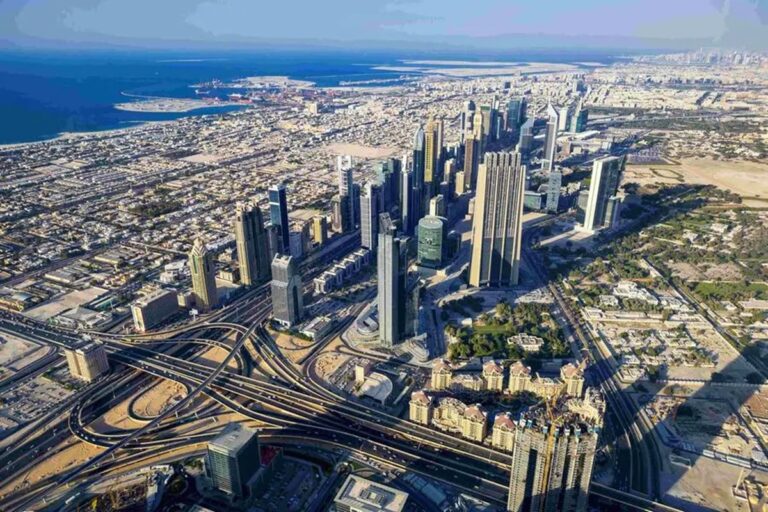
Are Prices Rising or Stabilizing?
While demand remains strong, price growth in 2026 is expected to be more moderate compared to previous years. Analysts predict a gradual increase rather than sharp spikes, indicating a more balanced market. This stability is crucial for long-term sustainability, as it prevents the formation of price bubbles.
Interestingly, some areas may experience slight corrections due to increased supply. However, these adjustments are typically localized and do not reflect the overall market trend. In fact, steady demand ensures that prices remain supported, even in the face of new inventory.
Luxury vs Affordable Segments
The luxury segment continues to perform exceptionally well, driven by high-net-worth individuals seeking premium properties. At the same time, the affordable housing segment is gaining traction, particularly among first-time buyers. This dual demand creates a diversified market structure that is less vulnerable to shocks.
Luxury properties benefit from limited supply and high exclusivity, while affordable units attract a broader audience. Together, these segments ensure that demand remains consistent across different price points, contributing to overall market stability.
Risks and Challenges in the Market
Oversupply Concerns
Despite strong demand, concerns about oversupply cannot be ignored. With a large number of units scheduled for completion, there is a possibility that certain segments may experience temporary imbalances. However, the high pre-sale rates mitigate this risk to a significant extent.
Developers are also becoming more cautious, adjusting their project launches based on market conditions. This proactive approach helps prevent oversupply, ensuring that the market remains balanced.
Geopolitical Influences
External factors, such as geopolitical tensions, can impact investor sentiment and transaction volumes. Recent events have shown that while the market may experience short-term fluctuations, long-term demand remains intact. Investors tend to focus on fundamentals, which continue to support Dubai’s real estate sector.
Opportunities for Investors in 2026
High ROI Segments
Investors looking for strong returns should focus on segments with consistent demand, such as rental properties and mid-range housing. These categories offer stable income streams and lower risk compared to speculative investments.
Best Property Types to Invest In
Some of the most promising property types include:
- Apartments in emerging communities
- Waterfront properties with high rental demand
- Branded residences offering premium experiences
Each of these categories caters to a specific segment of buyers, ensuring diversified opportunities for investors.
Future Outlook of Dubai Real Estate
Predictions Beyond 2026
Looking ahead, Dubai’s real estate market is expected to maintain its upward trajectory. Population growth, infrastructure development, and economic diversification will continue to drive demand. While short-term fluctuations are inevitable, the long-term outlook remains positive.
Long-Term Growth Potential
Dubai’s strategic vision and global positioning make it one of the most attractive real estate markets in the world. The combination of strong demand, controlled supply, and technological innovation creates a solid foundation for sustained growth.
Conclusion
Dubai’s real estate market in 2026 tells a compelling story—one of resilience, evolution, and strategic growth. The fact that nearly 95% of homes scheduled for completion are already sold is not just a headline; it’s a clear indicator of deep-rooted demand and investor confidence. What makes this even more impressive is that this demand is not driven by speculation alone but by a combination of population growth, global investment, and a maturing buyer mindset.
The market is no longer about rapid gains—it’s about sustainable value. Buyers are smarter, developers are more strategic, and the overall ecosystem is more balanced. While challenges such as oversupply and geopolitical risks exist, they are unlikely to derail the market’s long-term trajectory.
For investors and homebuyers alike, Dubai remains a market full of opportunity—provided decisions are made with insight and strategy.