Dubai has established itself as one of the world’s most dynamic real estate markets, attracting international investors, entrepreneurs, and property professionals. Behind this growth are business leaders who combine strategic thinking, market knowledge, and relationship-driven leadership to create opportunities in an increasingly competitive environment.
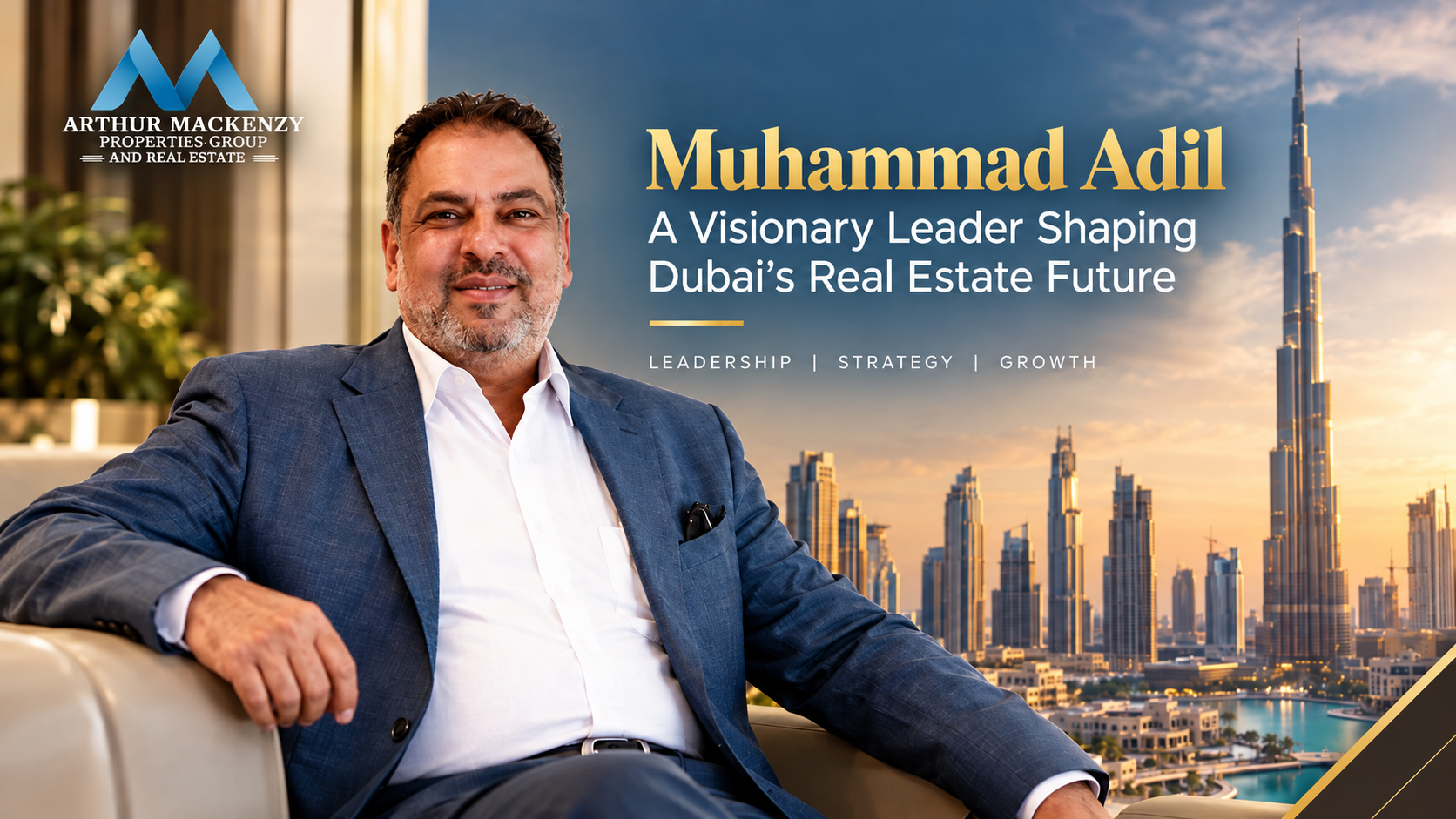
Muhammad Adil, featured in the October 2026 edition of Gulf Prime Magazine, represents this leadership-driven approach to real estate and business development. Recognised as a Dubai real estate entrepreneur and business leader, he is highlighted for his vision, strategic outlook, and commitment to building stronger, more connected communities.
For Arthur Mackenzy Properties, his feature offers an opportunity to reflect on the qualities that define effective leadership in Dubai’s evolving property market and the importance of combining international experience with a long-term business vision.
Muhammad Adil Featured in Gulf Prime Magazine’s October 2026 Edition
The October 2026 cover of Gulf Prime Magazine places Muhammad Adil in the spotlight as part of its Elite 20 Edition. The feature focuses on real estate leadership, business investment, growth, community development, and global impact.
The magazine’s central message highlights the importance of transforming experience into opportunities and creating a stronger, more connected future.
In real estate, this philosophy extends beyond buying and selling properties. Successful leadership involves understanding market movements, recognising emerging investment opportunities, developing professional relationships, and making decisions that support sustainable business growth.
Dubai’s property sector provides a particularly relevant environment for this approach. With its international investor base, expanding residential communities, luxury developments, and evolving infrastructure, the city continues to create opportunities for professionals who understand both local market dynamics and international business expectations.
Leadership That Goes Beyond Property Transactions
Real estate is fundamentally a people-oriented industry. While market data, property valuations, and investment returns remain essential, long-term success also depends on trust, communication, and the ability to understand clients’ individual objectives.
Effective real estate leadership brings these elements together.
For entrepreneurs operating in Dubai, this means recognising that every client has a different investment strategy. Some buyers prioritise capital appreciation, while others focus on rental income, long-term residence, portfolio diversification, or access to premium communities.
A professional approach requires listening carefully, evaluating available opportunities, and helping clients make decisions based on their circumstances and financial objectives.
Muhammad Adil’s magazine feature emphasises the connection between vision, strategy, and people. These principles reflect the broader requirements of modern real estate leadership, where relationships and informed decision-making are central to building a sustainable business.
Dubai Real Estate: A Market Driven by Global Opportunities
Dubai continues to attract attention from investors seeking exposure to an internationally connected property market. Its position as a business and tourism destination, established infrastructure, and diverse residential offerings contribute to its appeal.
The market provides opportunities across several segments, including:
Luxury Residential Properties: Premium villas, waterfront residences, and high-end apartments attract buyers seeking exclusive locations, lifestyle amenities, and long-term investment potential.
Off-Plan Developments: Newly launched projects appeal to investors evaluating payment plans, development locations, construction timelines, and potential future demand.
Ready Properties: Completed apartments and villas allow buyers to assess the actual property, surrounding community, available facilities, and current rental potential before purchasing.
Income-Generating Investments: Properties in established residential areas can appeal to investors seeking rental income, subject to purchase costs, service charges, occupancy levels, and prevailing market conditions.
Emerging Residential Communities: Infrastructure development, transport connectivity, retail facilities, and community amenities can influence the long-term attractiveness of different neighbourhoods.
Navigating these opportunities requires more than awareness of market trends. Investors benefit from a structured assessment of their budgets, investment horizons, risk tolerance, and preferred property types.
This is where experienced real estate professionals can add value by helping clients evaluate options and understand the considerations associated with each investment.
The Importance of Strategy in Real Estate Investment
A successful property investment begins with a clear strategy.
Investors should establish their primary objective before selecting a property. Someone purchasing a home for personal use may prioritise location, accessibility, schools, and lifestyle amenities. An investor seeking rental income may place greater emphasis on tenant demand, expected rental returns, annual expenses, and vacancy risk.
Similarly, buyers considering off-plan developments should evaluate the developer’s track record, contractual terms, payment schedule, construction progress, and anticipated completion date.
A comprehensive investment assessment should consider the following factors:
- Location and connectivity: Proximity to business districts, transport links, schools, healthcare facilities, and retail destinations.
- Purchase price and total costs: Acquisition expenses, applicable transaction fees, service charges, maintenance, and financing costs.
- Rental demand: The property’s suitability for its target tenant segment and the availability of competing properties.
- Potential capital appreciation: Market conditions, planned infrastructure, supply levels, and the area’s long-term development prospects.
- Liquidity and exit strategy: The potential resale market and the time and costs involved in disposing of the property.
- Risk management: Exposure to price fluctuations, changes in rental demand, construction delays, and unexpected expenses.
No investment is guaranteed to deliver a particular return. A disciplined strategy helps investors understand the potential benefits and risks before making a commitment.
For real estate leaders, providing clients with clear information and realistic expectations is an important part of building long-term professional relationships.
Building Stronger Communities Through Real Estate
The magazine’s emphasis on stronger communities highlights an important dimension of property development.
A successful residential community offers more than individual homes. Its long-term appeal also depends on infrastructure, public spaces, accessibility, retail services, educational facilities, healthcare, and opportunities for residents to connect.
Dubai’s residential landscape includes established neighbourhoods, master-planned developments, waterfront communities, and emerging districts designed around different lifestyles and budgets.
For buyers, understanding these characteristics can be just as important as comparing apartment sizes or villa specifications.
For investors, community development can influence tenant preferences, property demand, and long-term market positioning. However, these outcomes depend on factors such as delivery timelines, infrastructure completion, population growth, and the balance between supply and demand.
A people-centred approach to real estate therefore considers not only the property itself but also the environment in which residents will live and businesses will operate.
International Experience and a Global Business Perspective
Dubai’s property market operates within an international investment environment. Buyers and investors come from different countries, bringing varied expectations, financial considerations, and approaches to property ownership.
Professionals working in this environment need to understand cross-border client requirements, communicate clearly, and recognise the differences between individual investment objectives.
International business experience can support this process by encouraging broader market awareness, adaptable communication, and a strategic approach to relationship management.
Muhammad Adil’s Gulf Prime Magazine cover feature captures this wider perspective through its emphasis on global impact and turning experience into opportunity.
For the real estate industry, this philosophy reflects the importance of combining local market knowledge with an understanding of international investment expectations.
It also reinforces the value of professional integrity. Clear communication, accurate property information, transparent discussions about costs, and realistic expectations help create a stronger foundation for client relationships.
What Real Estate Leadership Means for Today’s Property Buyers
As Dubai’s property market evolves, buyers and investors increasingly need guidance that connects market information with practical decisions.
A professional real estate advisory process should begin by understanding the client’s objectives rather than simply presenting available listings.
For example, a first-time buyer may need support comparing mortgage affordability, community facilities, and long-term ownership costs. An overseas investor may need to assess property management arrangements, rental demand, transaction expenses, and the practical requirements of purchasing property in the UAE.
A luxury buyer may prioritise privacy, design, exclusivity, and location, while an investor building a diversified portfolio may focus on balancing property types and investment horizons.
In each case, the objective is to align the property selection with the buyer’s needs.
This approach also requires keeping up with market developments, understanding relevant regulations, and distinguishing verified information from promotional claims.
Real estate leadership is therefore not defined solely by transaction volume. It also involves the quality of advice, the strength of professional relationships, and the ability to help clients make informed decisions.
Arthur Mackenzy Properties: Supporting Informed Real Estate Decisions in Dubai
At Arthur Mackenzy Properties, understanding Dubai’s real estate landscape is essential to helping clients explore property opportunities that align with their objectives.
Whether clients are considering an apartment in an established neighbourhood, a villa in a family-oriented community, or an off-plan development with a long-term investment horizon, a structured approach can help them evaluate their options.
The most effective property decisions begin with the right questions:
- What is the primary purpose of the purchase?
- Which locations best match the buyer’s lifestyle or investment strategy?
- What is the total acquisition budget, including additional costs?
- How does the property compare with similar options in the market?
- What are the potential risks and ongoing ownership obligations?
- Is there a clear strategy for holding, renting, or reselling the property?
Answering these questions creates a more informed starting point for property selection.
Dubai’s diverse real estate market offers opportunities for different buyer profiles, but the suitability of any property depends on individual circumstances, market conditions, and the quality of the investment assessment.
By focusing on research, professional guidance, and client priorities, Arthur Mackenzy Properties aims to help buyers and investors navigate the market with greater clarity.
Looking Ahead: The Future of Real Estate Leadership
The future of Dubai real estate will be shaped by a combination of investment demand, infrastructure development, technology, changing lifestyle preferences, and evolving expectations around residential communities.
Digital tools and market analytics are making property information more accessible. At the same time, personal relationships, professional judgement, and local knowledge remain important when evaluating complex decisions.
Real estate professionals who combine these capabilities can be better positioned to respond to changing client needs.
The industry’s long-term success will also depend on responsible business practices, transparent communication, and an understanding of how developments contribute to the wider urban environment.
Muhammad Adil’s appearance on the October 2026 cover of Gulf Prime Magazine provides a timely opportunity to recognise these broader themes of leadership, strategy, and global business engagement.
His feature places the spotlight on the people behind the property industry and the importance of translating experience into meaningful opportunities.
Conclusion
Muhammad Adil’s feature in the October 2026 edition of Gulf Prime Magazine highlights a leadership philosophy centred on vision, strategy, people, and stronger communities.
These themes are particularly relevant to Dubai, where the real estate sector connects international investment with residential development, business growth, and evolving lifestyle expectations.
For buyers and investors, the wider lesson is clear: successful property decisions require more than identifying an attractive development. They demand careful research, an understanding of market conditions, a clear investment strategy, and professional guidance tailored to individual goals.
At Arthur Mackenzy Properties, these principles provide a valuable framework for exploring Dubai’s property opportunities and making informed real estate decisions.
As the market continues to develop, leadership grounded in knowledge, trust, and long-term thinking will remain an important part of building a stronger real estate sector.
Frequently Asked Questions (FAQs)
1. Who is Muhammad Adil?
Muhammad Adil is presented on the October 2026 cover of Gulf Prime Magazine as a Dubai real estate entrepreneur and business leader. The feature highlights themes of leadership, strategy, investment, and community development.
2. Why is Muhammad Adil featured in Gulf Prime Magazine?
The magazine’s October 2026 cover features Muhammad Adil as part of its Elite 20 Edition, focusing on real estate leadership, business investment, growth, community, and global impact.
3. Why is Dubai an important real estate investment destination?
Dubai attracts international property buyers through its residential and luxury property offerings, business environment, infrastructure, and diverse investment opportunities. Individual investment outcomes depend on location, purchase price, market conditions, and other factors.
4. What should investors consider before buying property in Dubai?
Investors should evaluate their objectives, property location, total acquisition costs, rental demand, potential returns, ongoing expenses, market risks, and exit strategy before making a purchase.
5. How can Arthur Mackenzy Properties help property buyers?
Arthur Mackenzy Properties can assist buyers and investors in exploring available property options, comparing locations, and evaluating opportunities according to their requirements and investment objectives.
Ready to explore Dubai’s real estate opportunities?
Connect with Arthur Mackenzy Properties to discuss your property requirements and explore residential and investment opportunities across Dubai.
Editorial note: This article is based on the supplied Gulf Prime Magazine cover. It avoids attributing specific business achievements, awards, or career milestones to Muhammad Adil that are not independently established by the image.